
用于细菌性阴道病的含乳酸产品及其对阴道微生物群的影响:一项系统评价。
Lactic acid-containing products for bacterial vaginosis and their impact on the vaginal microbiota: A systematic review.
作者信息
Plummer Erica L, Bradshaw Catriona S, Doyle Michelle, Fairley Christopher K, Murray Gerald L, Bateson Deborah, Masson Lindi, Slifirski Josephine, Tachedjian Gilda, Vodstrcil Lenka A
机构信息
Central Clinical School, Monash University, Melbourne, Victoria, Australia.
Melbourne Sexual Health Centre, Alfred Hospital, Carlton, Victoria, Australia.
出版信息
PLoS One. 2021 Feb 11;16(2):e0246953. doi: 10.1371/journal.pone.0246953. eCollection 2021.
OBJECTIVE
The vaginal microbiota in bacterial vaginosis (BV) typically has low abundance of lactic acid producing lactobacilli. Lactic acid has properties that may make it effective for treating BV and/or restoring an optimal lactobacillus-dominated vaginal microbiota. We conducted a systematic review to describe the effect of intravaginal lactic acid-containing products on BV cure, and their impact on vaginal microbiota composition (PROSPERO registration: CRD42018115982).
METHODS
PubMed, Embase and OVID were searched from inception to November 2019 to identify eligible studies. Included studies evaluated an intravaginal lactic acid-containing product and reported BV cure using established diagnostic methods, and/or vaginal microbiota composition using molecular methods. Studies were independently screened and assessed, and the proportion of women cured post-treatment was calculated. Study results were described in a qualitative manner.
RESULTS
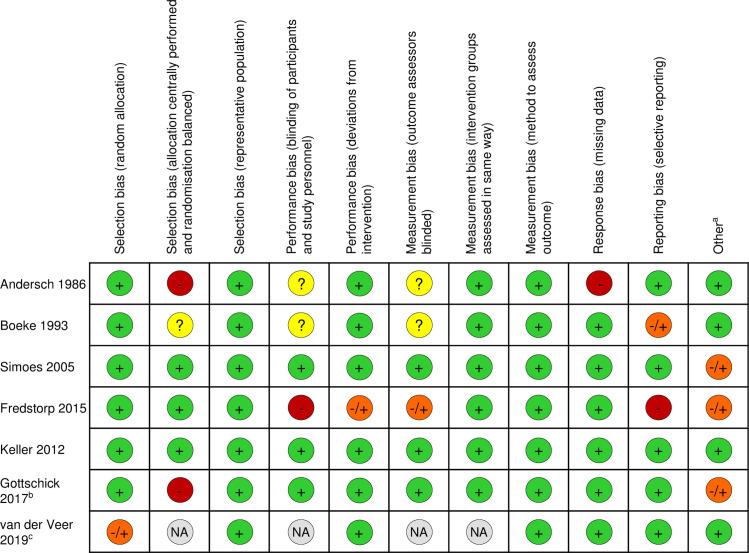
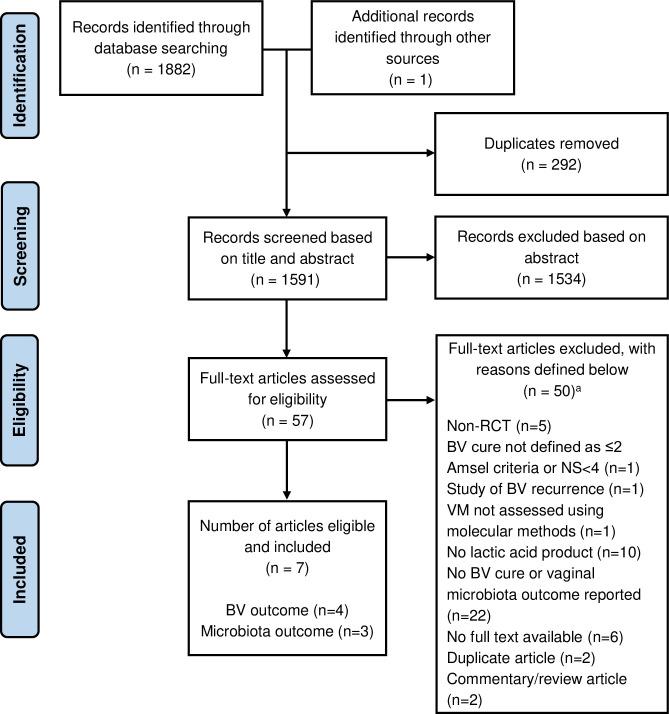
We identified 1,883 articles and assessed 57 full-texts for eligibility. Seven different lactic acid-containing products were evaluated and differed with respect to excipients, lactic acid concentration and pH. Most studies had medium or high risk of bias. Three trials compared the efficacy of a lactic acid-containing product to metronidazole for BV cure. One study found lactic acid to be equivalent to metronidazole and two studies found lactic acid to be significantly inferior to metronidazole. Two studies included a control group receiving a placebo or no treatment. One reported lactic acid to be superior than no treatment and the other reported lactic acid to be equivalent to placebo. Lactic acid-containing products did not significantly impact the vaginal microbiota composition.
CONCLUSION
There is a lack of high-quality evidence to support the use of lactic acid-containing products for BV cure or vaginal microbiota modulation. However, adequately powered and rigorous randomised trials with accompanying vaginal microbiota data are needed to evaluate the efficacy of lactic acid as a BV treatment strategy.
目的
细菌性阴道病(BV)患者的阴道微生物群中,产乳酸的乳酸杆菌丰度通常较低。乳酸具有的特性可能使其对治疗BV和/或恢复以乳酸杆菌为主导的最佳阴道微生物群有效。我们进行了一项系统评价,以描述含阴道内乳酸产品对BV治愈的影响及其对阴道微生物群组成的影响(国际前瞻性系统评价注册库登记号:CRD42018115982)。
方法
检索了PubMed、Embase和OVID数据库,检索时间从建库至2019年11月,以确定符合条件的研究。纳入的研究评估了一种含阴道内乳酸的产品,并使用既定的诊断方法报告了BV的治愈情况,和/或使用分子方法报告了阴道微生物群组成。对研究进行独立筛选和评估,并计算治疗后治愈的女性比例。以定性方式描述研究结果。
结果
我们检索到1883篇文章,并评估了57篇全文的 eligibility。评估了七种不同的含乳酸产品,它们在辅料、乳酸浓度和pH值方面存在差异。大多数研究存在中度或高度偏倚风险。三项试验比较了含乳酸产品与甲硝唑治疗BV的疗效。一项研究发现乳酸与甲硝唑等效,两项研究发现乳酸明显不如甲硝唑。两项研究纳入了接受安慰剂或不治疗的对照组。一项研究报告乳酸优于不治疗,另一项研究报告乳酸与安慰剂等效。含乳酸产品对阴道微生物群组成没有显著影响。
结论
缺乏高质量证据支持使用含乳酸产品治疗BV或调节阴道微生物群。然而,需要进行有足够样本量和严格的随机试验,并伴有阴道微生物群数据,以评估乳酸作为BV治疗策略的疗效。
 Zotero 插件