
特发性肺纤维化(IPF)合并肺癌患者血清中KL-6的浓度以及接受抗纤维化治疗的IPF患者血清KL-6的连续测量结果
Serum Concentrations of KL-6 in Patients with IPF and Lung Cancer and Serial Measurements of KL-6 in IPF Patients Treated with Antifibrotic Therapy.
作者信息
d'Alessandro Miriana, Bergantini Laura, Cameli Paolo, Pieroni Maria, Refini Rosa Metella, Sestini Piersante, Bargagli Elena
机构信息
Respiratory Diseases and Lung Transplantation Unit, Department of Medical and Surgical Sciences & Neurosciences, Siena University Hospital, 53100 Siena, Italy.
出版信息
Cancers (Basel). 2021 Feb 9;13(4):689. doi: 10.3390/cancers13040689.
BACKGROUND
Krebs von den Lungen-6 (KL-6) was suggested as ILD biomarker including idiopathic pulmonary fibrosis (IPF). Lung cancer is one of the most severe comorbidity of IPF patients. This study aims to serially analyze KL-6 in IPF patients after 24 months of Nintedanib and to first investigate the biomarker behavior in IPF associated with adenocarcinoma.
MATERIALS AND METHODS
One hundred and forty-two ILD patients (median (IQR), 69 (63-75) years; 86 males) were retrospectively enrolled. Serial serum samples were collected from IPF patients before starting antifibrotic therapy and after 12 months. Serum KL-6 levels were measured by KL-6 reagent assay (Fujirebio Europe, UK).
RESULTS
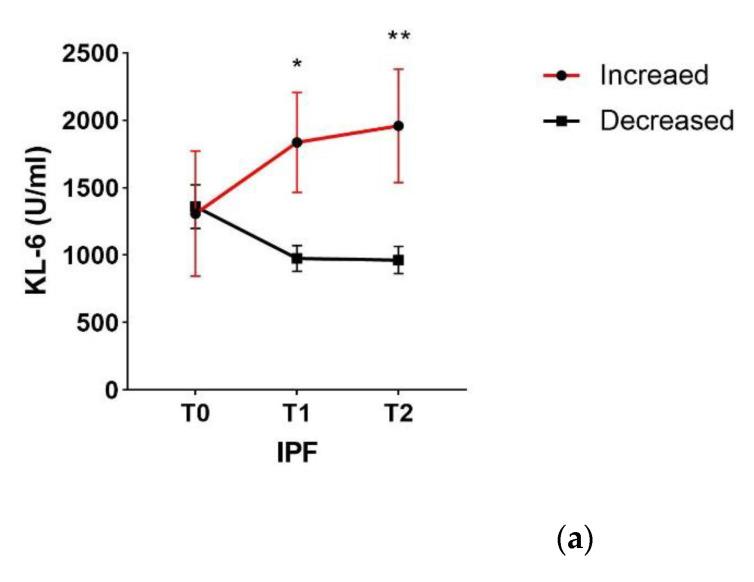
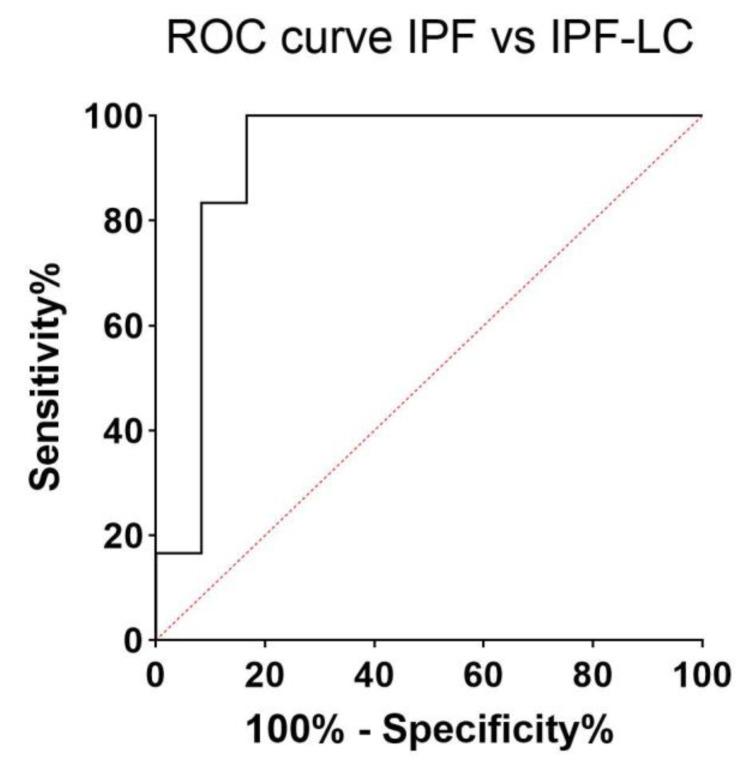
Increased KL-6 concentrations were identified in IPF-LC patients than IPF, fibrotic hypersensitivity pneumonitis, and pulmonary fibrosis associated with autoimmune disease groups. A cut-off value was calculated to distinguish IPF and IPF-LC patients. IPF patients monitored for 24 months with Nintedanib showed persisted increased levels of KL-6 with a progressive decline of FVC percentages.
CONCLUSION
This preliminary study offers a first demonstration that very high serum concentrations of KL-6 in IPF-LC patients are associated with poor prognosis. Moreover, serial evaluation of serum KL-6 in IPF patients over 24 months of Nintedanib treatment revealed that most patients experienced a stabilization of lung function parameters and of serum concentrations of KL-6.
背景
肺 Krebs von den Lungen-6(KL-6)被认为是包括特发性肺纤维化(IPF)在内的间质性肺疾病(ILD)生物标志物。肺癌是 IPF 患者最严重的合并症之一。本研究旨在对接受尼达尼布治疗 24 个月后的 IPF 患者进行 KL-6 的系列分析,并首次研究与腺癌相关的 IPF 中的生物标志物行为。
材料与方法
回顾性纳入 142 例 ILD 患者(中位年龄(四分位间距),69(63 - 75)岁;86 例男性)。在抗纤维化治疗开始前和 12 个月后从 IPF 患者中采集系列血清样本。血清 KL-6 水平通过 KL-6 试剂检测法(英国富士瑞必欧欧洲公司)进行测定。
结果
与 IPF、纤维化性过敏性肺炎以及与自身免疫性疾病相关的肺纤维化组相比,IPF - 肺癌(IPF-LC)患者中 KL-6 浓度升高。计算出一个临界值以区分 IPF 和 IPF-LC 患者。接受尼达尼布治疗 24 个月的 IPF 患者显示 KL-6 水平持续升高,同时用力肺活量(FVC)百分比逐渐下降。
结论
这项初步研究首次证明,IPF-LC 患者血清 KL-6 浓度极高与预后不良相关。此外,对接受尼达尼布治疗 24 个月以上的 IPF 患者进行血清 KL-6 的系列评估发现,大多数患者的肺功能参数和血清 KL-6 浓度趋于稳定。

 Zotero 插件