
选定因素对接受乳腺癌治疗的女性血清 25(OH)D 浓度的影响。
Effect of Selected Factors on the Serum 25(OH)D Concentration in Women Treated for Breast Cancer.
机构信息
Medical Laboratory Diagmed, Lwowska 20, 33-300 Nowy Sącz, Poland.
Department of Pediatrics, Gastroenterology and Nutrition, Faculty of Medicine, Jagiellonian University Medical College, Wielicka 265, 30-663 Kraków, Poland.
出版信息
Nutrients. 2021 Feb 9;13(2):564. doi: 10.3390/nu13020564.
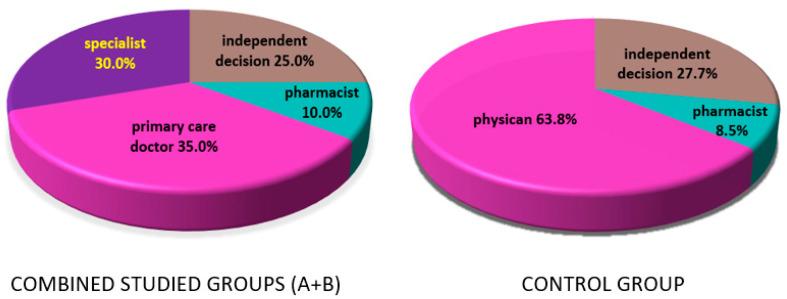
Maintaining an optimal vitamin D concentration reduces the risk of recurrence and extends survival time in patients after breast cancer treatment. Data on vitamin D deficiency among Polish women after breast cancer therapy are limited. Thus, the aim of the study was the analysis of vitamin D status in post-mastectomy patients, considering such factors as seasons, social habits, vitamin D supplementation and its measurements. The study involved 94 women after breast cancer treatment. Serum vitamin D concentration was measured, and a questionnaire, gathering demographic and clinical data regarding cancer, diet, exposure to sun radiation, and knowledge of recommendations on vitamin D supplementation, was delivered twice, in both winter and in summer. The control group consisted of 94 age-matched women with no oncological history. In women after breast cancer treatment, 25-hydroxyvitamin D (25(OH)D) deficiency was much more frequent than in the general population. Only about half of the patients supplemented vitamin D at the beginning of the study. After the first test and the issuing of recommendations on vitamin D supplementation, the percentage of vitamin D supplemented patients increased by about 30% in study groups. The average dose of supplement also increased. None of the women that were not supplementing vitamin D and were tested again in winter had optimal 25(OH)D concentration. It was concluded that vitamin deficiency is common in women treated for breast cancer. Medical advising about vitamin D supplementation and monitoring of 25(OH)D concentration should be improved.
维持最佳维生素 D 浓度可降低乳腺癌治疗后患者的复发风险并延长生存时间。波兰女性乳腺癌治疗后维生素 D 缺乏的数据有限。因此,本研究的目的是分析乳腺癌术后患者的维生素 D 状况,并考虑季节、社会习惯、维生素 D 补充及其测量等因素。该研究纳入了 94 名乳腺癌治疗后的女性。测量了血清维生素 D 浓度,并两次发放问卷,收集与癌症、饮食、暴露于太阳辐射以及对维生素 D 补充建议的了解相关的人口统计学和临床数据,分别在冬季和夏季进行。对照组由 94 名无肿瘤病史且年龄匹配的女性组成。在乳腺癌治疗后的女性中,25-羟维生素 D(25(OH)D)缺乏的发生率远高于一般人群。只有约一半的患者在研究开始时补充维生素 D。在第一次测试和发布维生素 D 补充建议后,研究组中补充维生素 D 的患者比例增加了约 30%。补充剂的平均剂量也增加了。在冬季再次接受检测且未补充维生素 D 的女性中,没有一人的 25(OH)D 浓度达到最佳水平。研究结论是,维生素 D 缺乏在接受乳腺癌治疗的女性中很常见。应改善关于维生素 D 补充的医学建议和 25(OH)D 浓度的监测。

 Zotero 插件