
英国成年人群体对非营养性甜味剂的认知和理解。
Knowledge and Perceptions of Non-Nutritive Sweeteners Within the UK Adult Population.
机构信息
School of Health Sciences, Liverpool Hope University, Hope Park, Liverpool L16 9JD, UK.
出版信息
Nutrients. 2021 Jan 29;13(2):444. doi: 10.3390/nu13020444.
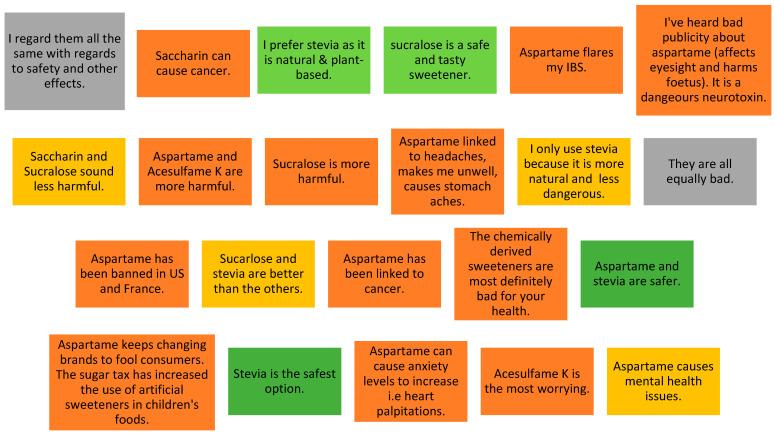
Non-nutritive sweeteners (NNS) are popular sugar substitutes that can help in weight and diabetes management, but concerns regarding their use have been raised by the public. This study aimed to investigate knowledge, benefits and safety perceptions of NNS in a sample of UK adults. The impact of knowledge dissemination on the change in perceptions was also examined. An online survey was distributed through social media platforms and UK Universities and was completed by 1589 participants aged 18 years and above. Results showed a high-risk perception of NNS and a lack of knowledge in regulations in nearly half the population sample. The artificial attributes of NNS further limited their acceptance. Risk perception has been significantly linked to a lower consumption of sweeteners ( < 0.001) and was affected by gender, occupation, education levels, age and body weight status. Information dissemination significantly reduced risk perception and increased awareness of the benefits of NNS. Results suggest that developing effective communication strategies to educate consumers, potentially through trusted health government agencies and professional bodies, can help them to make informed choices. Education of health professionals could also be valuable in reassuring the public of the benefits of NNS.
非营养性甜味剂(NNS)是一种受欢迎的糖替代品,有助于控制体重和糖尿病,但公众对其使用安全性表示担忧。本研究旨在调查英国成年人样本中对 NNS 的知识、益处和安全认知。还研究了知识传播对认知变化的影响。通过社交媒体平台和英国大学在线分发了一份调查问卷,共有 1589 名 18 岁及以上的参与者完成了调查。结果表明,近一半的人群样本对 NNS 的风险感知较高,对其监管规定的了解程度较低。NNS 的人工属性进一步限制了它们的接受程度。风险认知与甜味剂摄入量较低显著相关(<0.001),且受性别、职业、教育水平、年龄和体重状况的影响。信息传播显著降低了风险认知,提高了对 NNS 益处的认识。结果表明,通过可信赖的政府卫生机构和专业机构制定有效的沟通策略来教育消费者,可能有助于他们做出明智的选择。对卫生专业人员进行教育也有助于让公众相信 NNS 的益处。
 Zotero 插件