
克服癌症患者中诱发心血管疾病的氧化应激的分子与机制
Molecules and Mechanisms to Overcome Oxidative Stress Inducing Cardiovascular Disease in Cancer Patients.
作者信息
Sabbatino Francesco, Conti Valeria, Liguori Luigi, Polcaro Giovanna, Corbi Graziamaria, Manzo Valentina, Tortora Vincenzo, Carlomagno Chiara, Vecchione Carmine, Filippelli Amelia, Pepe Stefano
机构信息
Department of Medicine, Surgery and Dentistry 'Scuola Medica Salernitana', University of Salerno, 84081 Baronissi, Italy.
Oncology Unit, University Hospital "San Giovanni di Dio e Ruggi D'Aragona", 84131 Salerno, Italy.
出版信息
Life (Basel). 2021 Jan 30;11(2):105. doi: 10.3390/life11020105.
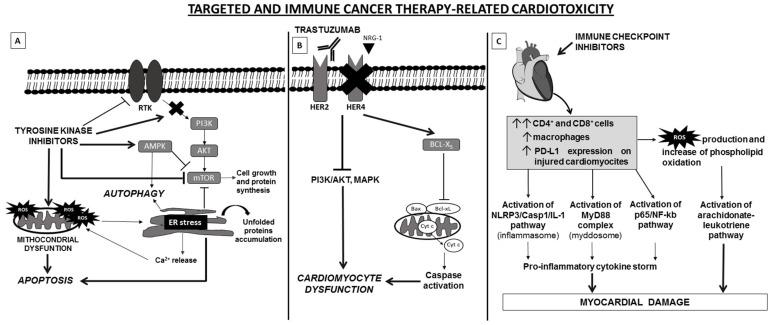
Reactive oxygen species (ROS) are molecules involved in signal transduction pathways with both beneficial and detrimental effects on human cells. ROS are generated by many cellular processes including mitochondrial respiration, metabolism and enzymatic activities. In physiological conditions, ROS levels are well-balanced by antioxidative detoxification systems. In contrast, in pathological conditions such as cardiovascular, neurological and cancer diseases, ROS production exceeds the antioxidative detoxification capacity of cells, leading to cellular damages and death. In this review, we will first describe the biology and mechanisms of ROS mediated oxidative stress in cardiovascular disease. Second, we will review the role of oxidative stress mediated by oncological treatments in inducing cardiovascular disease. Lastly, we will discuss the strategies that potentially counteract the oxidative stress in order to fight the onset and progression of cardiovascular disease, including that induced by oncological treatments.
活性氧(ROS)是参与信号转导途径的分子,对人体细胞既有有益影响,也有有害影响。ROS由许多细胞过程产生,包括线粒体呼吸、代谢和酶活性。在生理条件下,抗氧化解毒系统能使ROS水平保持良好平衡。相反,在心血管、神经和癌症等病理状况下,ROS的产生超过了细胞的抗氧化解毒能力,导致细胞损伤和死亡。在本综述中,我们将首先描述ROS介导的氧化应激在心血管疾病中的生物学特性和机制。其次,我们将综述肿瘤治疗介导的氧化应激在诱发心血管疾病中的作用。最后,我们将讨论可能对抗氧化应激以对抗心血管疾病的发生和发展的策略,包括由肿瘤治疗诱发的心血管疾病。

 Zotero 插件