
用于同时递送阿霉素和紫杉醇的新型pH响应性纳米杂化物:计算机模拟洞察
Novel pH-responsive nanohybrid for simultaneous delivery of doxorubicin and paclitaxel: an in-silico insight.
作者信息
Alimohammadi Ehsan, Maleki Reza, Akbarialiabad Hossein, Dahri Mohammad
机构信息
Neurosurgery Department, Kermanshah University of Medical Sciences, Kermanshah, Iran.
Computational Biology and Chemistry Group (CBCG), Universal Scientific and Education and Research Network (USERN), Tehran, Iran.
出版信息
BMC Chem. 2021 Feb 11;15(1):11. doi: 10.1186/s13065-021-00735-4.
BACKGROUND
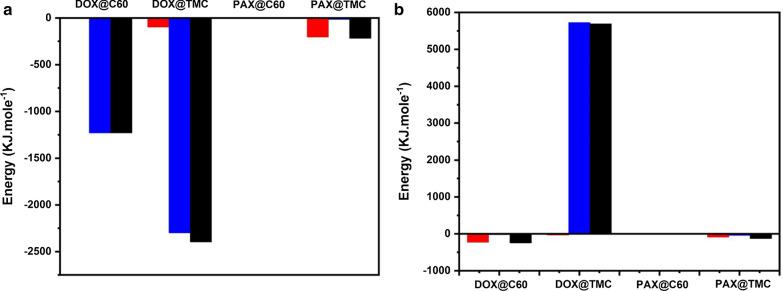
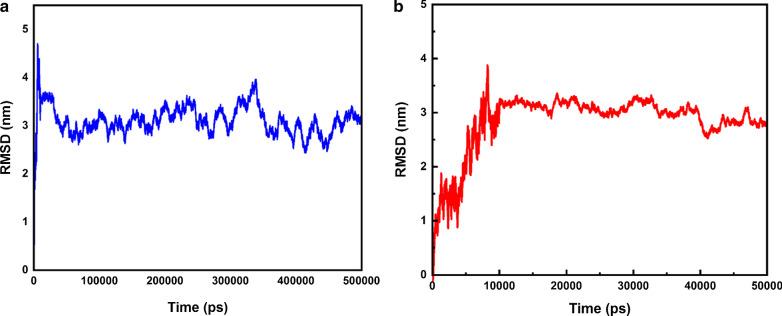
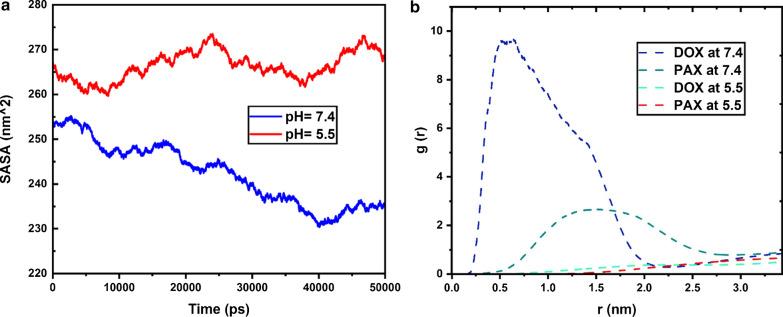
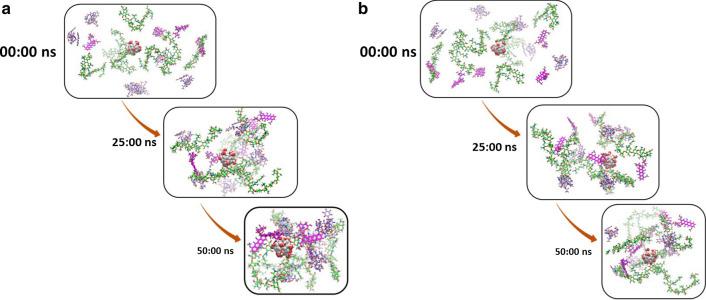
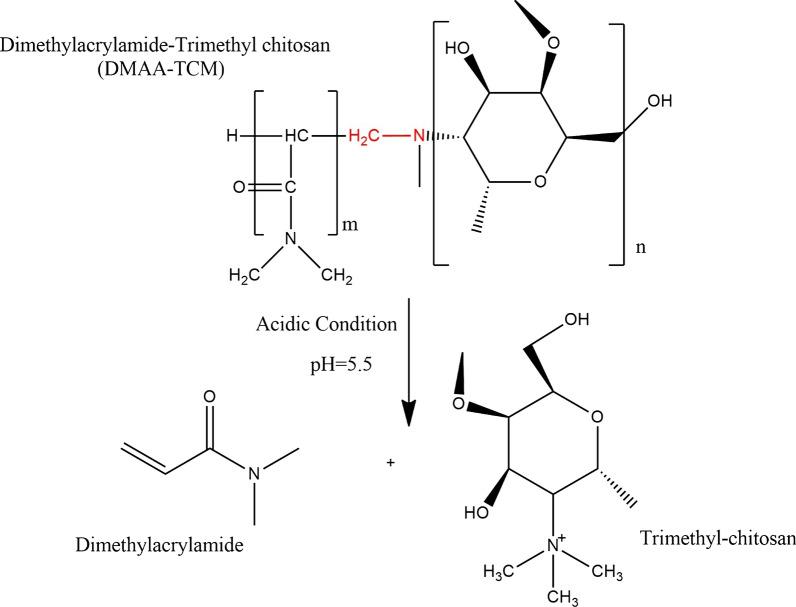
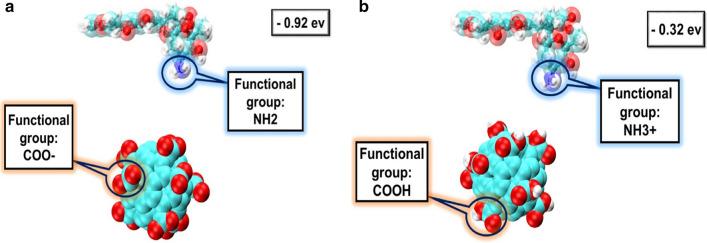
The distribution of drugs could not be controlled in the conventional delivery systems. This has led to the developing of a specific nanoparticle-based delivery system, called smart drug delivery systems. In cancer therapy, innovative biocompatible nanocarriers have received much attention for various ranges of anti-cancer drugs. In this work, the effect of an interesting and novel copolymer named "dimethyl acrylamide-trimethyl chitosan" was investigated on delivery of paclitaxel and doxorubicin applying carboxylated fullerene nanohybrid. The current study was run via molecular dynamics simulation and quantum calculations based on the acidic pH differences between cancerous microenvironment and normal tissues. Furthermore, hydrogen bonds, radius of gyration, and nanoparticle interaction energies were studied here. Stimulatingly, a simultaneous pH and temperature-responsive system were proposed for paclitaxel and doxorubicin for a co-polymer. A pH-responsive and thermal responsive copolymer were utilized based on trimethyl chitosan and dimethyl acrylamide, respectively. In such a dualistic approach, co-polymer makes an excellent system to possess two simultaneous properties in one bio-polymer.
RESULTS
The simulation results proposed dramatic and indisputable effects of the copolymer in the release of drugs in cancerous tissues, as well as increased biocompatibility and drug uptake in healthy tissues. Repeated simulations of a similar article performed for the validation test. The results are very close to those of the reference paper.
CONCLUSIONS
Overall, conjugated modified fullerene and dimethyl acrylamide-trimethyl chitosan (DMAA-TMC) as nanohybrid can be an appropriate proposition for drug loading, drug delivery, and drug release on dual responsive smart drug delivery system.
背景
在传统给药系统中,药物的分布无法得到控制。这促使了一种基于纳米颗粒的特定给药系统的发展,即智能药物递送系统。在癌症治疗中,创新的生物相容性纳米载体因各种抗癌药物而备受关注。在这项工作中,研究了一种名为“二甲基丙烯酰胺 - 三甲基壳聚糖”的有趣新型共聚物对应用羧化富勒烯纳米杂化物递送紫杉醇和阿霉素的影响。本研究通过分子动力学模拟和量子计算进行,基于癌组织与正常组织之间的酸性pH差异。此外,还研究了氢键、回转半径和纳米颗粒相互作用能。令人兴奋的是,针对共聚物提出了一种同时对pH和温度响应的紫杉醇和阿霉素系统。分别基于三甲基壳聚糖和二甲基丙烯酰胺使用了一种pH响应性和热响应性共聚物。在这种二元方法中,共聚物形成了一个出色的系统,在一种生物聚合物中同时具备两种特性。
结果
模拟结果表明该共聚物在癌组织中药物释放方面具有显著且无可争议的效果,同时提高了健康组织中的生物相容性和药物摄取。对类似文章进行了重复模拟以进行验证测试。结果与参考文献非常接近。
结论
总体而言,共轭修饰的富勒烯和二甲基丙烯酰胺 - 三甲基壳聚糖(DMAA - TMC)作为纳米杂化物对于双响应智能药物递送系统中的药物负载、药物递送和药物释放可能是一个合适的选择。
 Zotero 插件