
新冠病毒感染所致嗅觉和味觉障碍:对生理功能的潜在影响。
COVID 19-Induced Smell and Taste Impairments: Putative Impact on Physiology.
作者信息
Meunier Nicolas, Briand Loïc, Jacquin-Piques Agnès, Brondel Laurent, Pénicaud Luc
机构信息
Université Paris-Saclay, INRAE, UVSQ, VIM, Jouy-en-Josas, France.
Centre des Sciences du Goût et de l'Alimentation, AgroSup Dijon, CNRS UMR6265, INRAE UMR 1324, Université de Bourgogne Franche Comté, Dijon, France.
出版信息
Front Physiol. 2021 Jan 26;11:625110. doi: 10.3389/fphys.2020.625110. eCollection 2020.
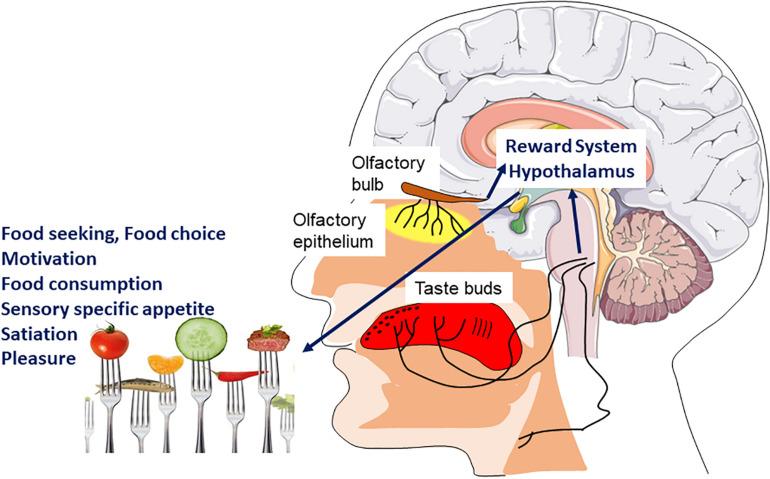
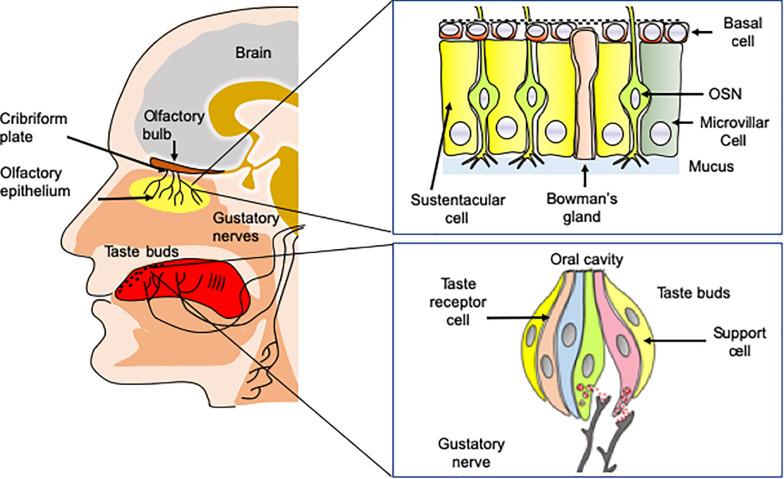
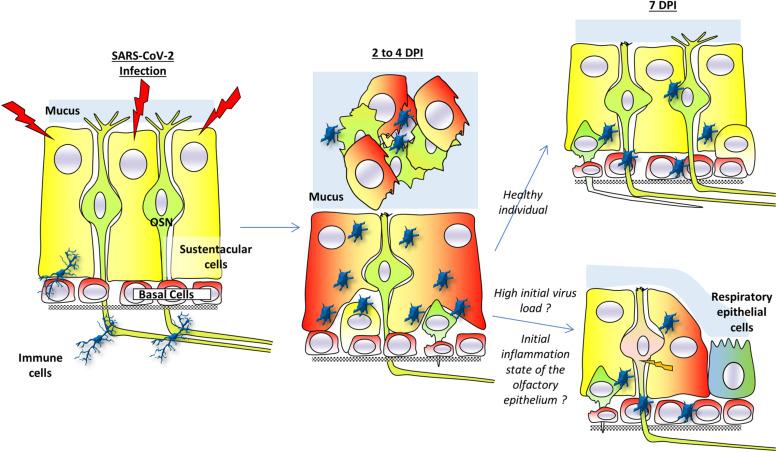
Smell and taste impairments are recognized as common symptoms in COVID 19 patients even in an asymptomatic phase. Indeed, depending on the country, in up to 85-90% of cases anosmia and dysgeusia are reported. We will review briefly the main mechanisms involved in the physiology of olfaction and taste focusing on receptors and transduction as well as the main neuroanatomical pathways. Then we will examine the current evidences, even if still fragmented and unsystematic, explaining the disturbances and mode of action of the virus at the level of the nasal and oral cavities. We will focus on its impact on the peripheral and central nervous system. Finally, considering the role of smell and taste in numerous physiological functions, especially in ingestive behavior, we will discuss the consequences on the physiology of the patients as well as management regarding food intake.
嗅觉和味觉障碍被认为是新冠病毒肺炎患者的常见症状,即使在无症状阶段也是如此。事实上,根据不同国家的报告,高达85%至90%的病例存在嗅觉丧失和味觉障碍。我们将简要回顾嗅觉和味觉生理学中涉及的主要机制,重点关注受体、转导以及主要的神经解剖学通路。然后,我们将研究目前的证据,尽管这些证据仍然零散且不系统,以解释病毒在鼻腔和口腔水平的干扰和作用方式。我们将关注其对周围和中枢神经系统的影响。最后,考虑到嗅觉和味觉在众多生理功能中的作用,尤其是在摄食行为中的作用,我们将讨论对患者生理的影响以及关于食物摄入的管理。
 Zotero 插件