
在新冠疫情期间对常见呼吸道感染的监测证明了非药物干预措施的预防效果。
Surveillance of common respiratory infections during the COVID-19 pandemic demonstrates the preventive efficacy of non-pharmaceutical interventions.
作者信息
Yang Qi, Xiao Xia, Gu Xinxia, Liang Dong, Cao Ting, Mou Jun, Huang Chunxu, Chen Lei, Liu Jie
机构信息
Laboratory of Infectious Diseases and Vaccine, West China Hospital, West China School of Medicine, Sichuan University, Chengdu, China.
Chengdu CapitalBio Medical Laboratory, Chengdu, China.
出版信息
Int J Infect Dis. 2021 Apr;105:442-447. doi: 10.1016/j.ijid.2021.02.027. Epub 2021 Feb 11.
OBJECTIVE
The emergence of a novel coronavirus, SARS-CoV-2, and its subsequent spread outside of Wuhan, China, led to the human society experiencing a pandemic of coronavirus disease 2019 (COVID-19). While the development of vaccines and pharmaceutical treatments are ongoing, government authorities in China have implemented unprecedented non-pharmaceutical interventions as primary barriers to curb the spread of the deadly SARS-CoV-2 virus. Although the decline of COVID-19 cases coincided with the implementation of such interventions, we searched for evidence to demonstrate the efficacy of these interventions, since artifactual factors, such as the environment, the pathogen itself, and the phases of epidemic, may also alter the patterns of case development.
METHODS
We surveyed common viral respiratory infections that have a similar pattern of transmission, tropism, and clinical manifestation, as COVID-19 under a series of non-pharmaceutical interventions during the current pandemic season. We then compared this data with historical data from previous seasons without such interventions.
RESULTS
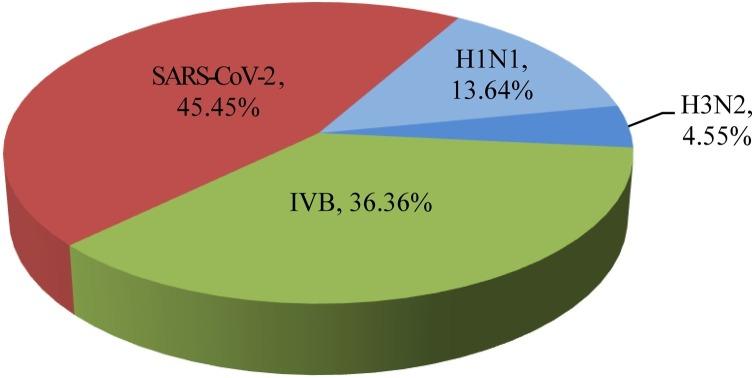
Our survey showed that the rates of common respiratory infections, such as influenza and respiratory syncytial virus infections, decreased dramatically from 13.7% (95% CI, 10.82-16.58) and 4.64% (95% CI, 2.88-7.64) in previous years to 0.73% (95% CI, 0.02-1.44) and 0.0%, respectively, in the current season.
CONCLUSIONS
Our surveillance provides compelling evidence that non-pharmaceutical interventions are cost-effective ways to curb the spread of contagious agents, and may represent the only practical approach to limit the evolving epidemic until specific vaccines and pharmaceutical treatments are available.
目的
新型冠状病毒SARS-CoV-2的出现及其随后在中国武汉以外地区的传播,导致人类社会经历了2019冠状病毒病(COVID-19)大流行。在疫苗和药物治疗不断发展的同时,中国政府当局实施了前所未有的非药物干预措施,作为遏制致命SARS-CoV-2病毒传播的主要屏障。尽管COVID-19病例的下降与这些干预措施的实施同时发生,但我们仍在寻找证据来证明这些干预措施的有效性,因为环境、病原体本身和流行阶段等人为因素也可能改变病例发展模式。
方法
我们调查了在当前大流行季节一系列非药物干预措施下,与COVID-19具有相似传播模式、嗜性和临床表现的常见病毒性呼吸道感染。然后,我们将这些数据与以往没有此类干预措施季节的历史数据进行了比较。
结果
我们的调查显示,常见呼吸道感染,如流感和呼吸道合胞病毒感染的发生率,从前几年的13.7%(95%CI,10.82-16.58)和4.64%(95%CI,2.88-7.64)大幅下降至本季节的0.73%(95%CI,0.02-1.44)和0.0%。
结论
我们的监测提供了有力证据,表明非药物干预措施是遏制传染因子传播的经济有效方式,并且在有特定疫苗和药物治疗之前,可能是限制不断演变的疫情的唯一可行方法。


 Zotero 插件