
病原体清除中的活性氧:杀伤机制、适应性反应及副作用
Reactive Oxygen Species in Pathogen Clearance: The Killing Mechanisms, the Adaption Response, and the Side Effects.
作者信息
Li Hao, Zhou Xuedong, Huang Yuyao, Liao Binyou, Cheng Lei, Ren Biao
机构信息
State Key Laboratory of Oral Diseases, National Clinical Research Center for Oral Diseases, West China Hospital of Stomatology, Sichuan University, Chengdu, China.
出版信息
Front Microbiol. 2021 Feb 4;11:622534. doi: 10.3389/fmicb.2020.622534. eCollection 2020.
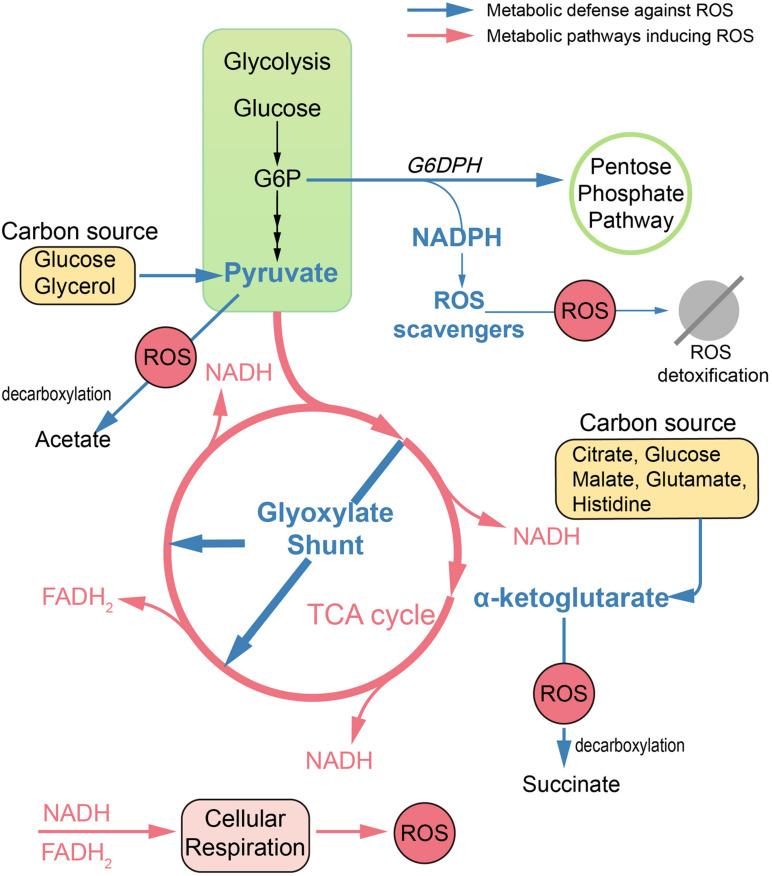
Reactive oxygen species (ROS) are attractive weapons in both antibiotic-mediated killing and host-mediated killing. However, the involvement of ROS in antibiotic-mediated killing and complexities in host environments challenge the paradigm. In the case of bacterial pathogens, the examples of some certain pathogens thriving under ROS conditions prompt us to focus on the adaption mechanism that pathogens evolve to cope with ROS. Based on these, we here summarized the mechanisms of ROS-mediated killing of either antibiotics or the host, the examples of bacterial adaption that successful pathogens evolved to defend or thrive under ROS conditions, and the potential side effects of ROS in pathogen clearance. A brief section for new antibacterial strategies centered around ROS was also addressed.
活性氧(ROS)是抗生素介导的杀伤和宿主介导的杀伤中极具吸引力的武器。然而,ROS在抗生素介导的杀伤中的作用以及宿主环境的复杂性对这一范式提出了挑战。就细菌病原体而言,一些特定病原体在ROS条件下蓬勃生长的例子促使我们关注病原体进化出的应对ROS的适应机制。基于此,我们在此总结了ROS介导的抗生素或宿主杀伤机制、成功病原体进化出的在ROS条件下防御或生长的细菌适应实例,以及ROS在病原体清除中的潜在副作用。还简要介绍了围绕ROS的新型抗菌策略。

 Zotero 插件