
甘蔗/花生间作系统通过改变根际土壤中的氮磷循环和有机质周转来改善土壤理化性质。
Sugarcane/peanut intercropping system improves physicochemical properties by changing N and P cycling and organic matter turnover in root zone soil.
作者信息
Tang Xiumei, Zhang Yixin, Jiang Jing, Meng Xiuzhen, Huang Zhipeng, Wu Haining, He Liangqiong, Xiong Faqian, Liu Jing, Zhong Ruichun, Han Zhuqiang, Tang Ronghua
机构信息
Guangxi Academy of Agricultural Sciences, Cash Crops Research Institute, Nanning, Guangxi, China.
Guangxi Academy of Agricultural Sciences, Guangxi Crop Genetic Improvement and Biotechnology Laboratory, Nanning, Guangxi, China.
出版信息
PeerJ. 2021 Feb 16;9:e10880. doi: 10.7717/peerj.10880. eCollection 2021.
BACKGROUND
The sugarcane/peanut intercropping system is a specific and efficient cropping pattern in South China. Intercropping systems change the bacterial diversity of soils and decrease disease rates. It can not only utilized light, heat, water and land resources efficiently, but also increased yield and economic benefits of farmers.
METHODS
We determined soil nutrients, enzymes and microbes in sugarcane/peanut intercropping system, and analyzed relevance of the soil physicochemical properties and the genes involved in N and P cycling and organic matter turnover by metagenome sequencing.
RESULTS
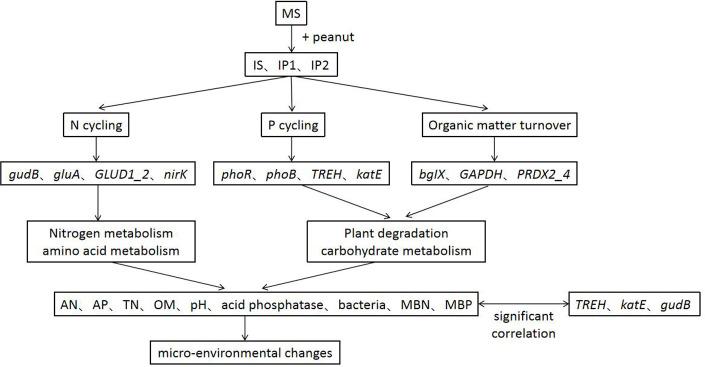
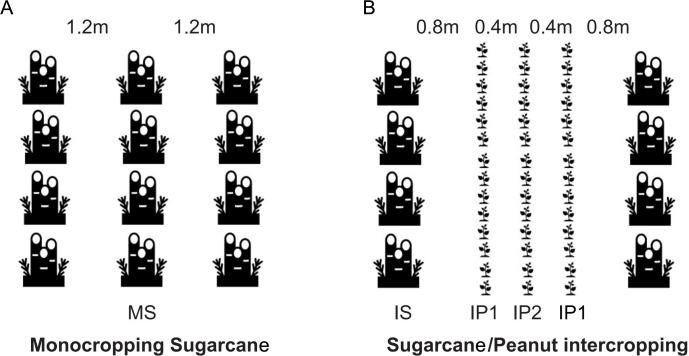
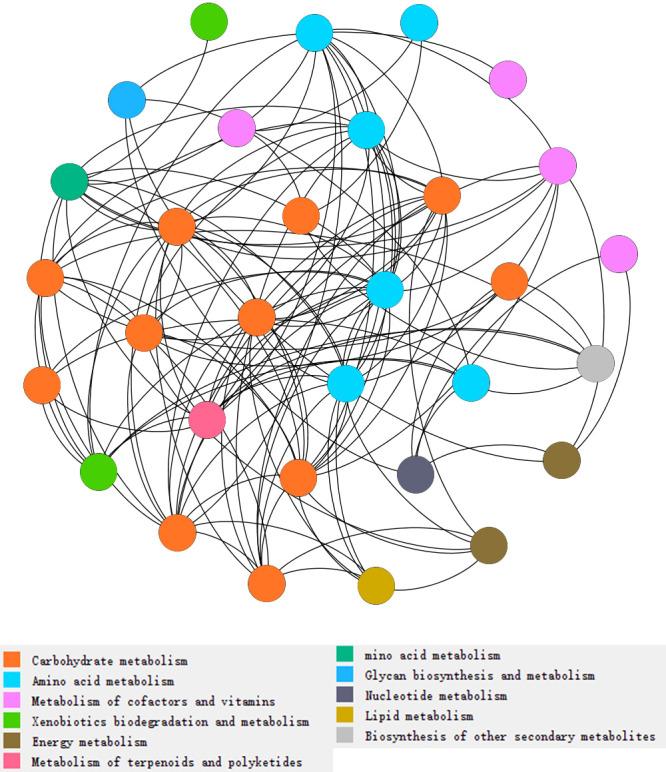
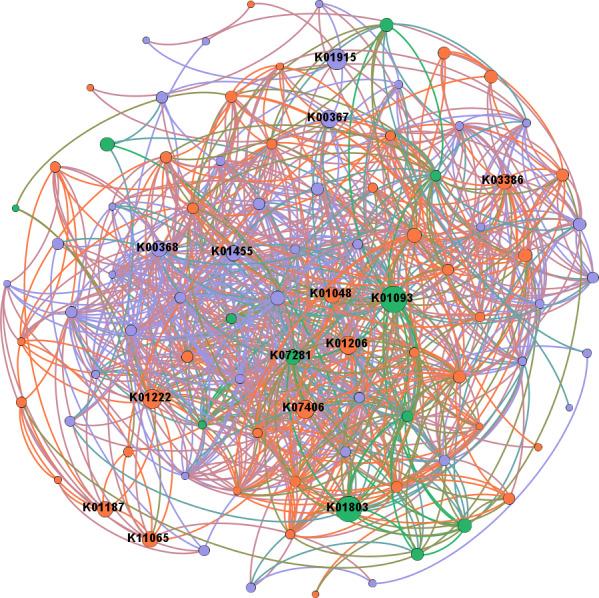
The results showed that sugarcane/peanut intercropping significantly boosted the content of total nitrogen, available phosphorus, total potassium, organic matter, pH value and bacteria and enhanced the activity of acid phosphatase compared to monocropping. Especially the content of available nitrogen, available phosphorus and organic matter increased significantly by 20.1%, 65.3% and 56.0% in root zone soil of IP2 treatment than monocropping treatment. The content of available potassium and microbial biomass carbon, as well as the activity of catalase, sucrase and protease, significantly decreased in intercropping root zone soil. Intercropping resulted in a significant increase by 7.8%, 16.2% and 23.0% in IS, IP1 and IP2, respectively, of the acid phosphatase content relative to MS. Metagenomic analysis showed that the pathways involved in carbohydrate and amino acid metabolism were dominant and more abundant in intercropping than in monocropping. Moreover, the relative abundances of genes related to N cycling (, , ), P cycling (, ) and organic matter turnover () were higher in the intercropping soil than in the monocropping soil. The relative abundance of and were 25.5% and 13.8% higher in the IP2 treatment respectively,and was higher in IS treatment compared to the monocropping treatment. Genes that were significantly related to phosphorus metabolism and nitrogen metabolism (, , ) were more abundant in intercropping than in monocropping.
CONCLUSION
The results of this study indicate that the intercropping system changed the numbers of microbes as well as enzymes activities, and subsequently regulate genes involved in N cycling, P cycling and organic matter turnover. Finally, it leads to the increase of nutrients in root zone soil and improved the soil environment.
背景
甘蔗/花生间作系统是中国南方一种独特且高效的种植模式。间作系统会改变土壤细菌多样性并降低发病率。它不仅能高效利用光、热、水和土地资源,还能提高产量和农民的经济效益。
方法
我们测定了甘蔗/花生间作系统中的土壤养分、酶和微生物,并通过宏基因组测序分析了土壤理化性质与参与氮、磷循环及有机质周转的基因之间的相关性。
结果
结果表明,与单作相比,甘蔗/花生间作显著提高了全氮、有效磷、全钾、有机质、pH值和细菌含量,并增强了酸性磷酸酶的活性。特别是IP2处理根际土壤中有效氮、有效磷和有机质含量比单作处理分别显著增加了20.1%、65.3%和56.0%。间作根际土壤中有效钾和微生物生物量碳含量以及过氧化氢酶、蔗糖酶和蛋白酶的活性显著降低。间作导致IS、IP1和IP2处理的酸性磷酸酶含量相对于MS分别显著增加了7.8%、16.2%和23.0%。宏基因组分析表明,参与碳水化合物和氨基酸代谢的途径在间作中占主导地位且比单作更为丰富。此外,间作土壤中与氮循环(、、)、磷循环(、)和有机质周转()相关的基因相对丰度高于单作土壤。IP2处理中 和 的相对丰度分别比单作高25.5%和13.8%,IS处理中 相对于单作处理更高。与磷代谢和氮代谢显著相关的基因(、、)在间作中比单作更为丰富。
结论
本研究结果表明,间作系统改变了微生物数量和酶活性,随后调节了参与氮循环、磷循环和有机质周转的基因。最终,导致根际土壤养分增加并改善了土壤环境。




 Zotero 插件