
夜间臭氧吸收对植物的危害比同等白天通量更大。
Ozone uptake at night is more damaging to plants than equivalent day-time flux.
机构信息
Plant and Microbial Biology, School of Natural and Environmental Science [SNES], Devonshire Building, Newcastle University, Newcastle Upon Tyne, NE1 7RU, UK.
School of Agricultural Sciences, Hellenic Mediterranean University, P.O. Box 1939, GR-71004, Heraklion, Crete, Greece.
出版信息
Planta. 2021 Feb 24;253(3):75. doi: 10.1007/s00425-021-03580-w.
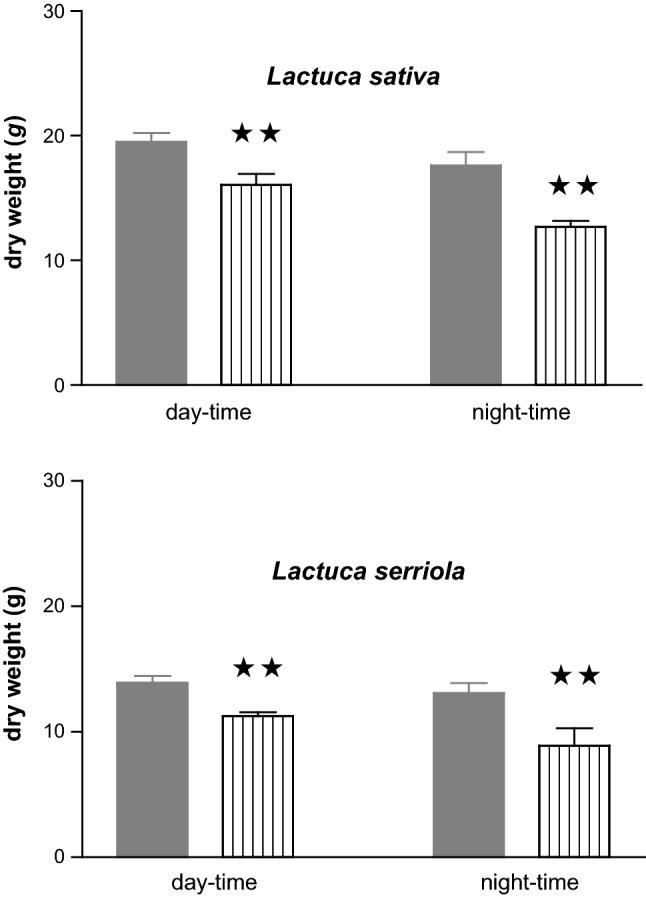
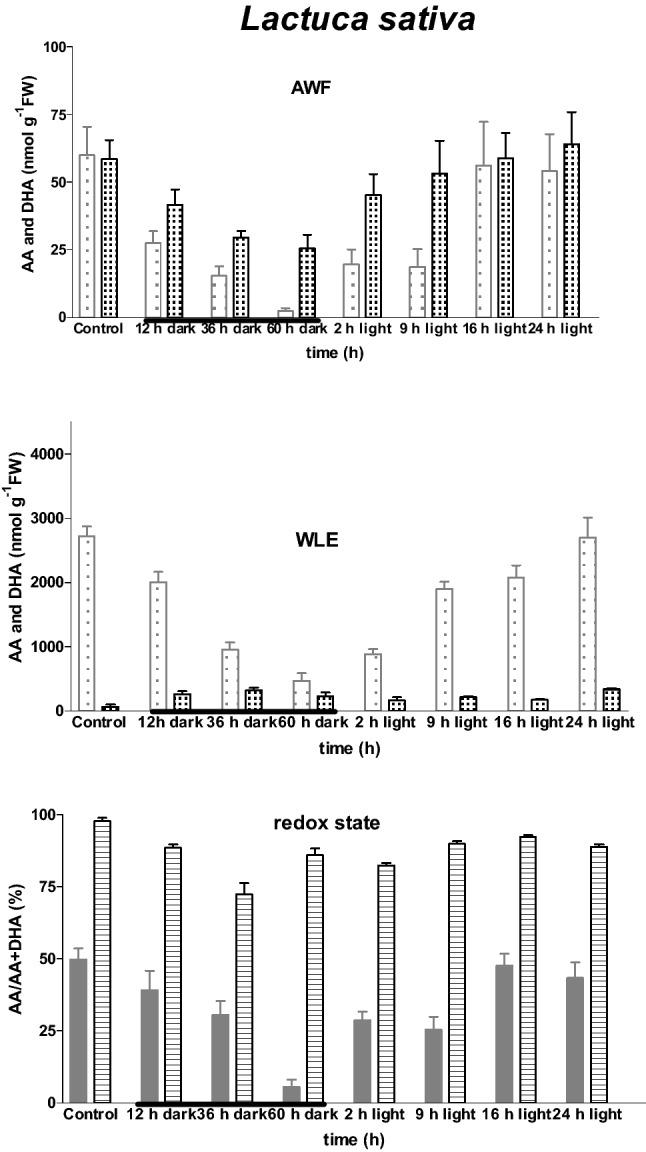
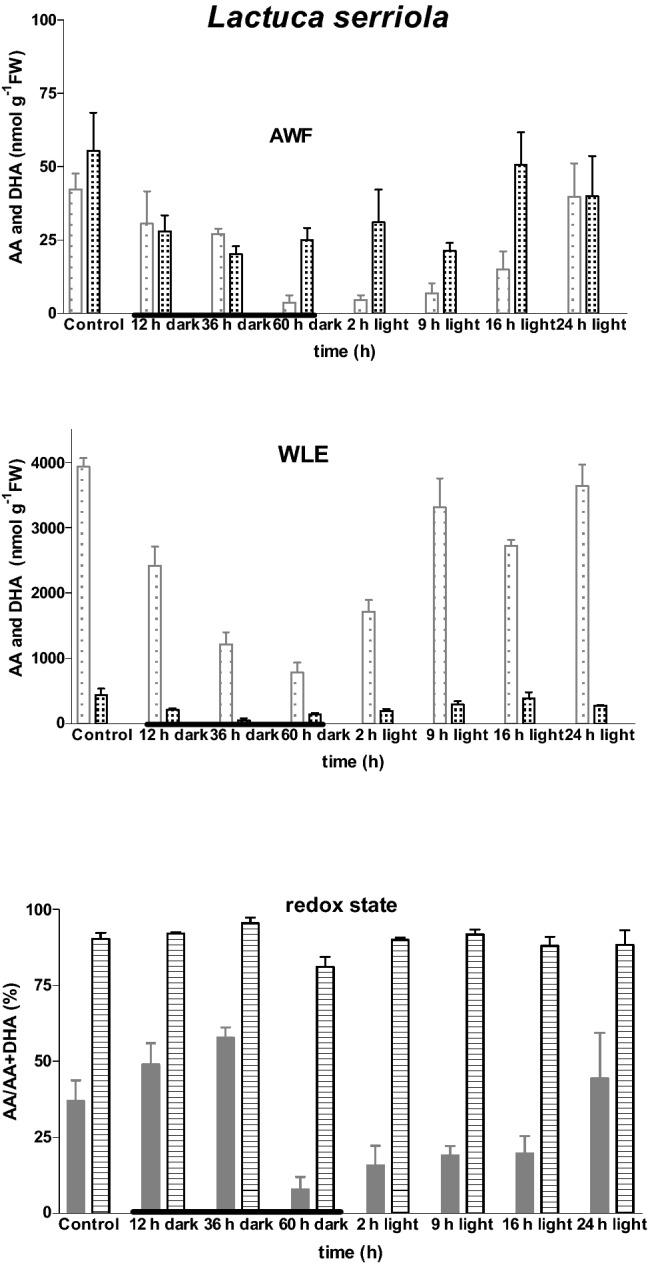
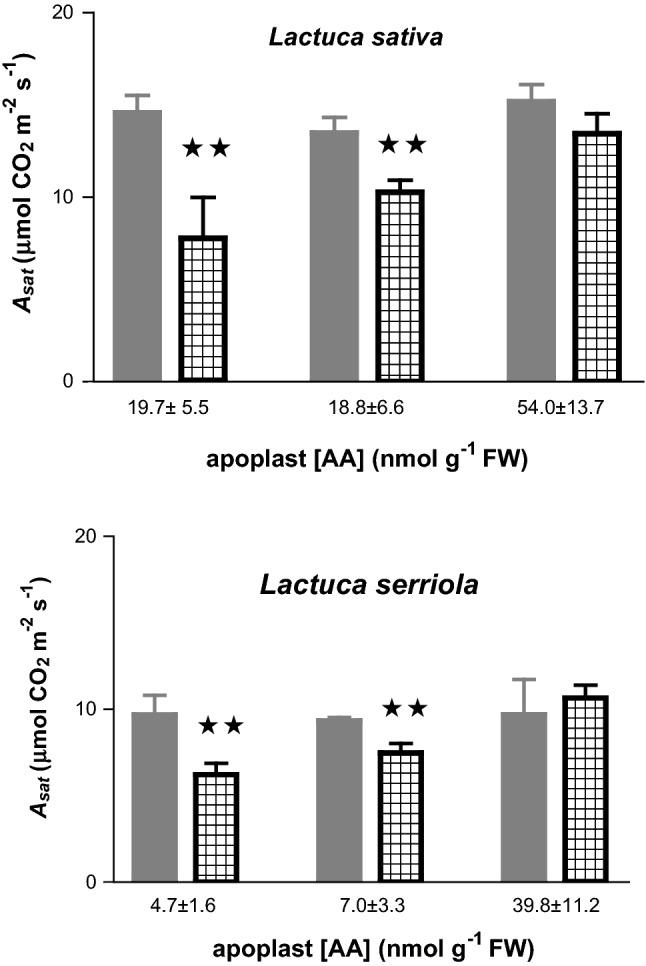
Plants exposed to equivalent ozone fluxes administered during day-time versus night-time exhibited greater losses in biomass at night and this finding is attributed to night-time depletion of cell wall-localised ascorbate. The present study employed Lactuca sativa and its closest wild relative, L. serriola, to explore the relative sensitivity of plants to ozone-induced oxidative stress during day-time versus night-time. By controlling atmospheric ozone concentration and measuring stomatal conductance, equivalent ozone uptake into leaves was engineered during day and night, and consequences on productivity and net CO assimilation rate were determined. Biomass losses attributable to ozone were significantly greater when an equivalent dose of ozone was taken-up by foliage at night compared to the day. Linkages between ozone impacts and ascorbic acid (AA) content, redox status and cellular compartmentation were probed in both species. Leaf AA pools were depleted by exposure of plants to darkness, and then AA levels in the apoplast and symplast were monitored on subsequent transfer of plants to the light. Apoplast AA appeared to be more affected by light-dark transition than the symplast pool. Moreover, equivalent ozone fluxes administered to leaves with contrasting AA levels resulted in contrasting effects on the light-saturated rate of CO assimilation (A) in both species. Once apoplast AA content recovered to pre-treatment levels, the same ozone flux resulted in no impacts on A. The results of the present investigation reveal that plants are significantly more sensitive to equivalent ozone fluxes taken-up at night compared with those during the day and were consistent with diel shifts in apoplast AA content and/or redox status. Furthermore, findings suggest that some thought should be given to weighing regional models of ozone impacts for extraordinary night-time ozone impacts.
植物在白天和夜间暴露于等效臭氧通量下,夜间生物量损失更大,这一发现归因于细胞壁定位抗坏血酸在夜间的消耗。本研究利用生菜及其最接近的野生种,莴苣 serriola,来探索植物在白天和夜间对臭氧诱导的氧化应激的相对敏感性。通过控制大气臭氧浓度并测量气孔导度,在白天和夜间工程化控制叶片内等效的臭氧吸收,然后确定对生产力和净 CO 同化率的影响。当等量的臭氧在夜间被叶片吸收时,臭氧对生物量的损失明显大于白天。在两个物种中探测了臭氧影响与抗坏血酸 (AA) 含量、氧化还原状态和细胞区室化之间的联系。植物暴露在黑暗中会使叶片 AA 库耗竭,然后监测 AA 水平在随后将植物转移到光下时在质外体和共质体中的变化。质外体 AA 似乎比共质体库更容易受到光暗转换的影响。此外,对具有不同 AA 水平的叶片施加等效臭氧通量会对两种物种的光饱和 CO 同化率 (A) 产生不同的影响。一旦质外体 AA 含量恢复到预处理水平,相同的臭氧通量就不会对 A 产生影响。本研究的结果表明,与白天相比,植物对夜间吸收的等效臭氧通量更为敏感,这与质外体 AA 含量和/或氧化还原状态的日变化一致。此外,研究结果表明,在评估臭氧影响的区域模型时,应该考虑到夜间臭氧影响的异常情况。
 Zotero 插件