
头颈癌患者在联合肿瘤治疗期间调节性T淋巴细胞血液百分比变化的分析:初步报告。
The analysis of Treg lymphocyte blood percentage changes in patients with head and neck cancer during combined oncological treatment: a preliminary report.
作者信息
Dutsch-Wicherek Magdalena, Chaberek Katarzyna, Makarewicz Adrianna, Antoni S Ierant, Witwicki Jacek, Bielecki Ireneusz, Wicherek Łukasz
机构信息
Center of Postgraduate Medical Education (CMKP), Warsaw, Poland.
nd Department of Obstetrics and Gynaecology, Center of Postgraduate Medical Education (CMKP), Warsaw, Poland.
出版信息
Cent Eur J Immunol. 2020;45(4):409-413. doi: 10.5114/ceji.2020.103417. Epub 2021 Jan 30.
INTRODUCTION
In patients with cancer, Treg lymphocytes seem to play an important role in promoting tumour growth. The number of circulating Treg cells has been associated with poor survival among patients suffering from various types of cancers. The aim of the present study was to evaluate the changes in the percentage levels of Treg lymphocytes in the blood samples of patients with head and neck cancer during combined treatment with respect to the stage of the disease and the intensity of the radiation reaction as monitored using the Dische scale.
MATERIAL AND METHODS
Peripheral blood samples were collected from 20 head and neck cancer patients prior to the combined oncological treatment, during, and then one week after the completion of the therapy.
RESULTS
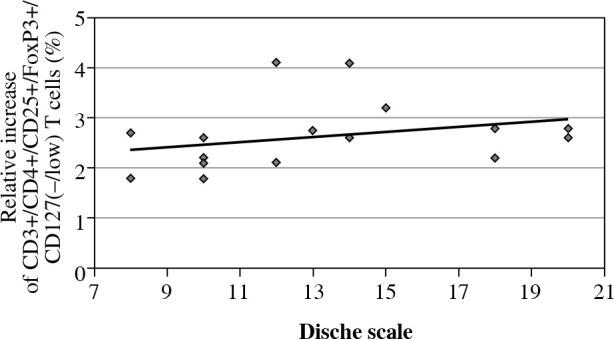
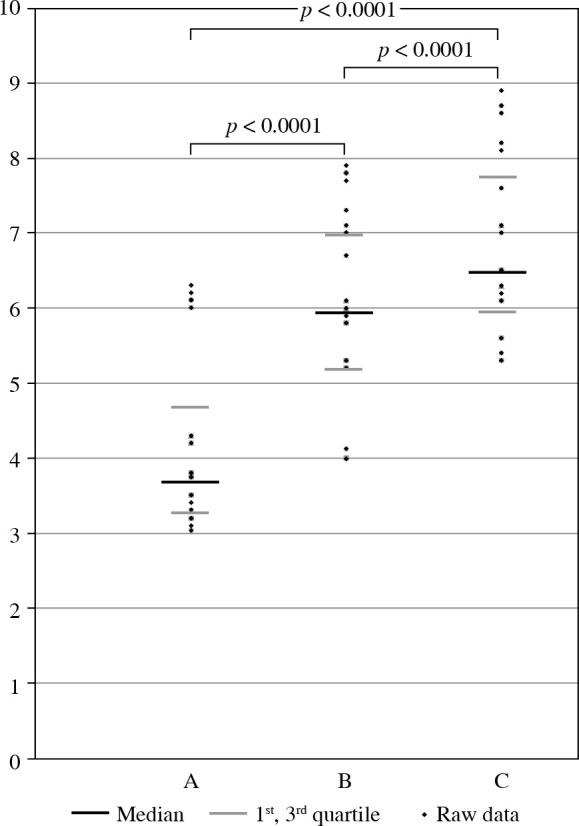
A statistically significantly higher percentage of CD3/CD4/CD25/FoxP3/CD127(/low) T cells within the CD3/CD4 T cell population was detected in patients during radiotherapy (RTH), chemotherapy (CTH), and chemoradiotherapy (CRT) than before the treatment began (p < 0.0001). A statistically significantly higher percentage of CD3/CD4/CD25/FoxP3/CD127(/low) T cells within the CD3/CD4 T cell population was detected after RTH/CRT than before treatment, with respect to the radiation reaction as evaluated using the Dische scale (p = 0.0150).
CONCLUSIONS
The increase in the percentage of Treg cells correlated with an increase in the intensity of the radiation reaction measured using the Dische scale which indicates the advance of the oral mucositis reaction to RTH. In conclusion, because the role of Treg lymphocytes in cancer patients is complex, it is necessary to monitor the percentages of these cells in patients during combined oncological therapies.
引言
在癌症患者中,调节性T淋巴细胞(Treg)似乎在促进肿瘤生长方面发挥着重要作用。循环Treg细胞的数量与各类癌症患者的不良生存情况相关。本研究的目的是评估头颈癌患者在联合治疗期间,血液样本中Treg淋巴细胞百分比水平的变化,这些变化与疾病分期以及使用迪斯切量表监测的放射反应强度有关。
材料与方法
从20名头颈癌患者身上采集外周血样本,分别在联合肿瘤治疗前、治疗期间以及治疗完成后一周采集。
结果
在放疗(RTH)、化疗(CTH)和放化疗(CRT)期间,患者CD3/CD4 T细胞群体中CD3/CD4/CD25/FoxP3/CD127(/低)T细胞的百分比在统计学上显著高于治疗开始前(p < 0.0001)。就使用迪斯切量表评估的放射反应而言,RTH/CRT后检测到的CD3/CD4 T细胞群体中CD3/CD4/CD25/FoxP3/CD127(/低)T细胞的百分比在统计学上显著高于治疗前(p = 0.0150)。
结论
Treg细胞百分比的增加与使用迪斯切量表测量的放射反应强度增加相关,这表明口腔黏膜炎反应对RTH的进展。总之,由于Treg淋巴细胞在癌症患者中的作用复杂,在联合肿瘤治疗期间监测这些细胞在患者中的百分比是必要的。

 Zotero 插件