
与胰腺癌5年以上生存率相关的人口统计学因素的生存分析
Survival Analysis of Demographic Factors Associated With 5+ Year Survival of Pancreatic Carcinoma.
作者信息
Anama-Green Chris, Quinn Megan
机构信息
Health Science and Education, University of the People, Pasadena, USA.
Education, University of the Cumberlands, Williamsburg, USA.
出版信息
Cureus. 2021 Jan 31;13(1):e13032. doi: 10.7759/cureus.13032.
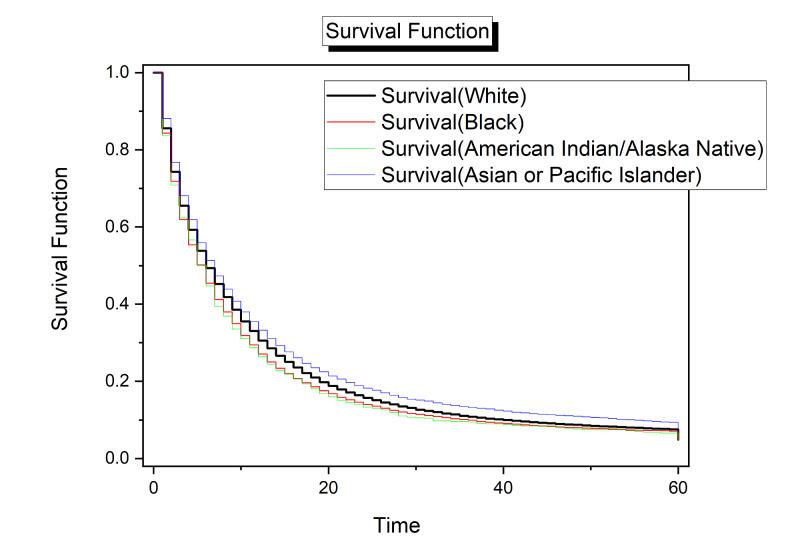
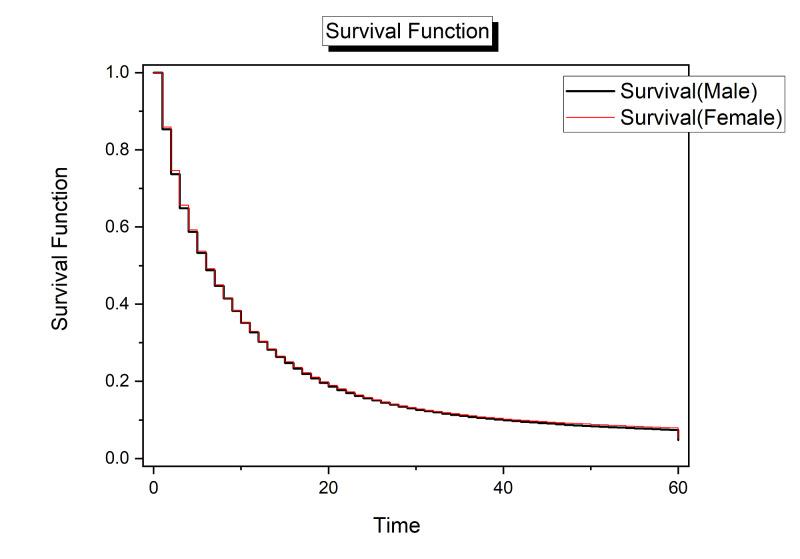
Background Although pancreatic cancer incidence is low at 13.1 per 100,000 people, this cancer is difficult to treat and carries a poor 5-year survival rate. Additionally, pancreatic cancer survival rates vary disproportionately based on age and race. The objective of this study was to evaluate the association between 5-year survival of pancreatic cancer and the basic demographic factors age, race, and sex. Methods Data were retrieved from the National Cancer Institute's Surveillance, Epidemiology, and End Results (SEER) 18 database, spanning from 2000-2017, using SEER*Stat. SPSS was used to calculate descriptive statistics for vital status, age, race, and sex. Odds ratios with confidence intervals were calculated using Epi Info. Case data were used to conduct survival analysis by age, race, and sex using OriginPro. Results Out of a total of 118,581 cases, 79.3% were White (n = 106,887), 12.5% were Black (n = 16,866), 7.4% were Asian or Pacific Islander (n = 9,960), 0.6% were American Indian/Alaskan Native (n = 792), and 0.2% were unknown race (n = 321). The odds ratio (OR) of dying before reaching 5+ survival was lowest for the Asian or Pacific Islander group (OR = 0.70, 95% CI: 0.66 - 0.74), followed by the group of Black patients (OR = 1.07, 95% CI: 1.02 - 1.13), the White patients group (OR = 1.12, 95% CI: 1.08 - 1.17), and the American Indian/Alaskan Native group (OR = 1.12, 95% CI: 0.89 - 1.40). The largest age group was 65-69 years old, comprising 14.7% (n = 19,866) of the dataset. Probability of 5+ year survival for pancreatic cancer patients was highest for the age group 15-19 years (n = 74). In general, 5+ year survival probability declined with age. Risk of death before reaching 5+ year pancreatic cancer survival was slightly higher in men (OR = 1.03, 95% CI: 1.00 - 1.07), who comprised 50.9% (n = 68,628) of the dataset. Discussion Findings from this study corroborate differences by age, race, and sex discussed in the literature. Differences in survival rates by race depart from some findings in literature documenting no significant differences in treatment outcome by race. Controlling for age in a future study in both race and sex survival probability analyses may be helpful. Further, stratifying by sex in survival probability analysis by race would be illuminating. In addition to survival analysis, regression modeling would be a useful next step.
背景
尽管胰腺癌的发病率较低,为每10万人中有13.1人发病,但这种癌症难以治疗,5年生存率很低。此外,胰腺癌的生存率因年龄和种族的不同而极不均衡。本研究的目的是评估胰腺癌5年生存率与年龄、种族和性别这些基本人口统计学因素之间的关联。
方法
使用SEER*Stat从美国国家癌症研究所的监测、流行病学和最终结果(SEER)18数据库中检索2000年至2017年的数据。使用SPSS计算生命状态、年龄、种族和性别的描述性统计数据。使用Epi Info计算带有置信区间的比值比。使用OriginPro通过年龄、种族和性别对病例数据进行生存分析。
结果
在总共118,581例病例中,79.3%为白人(n = 106,887),12.5%为黑人(n = 16,866),7.4%为亚裔或太平洋岛民(n = 9,960),0.6%为美洲印第安人/阿拉斯加原住民(n = 792),0.2%为种族未知(n = 321)。在达到5年以上生存期之前死亡的比值比(OR)在亚裔或太平洋岛民组中最低(OR = 0.70,95%置信区间:0.66 - 0.74),其次是黑人患者组(OR = 1.07,95%置信区间:1.02 - 1.13)、白人患者组(OR = 1.12,95%置信区间:1.08 - 1.17)和美洲印第安人/阿拉斯加原住民组(OR = 1.12,95%置信区间:0.89 - 1.40)。最大的年龄组是65 - 69岁,占数据集的14.7%(n = 19,866)。胰腺癌患者5年以上生存期的概率在15 - 19岁年龄组中最高(n = 74)。一般来说,5年以上生存期的概率随年龄下降。在达到5年以上胰腺癌生存期之前死亡的风险在男性中略高(OR = 1.03,95%置信区间:1.00 - 1.07),男性占数据集的50.9%(n = 68,628)。
讨论
本研究的结果证实了文献中所讨论的年龄、种族和性别差异。种族之间生存率的差异与文献中的一些发现不同,文献记录显示种族在治疗结果上没有显著差异。在未来关于种族和性别生存概率分析的研究中控制年龄可能会有所帮助。此外,在按种族进行生存概率分析时按性别分层将具有启发性。除了生存分析之外,回归建模将是下一步有用的措施。

 Zotero 插件