
欧洲及周边地区的“同一健康”认知与实践情况调查
A Survey on One Health Perception and Experiences in Europe and Neighboring Areas.
机构信息
Department of Veterinary Science, University of Turin, Grugliasco-Turin, Italy.
Scientific Veterinary Institute "Novi Sad", Novi Sad, Serbia.
出版信息
Front Public Health. 2021 Feb 17;9:609949. doi: 10.3389/fpubh.2021.609949. eCollection 2021.
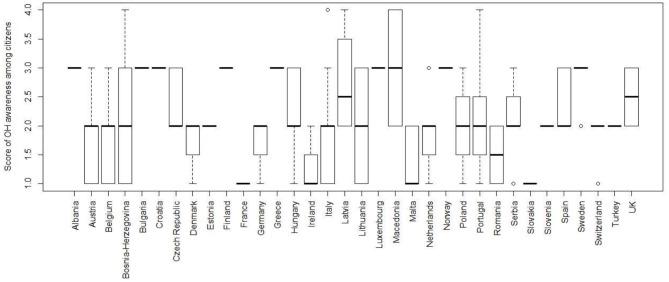
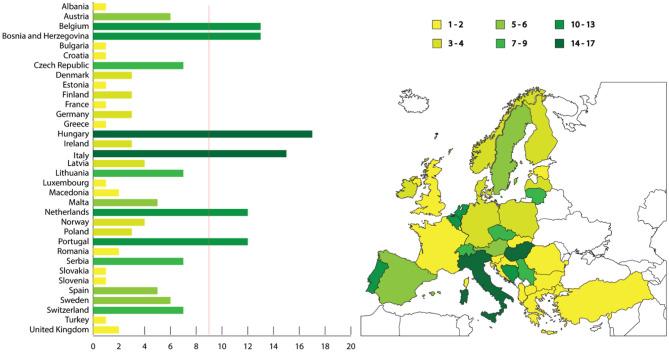
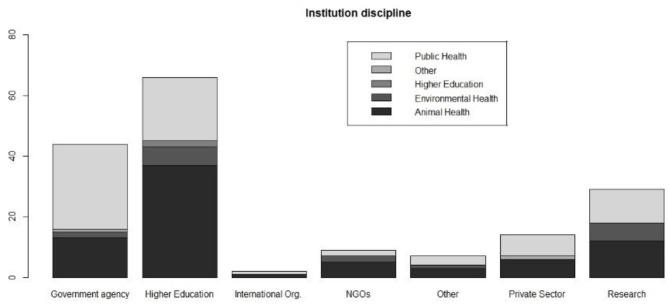
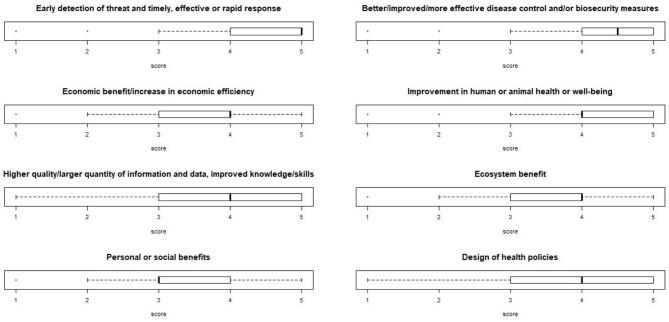
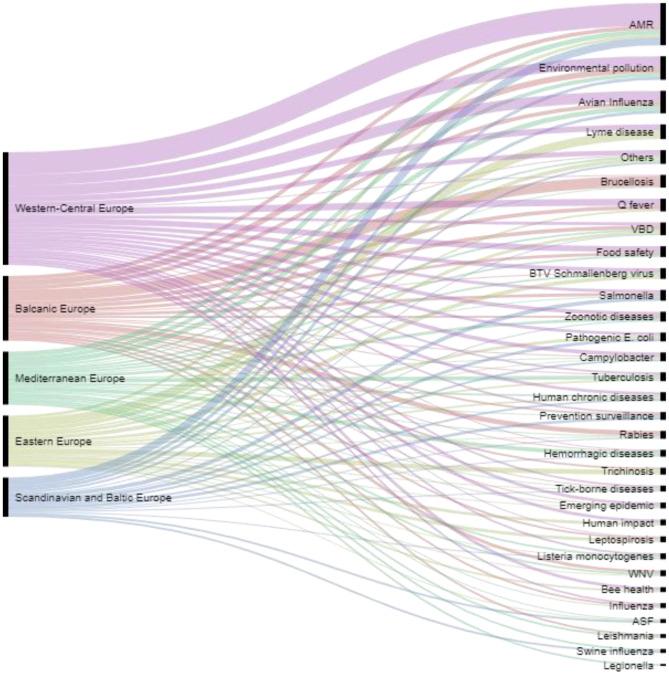
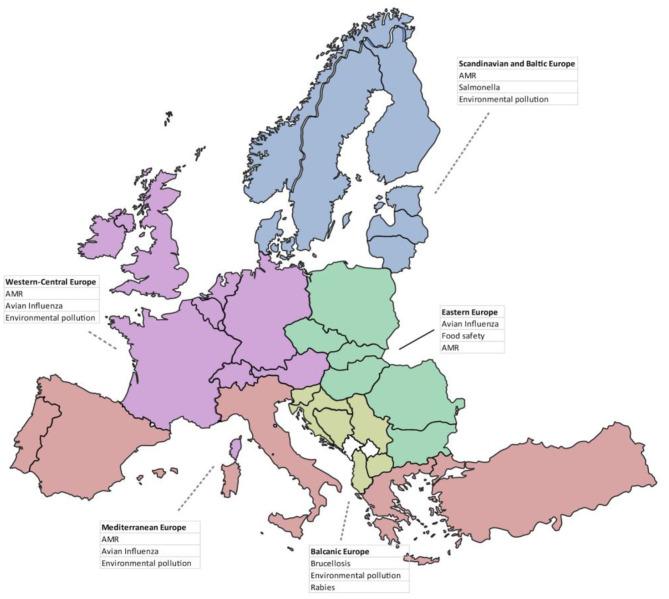
A questionnaire survey was promoted under the COST Actions " and ", from June 2016 to April 2017, to collect information on the existence of One Health (OH) collaboration and implementation of OH initiatives in 37 EU COST Countries. The questionnaire was to be answered by key respondents representing the three major OH components: (i). Animal Health; (ii). Human Health/Public Health; (iii). Environmental Health. A target respondent rate of nine respondents/country was aimed for, representing the following categories: (i). ministries; (ii). academia-research; (iii). private sector and NGOs, associations and scientific societies. The questionnaire, composed of 27 questions organized in six sections, was circulated to target respondents by Committee Members of the two COST actions. A total of 171 respondents from 34 countries completed the questionnaire, mainly belonging to academic and research institutions (55.5%), and to Animal Health/Animal Science fields (53.8%). Although the majority (57.9%) declared they had heard about OH, few respondents (10.7%) provided a complete definition. The "human" and "animal" elements prevailed over other key elements of OH definition (ecosystem, intersectoral, transdisciplinary, holistic, collaboration). Overall, 62.6% respondents declared to take part in OH initiatives. Antimicrobial resistance, avian influenza and environmental pollution were cited as the top three OH issues over the past 5 years. Limitations and gaps in intersectoral collaboration included communication and organizational problems resulting in poor networking, differing priorities and a lack of understanding between sectors. Regarding control and monitoring of zoonotic diseases, respondents from different sectors preferentially selected their own directorates/ministries while actually in most countries both Ministry of Health and Ministry of Agriculture are engaged. According to respondents, the level of awareness of OH amongst the general public is limited. Similarly, a dearth of opportunities of collaborations at different institutional and/or professional levels was described. Our survey provided an overview of how respondents in COST countries perceived and experienced OH and current limits to OH implementation. Identifying how initiatives are currently working and knowing the promoting and hindering factors allowed suggesting strategies to promote efficiency and effectiveness of OH implementation in the future.
一项问卷调查研究于 2016 年 6 月至 2017 年 4 月在 COST 行动“和”下开展,旨在收集 37 个欧盟 COST 国家内的“同一健康”(One Health,OH)协作和 OH 倡议实施的相关信息。问卷由代表 OH 三大组成部分的主要应答者回答:(一)动物健康;(二)人类健康/公共卫生;(三)环境卫生。目标应答者覆盖率为每个国家 9 名应答者,代表以下类别:(一)部委;(二)学术界-研究;(三)私营部门和非政府组织、协会和科学学会。问卷由两个 COST 行动的委员会成员分发给目标应答者,共 27 个问题,分为六个部分。共有来自 34 个国家的 171 名应答者完成了问卷,主要来自学术和研究机构(55.5%),以及动物健康/动物科学领域(53.8%)。尽管大多数应答者(57.9%)听说过 OH,但很少有应答者(10.7%)给出完整的定义。“人”和“动物”元素超过 OH 定义的其他关键元素(生态系统、跨部门、跨学科、整体、协作)。总体而言,62.6%的应答者表示参与了 OH 倡议。过去 5 年中,抗生素耐药性、禽流感和环境污染被列为 OH 的前三大问题。跨部门协作的局限性和差距包括沟通和组织问题,导致网络不佳、优先事项不同以及部门之间缺乏理解。关于人畜共患疾病的控制和监测,来自不同部门的应答者优先选择自己的主管部门/部委,而实际上在大多数国家,卫生部门和农业部门都参与其中。根据应答者的说法,公众对 OH 的认识有限。同样,还描述了不同机构和/或专业层面合作机会不足的情况。我们的调查概述了 COST 国家的应答者如何看待和体验 OH 以及当前 OH 实施的限制。确定当前倡议的运作方式并了解促进和阻碍因素,使我们能够提出未来促进 OH 实施效率和效果的策略。


 Zotero 插件