
关于哥伦比亚和一些拉丁美洲国家的“One Health”方法的调查:从碎片化的卫生组织到综合卫生应对全球挑战。
A Survey on One Health Approach in Colombia and Some Latin American Countries: From a Fragmented Health Organization to an Integrated Health Response to Global Challenges.
机构信息
Epidemiology and Public Health Research Group, Veterinary Medicine Program, School of Agricultural Sciences, Universidad de La Salle, Bogotá, Colombia.
Veterinary Medicine Program, School of Agricultural Sciences, Universidad de La Salle, Bogotá, Colombia.
出版信息
Front Public Health. 2021 Oct 25;9:649240. doi: 10.3389/fpubh.2021.649240. eCollection 2021.
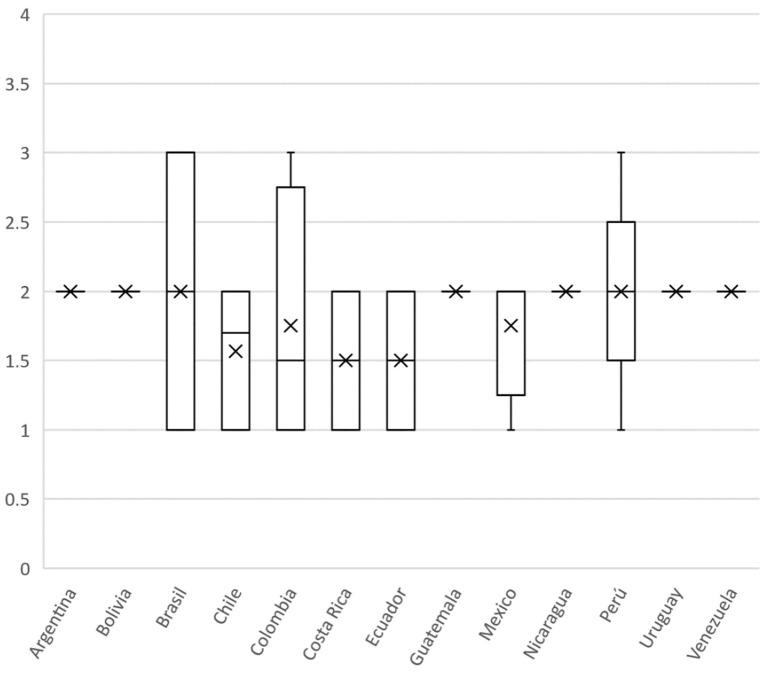
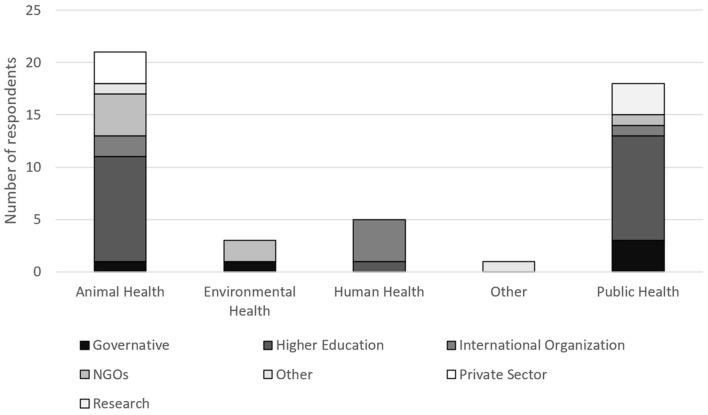
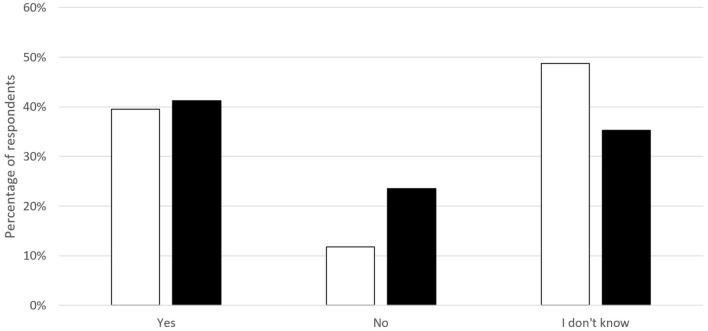
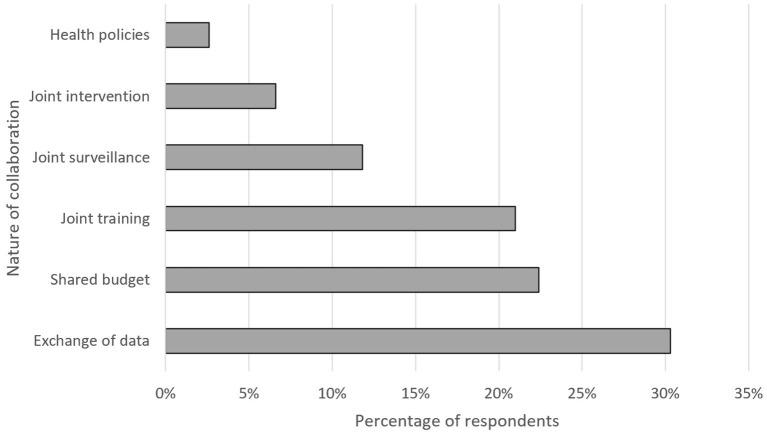
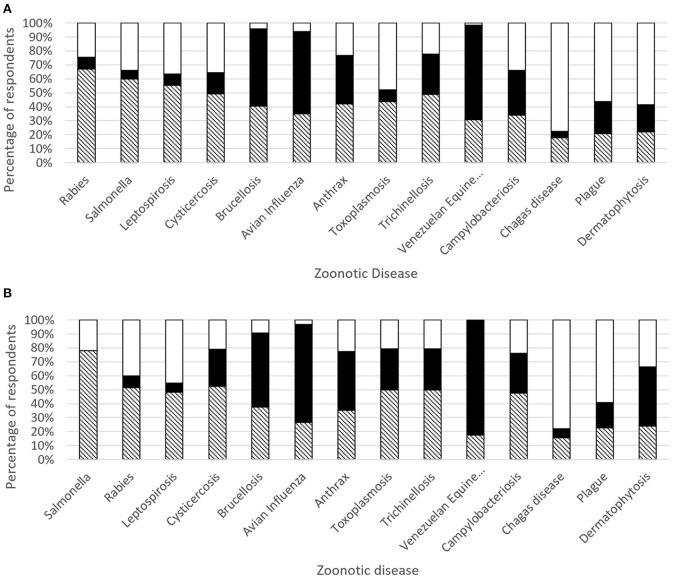
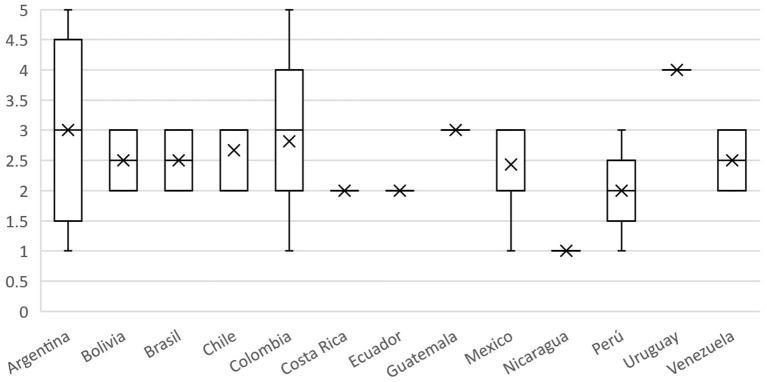
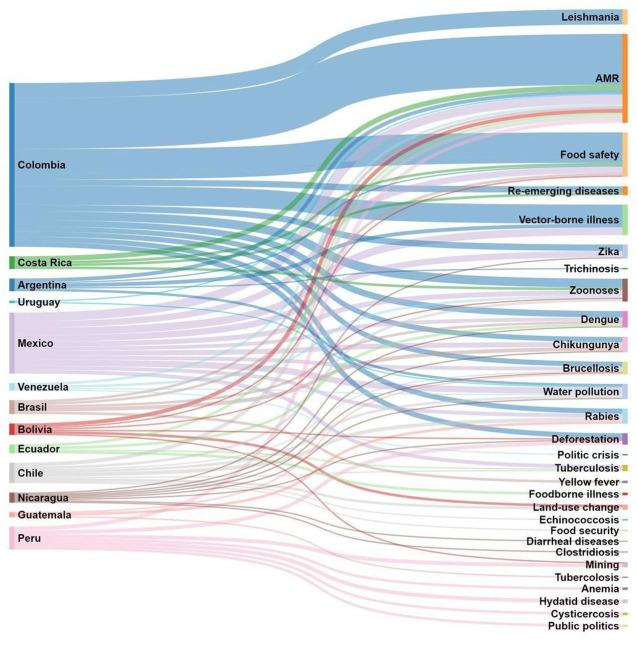
The "One Health" (OH) approach has been recognized by world health authorities such as FAO/OIE/WHO, advocating for effective, multi-sectoral, and transdisciplinary collaboration. However, there is a lack of published evidence of the awareness of the OH concept in Colombia and other countries in the Latin American Region. In order to explore existing collaboration amongst the animal health, human-public health, environmental health sectors, and to describe the perception, knowledge, and barriers on OH in Colombia and other countries of Latin America, an online questionnaire-based survey was distributed among key professionals representing the three OH pillars (August 2018-August 2020). Overall, 76 key respondents from 13 countries (Colombia, México, Chile, Brazil, Argentina, Bolivia, Costa Rica, Ecuador, Perú, Guatemala, Nicaragua Uruguay, and Venezuela) completed the questionnaire. Respondents worked in institutions of animal (59%), public (20%), human (7%), and environmental health (7%); they mainly belonged to higher academic institutions (59%), followed by ministries (11%), and research organizations (9%). Most participants (92%) were familiar with the OH term and 68% were aware of the formal cooperation among sectors in their countries, mostly on zoonoses; in 46% of the cases, such connections were established in the last 5 years. The main reported limiting factors to intersectorality were the lack of commitment of policy-makers, resources, and budget for OH (38%) and the "siloed approach" of sectors and disciplines (34%). Respondents ranked a median score of 3.0 (1-5 scoring) in how good OH activities are implemented in their countries, and a median score of 2.0 in the citizen awareness on OH as regards their countries. The most important OH issues were identified in vector-borne diseases, rabies, wrong and/or improper use of antimicrobials, emerging viral diseases, food-borne diseases, neglected parasitic diseases, deforestation, and ecosystem fragmentation. Although there is a high-perceived importance on conjoint cooperation, OH implementation, and operationalization remain weak, and the environmental component is not well-integrated. We consider that integration and implementation of the OH Approach can support countries to improve their health policies and health governance as well as to advocate the social, economic, and environmental sustainability of the Region.
“One Health”(同一健康)方法得到了粮农组织/世界动物卫生组织/世界卫生组织等世界卫生当局的认可,倡导采取有效、多部门和跨学科的合作。然而,在哥伦比亚和拉丁美洲其他国家,缺乏有关同一健康概念意识的已发表证据。为了探索动物健康、人类公共卫生和环境卫生部门之间现有的合作,并描述哥伦比亚和拉丁美洲其他国家对同一健康的看法、知识和障碍,我们于 2018 年 8 月至 2020 年 8 月期间向代表同一健康三大支柱的关键专业人员分发了在线问卷调查。共有来自 13 个国家(哥伦比亚、墨西哥、智利、巴西、阿根廷、玻利维亚、哥斯达黎加、厄瓜多尔、秘鲁、危地马拉、尼加拉瓜、乌拉圭和委内瑞拉)的 76 名关键受访者完成了问卷调查。受访者在动物(59%)、公共(20%)、人类(7%)和环境卫生(7%)机构工作;他们主要来自高等学术机构(59%),其次是部委(11%)和研究组织(9%)。大多数参与者(92%)熟悉同一健康术语,68%的人了解本国各部门之间的正式合作,主要是关于人畜共患病;在 46%的情况下,此类联系是在过去 5 年内建立的。报告的限制跨部门合作的主要因素是决策者缺乏承诺、资源和同一健康预算(38%)以及部门和学科的“筒仓方法”(34%)。受访者在如何评价本国同一健康活动的实施情况方面的平均得分为 3.0(1-5 分制),在公民对本国同一健康的认识方面的平均得分为 2.0。确定的最重要的同一健康问题是媒介传播疾病、狂犬病、错误和/或不适当使用抗生素、新出现的病毒性疾病、食源性疾病、被忽视的寄生虫病、森林砍伐和生态系统破碎化。尽管人们普遍认为联合合作很重要,但同一健康的实施和运作仍然薄弱,环境部分也没有很好地融入。我们认为,同一健康方法的整合和实施可以支持各国改善其卫生政策和卫生治理,并倡导该地区的社会、经济和环境可持续性。



 Zotero 插件