
颗粒物暴露浓度和持续时间对支气管上皮细胞转录组和DNA甲基化组的影响。
Effect of concentration and duration of particulate matter exposure on the transcriptome and DNA methylome of bronchial epithelial cells.
作者信息
Huang Steven K, Tripathi Priya, Koneva Lada A, Cavalcante Raymond G, Craig Nathan, Scruggs Anne M, Sartor Maureen A, Deng Furong, Chen Yahong
机构信息
Division of Pulmonary and Critical Care Medicine, Department of Internal Medicine, University of Michigan Medical School, 6301 MSRB III, 1150 W Medical Center Drive, Ann Arbor, MI 48109, USA.
Department of Computational Medicine and Bioinformatics, University of Michigan Medical School, Ann Arbor, Room 2017, Palmer Commons 100 Washtenaw Avenue Ann Arbor, MI 48109-2218, USA.
出版信息
Environ Epigenet. 2021 Feb 28;7(1):dvaa022. doi: 10.1093/eep/dvaa022. eCollection 2021.
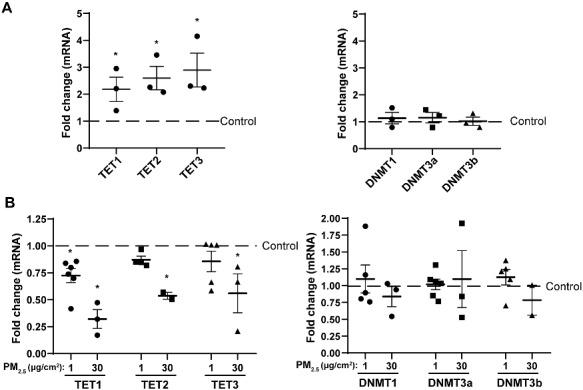
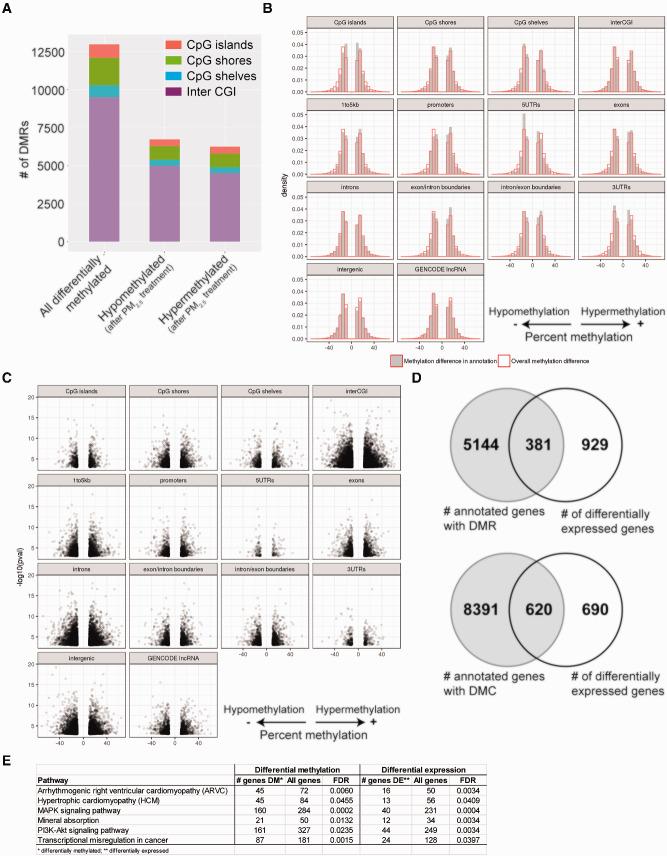
Exposure to particulate matter (PM) from ambient air pollution is a well-known risk factor for many lung diseases, but the mechanism(s) for this is not completely understood. Bronchial epithelial cells, which line the airway of the respiratory tract, undergo genome-wide level changes in gene expression and DNA methylation particularly when exposed to fine (<2.5 µm) PM (PM). Although some of these changes have been reported in other studies, a comparison of how different concentrations and duration of exposure affect both the gene transcriptome and DNA methylome has not been done. Here, we exposed BEAS-2B, a bronchial epithelial cell line, to different concentrations of PM, and compared how single or repeated doses of PM affect both the transcriptome and methylome of cells. Widespread changes in gene expression occurred after cells were exposed to a single treatment of high-concentration (30 µg/cm) PM for 24 h. These genes were enriched in pathways regulating cytokine-cytokine interactions, Mitogen-Activated Protein Kinase (MAPK) signaling, PI3K-Akt signaling, IL6, and P53. DNA methylomic analysis showed that nearly half of the differentially expressed genes were found to also have DNA methylation changes, with just a slightly greater trend toward overall hypomethylation across the genome. Cells exposed to a lower concentration (1 µg/cm) of PM demonstrated a comparable, but more attenuated change in gene expression compared to cells exposed to higher concentrations. There were also many genes affected by lower concentrations of PM, but not higher concentrations. Additionally, repeated exposure to PM (1 µg/cm) for seven days resulted in transcriptomic and DNA methylomic changes that were distinct from cells treated with PM for only one day. Compared to single exposure, repeated exposure to PM caused a more notable degree of hypomethylation across the genome, though certain genes and regions demonstrated increased DNA methylation. The overall increase in hypomethylation, especially with repeated exposure to PM, was associated with an increase in expression of ten-eleven translocation enzymes. These data demonstrate how variations in concentration and duration of PM exposure induce distinct differences in the transcriptomic and DNA methylomic profile of bronchial epithelial cells, which may have important implications in the development of both acute and chronic lung disease.
暴露于环境空气污染中的颗粒物(PM)是许多肺部疾病的一个众所周知的风险因素,但其作用机制尚未完全明确。呼吸道气道内衬的支气管上皮细胞在基因表达和DNA甲基化方面会发生全基因组水平的变化,尤其是在暴露于细颗粒物(<2.5微米)时(PM)。尽管其他研究已经报道了其中一些变化,但尚未对不同浓度和暴露持续时间如何影响基因转录组和DNA甲基化组进行比较。在这里,我们将支气管上皮细胞系BEAS-2B暴露于不同浓度的PM中,并比较单次或重复剂量的PM如何影响细胞的转录组和甲基化组。细胞在单次暴露于高浓度(30微克/平方厘米)PM 24小时后,基因表达发生了广泛变化。这些基因富集于调节细胞因子-细胞因子相互作用、丝裂原活化蛋白激酶(MAPK)信号传导、PI3K-Akt信号传导、IL6和P53的通路中。DNA甲基化组分析表明,近一半的差异表达基因也存在DNA甲基化变化,全基因组总体上有略微更大的低甲基化趋势。与暴露于较高浓度PM的细胞相比,暴露于较低浓度(1微克/平方厘米)PM的细胞在基因表达上表现出类似但更微弱的变化。也有许多基因受到较低浓度PM的影响,但不受较高浓度的影响。此外,连续七天重复暴露于PM(1微克/平方厘米)导致的转录组和DNA甲基化组变化与仅暴露一天的细胞不同。与单次暴露相比,重复暴露于PM导致全基因组范围内低甲基化程度更显著,尽管某些基因和区域表现出DNA甲基化增加。低甲基化的总体增加,尤其是重复暴露于PM时,与十-十一易位酶的表达增加有关。这些数据表明,PM暴露浓度和持续时间的变化如何在支气管上皮细胞的转录组和DNA甲基化组谱中诱导明显差异,这可能对急性和慢性肺部疾病的发展具有重要意义。



 Zotero 插件