
芝麻菜(十字花科)叶绿体基因组的完整特征及系统发育分析
Complete chloroplast genome features and phylogenetic analysis of Eruca sativa (Brassicaceae).
作者信息
Zhu Bin, Qian Fang, Hou Yunfeng, Yang Weicheng, Cai Mengxian, Wu Xiaoming
机构信息
School of Life Sciences, Guizhou Normal University, Guiyang, China.
Oil Crops Research Institute, Chinese Academy of Agricultural Sciences, Wuhan, China.
出版信息
PLoS One. 2021 Mar 12;16(3):e0248556. doi: 10.1371/journal.pone.0248556. eCollection 2021.
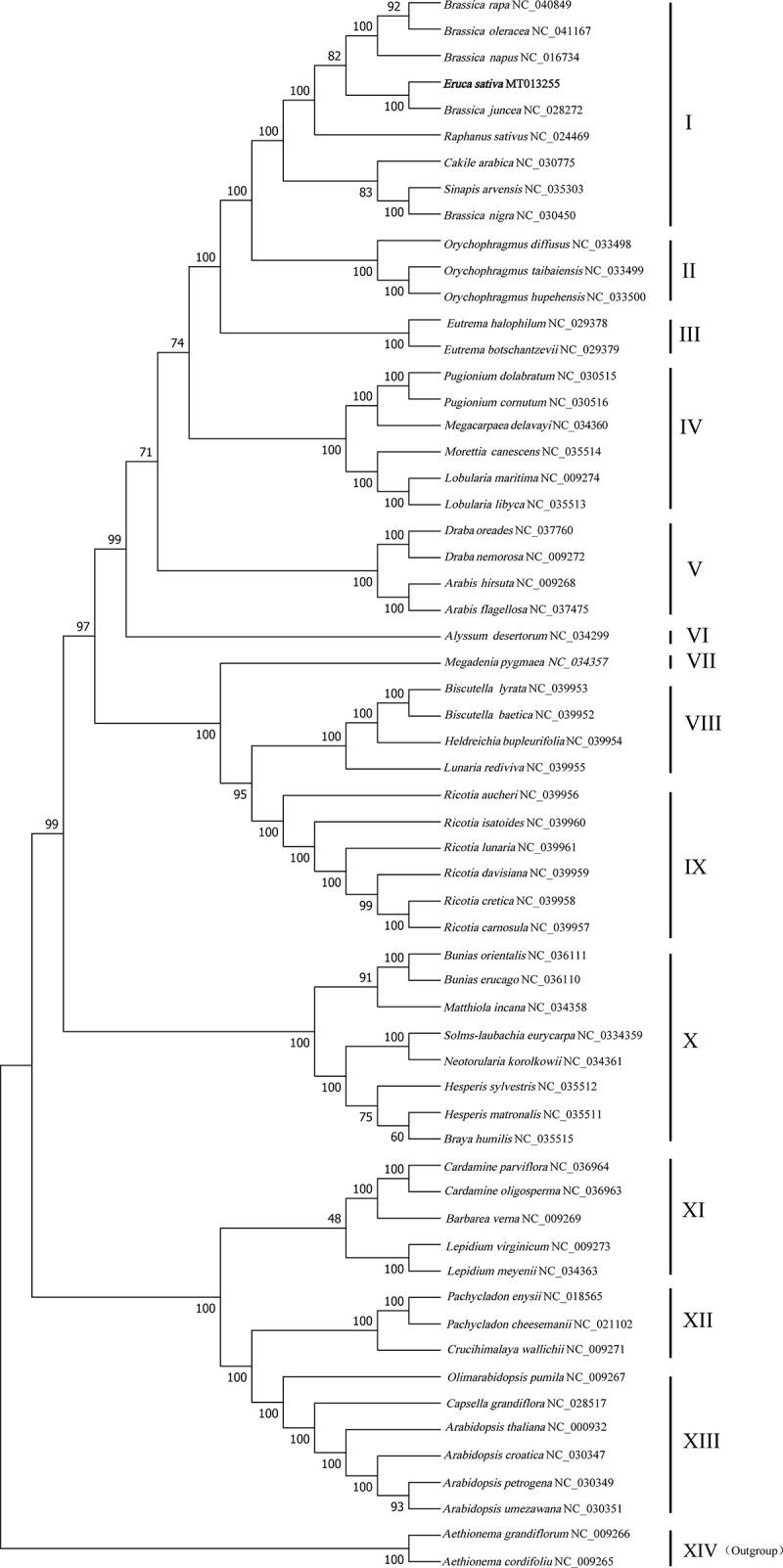
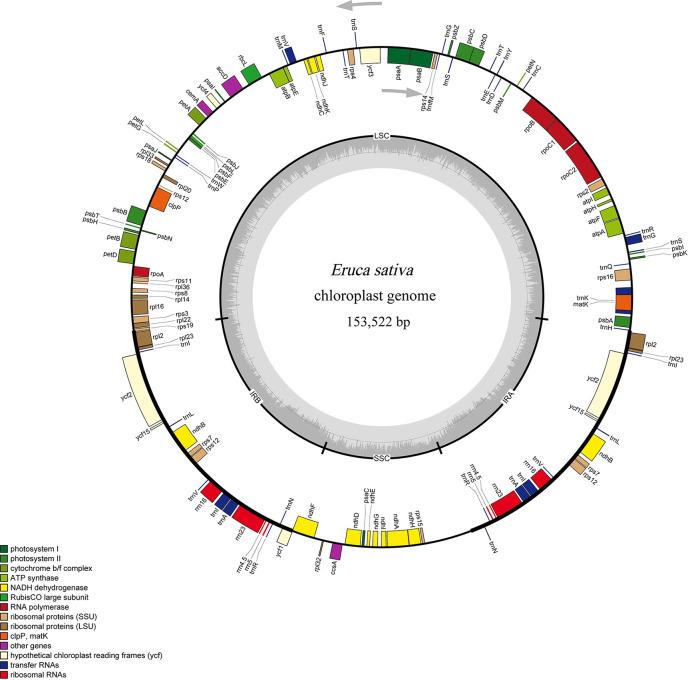
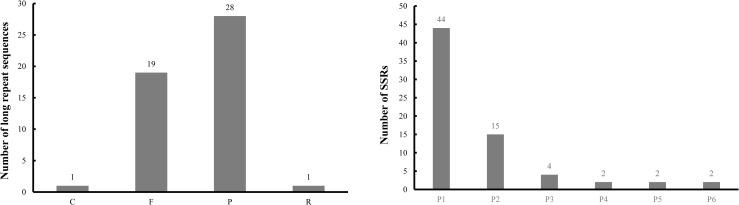
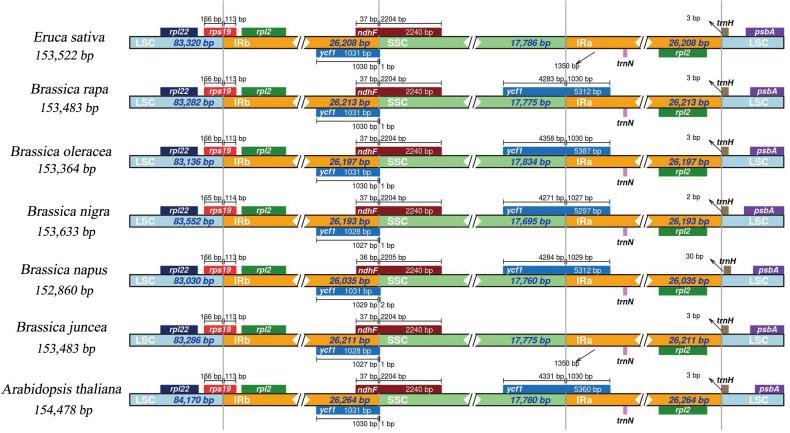
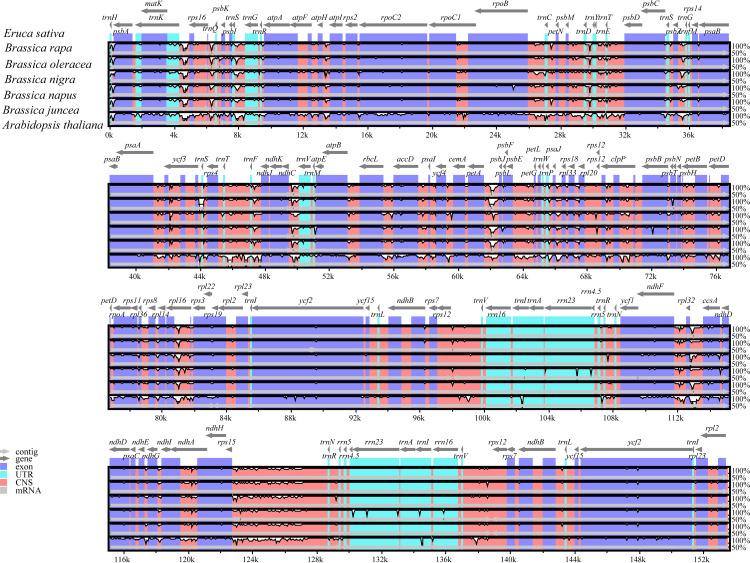
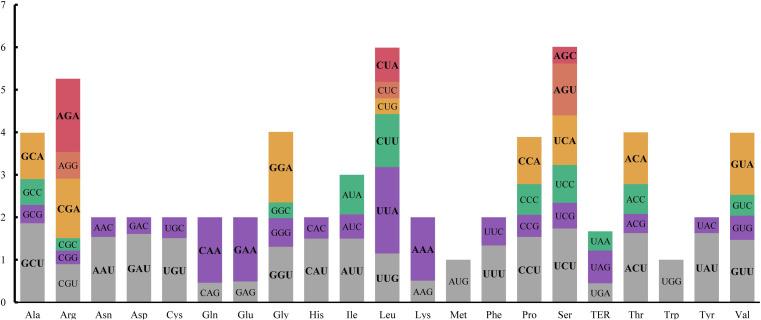
Eruca sativa Mill. (Brassicaceae) is an important edible vegetable and a potential medicinal plant due to the antibacterial activity of its seed oil. Here, the complete chloroplast (cp) genome of E. sativa was de novo assembled with a combination of long PacBio reads and short Illumina reads. The E. sativa cp genome had a quadripartite structure that was 153,522 bp in size, consisting of one large single-copy region of 83,320 bp and one small single-copy region of 17,786 bp which were separated by two inverted repeat (IRa and IRb) regions of 26,208 bp. This complete cp genome harbored 113 unique genes: 79 protein-coding genes, 30 tRNA genes, and four rRNA genes. Forty-nine long repetitive sequences and 69 simple sequence repeats were identified in the E. sativa cp genome. A codon usage analysis of the E. sativa cp genome showed a bias toward codons ending in A/T. The E. sativa cp genome was similar in size, gene composition, and linearity of the structural region when compared with other Brassicaceae cp genomes. Moreover, the analysis of the synonymous (Ks) and non-synonymous (Ka) substitution rates demonstrated that protein-coding genes generally underwent purifying selection pressure, expect ycf1, ycf2, and rps12. A phylogenetic analysis determined that E. sativa is evolutionarily close to important Brassica species, indicating that it may be possible to transfer favorable E. sativa alleles into other Brassica species. Our results will be helpful to advance genetic improvement and breeding of E. sativa, and will provide valuable information for utilizing E. sativa as an important resource to improve other Brassica species.
芝麻菜(十字花科)是一种重要的可食用蔬菜,因其种子油具有抗菌活性,也是一种潜在的药用植物。在此,利用长读长的PacBio测序数据和短读长的Illumina测序数据从头组装了芝麻菜的完整叶绿体(cp)基因组。芝麻菜的cp基因组具有四分体结构,大小为153,522 bp,由一个83,320 bp的大单拷贝区域和一个17,786 bp的小单拷贝区域组成,这两个区域被两个26,208 bp的反向重复(IRa和IRb)区域隔开。这个完整的cp基因组包含113个独特基因:79个蛋白质编码基因、30个tRNA基因和4个rRNA基因。在芝麻菜cp基因组中鉴定出49个长重复序列和69个简单序列重复。芝麻菜cp基因组的密码子使用分析显示对以A/T结尾的密码子有偏好。与其他十字花科cp基因组相比,芝麻菜cp基因组在大小、基因组成和结构区域的线性方面相似。此外,同义(Ks)和非同义(Ka)替换率分析表明,除了ycf1、ycf2和rps12外,蛋白质编码基因一般受到纯化选择压力。系统发育分析确定芝麻菜在进化上与重要的芸苔属物种接近,这表明有可能将芝麻菜的有利等位基因转移到其他芸苔属物种中。我们的结果将有助于推进芝麻菜的遗传改良和育种,并将为利用芝麻菜作为改良其他芸苔属物种的重要资源提供有价值的信息。

 Zotero 插件