
左旋肉碱对雄性大鼠慢性铅诱导生殖毒性的改善作用。
Ameliorative effect of L-carnitine on chronic lead-induced reproductive toxicity in male rats.
机构信息
Department of Pharmacology, Faculty of Medicine, Assiut University, Assiut, Egypt.
Centre of Excellence in Environmental Studies (CEES), King Abdulaziz University, Jeddah, Saudi Arabia.
出版信息
Vet Med Sci. 2021 Jul;7(4):1426-1435. doi: 10.1002/vms3.473. Epub 2021 Mar 16.
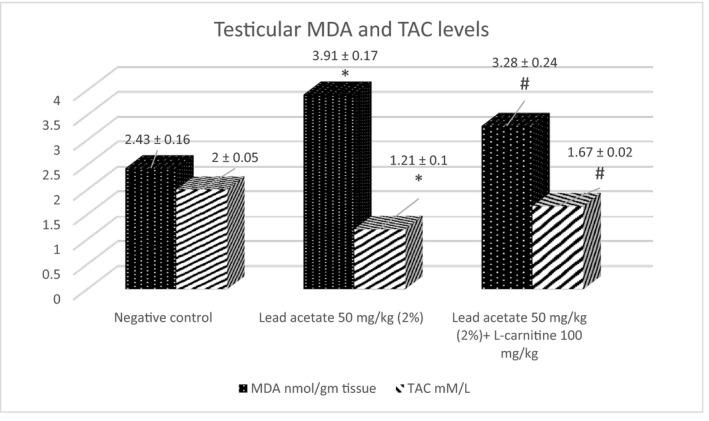
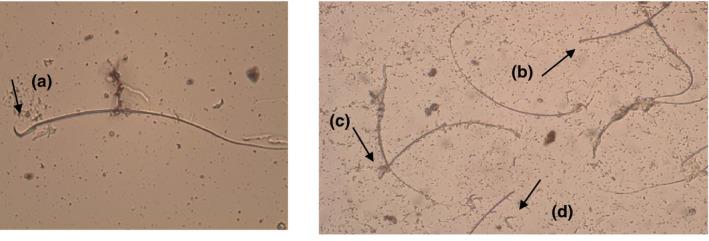
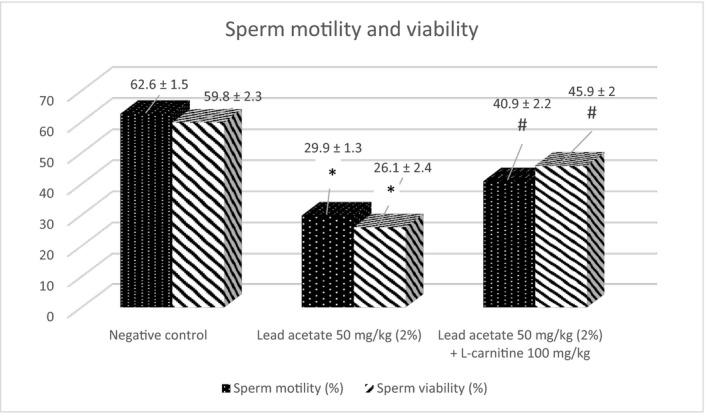
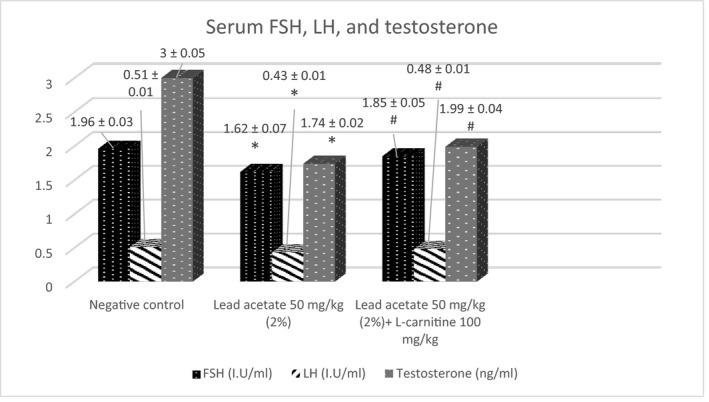
Lead toxicity is one of the causative agents of male infertility that raised concern from environmental contamination worldwide. L-carnitine, a biologically active amino acid, present in high concentration in the reproductive organs such as the epididymis, is involved in sperm maturation. The possible protective effect of L-carnitine in experimentally lead-induced male reproductive toxicity in rats was evaluated in this study. Thirty adult male Wistar rats were divided into three groups. Group 1: the negative control group was treated with normal saline; Group 2: exposed to 50 mg/kg lead acetate (2% solution in saline); and Group 3: treated with lead acetate 50 mg/kg (2% solution in saline) + L-carnitine 100 mg/kg. At the end of the experimental period, body and testicular weights were determined, blood samples were withdrawn for hormonal assays of FSH, LH and testosterone. Sperm parameters as sperm count, morphology, viability and motility were measured. Testicular tissue homogenates were prepared for enzymatic assays and for measuring oxidative stress parameters. Lead significantly increased both oxidative stress and the concentration of lactate dehydrogenase-C in the testicular tissues with a decrease in sperm count, motility and viability. Lead acetate treatment, induced alteration in sperms with normal morphology together with reductions in the serum FSH, LH, testosterone, body and testicular weights. The concentration of 17β-hydroxysteroid dehydrogenase was significantly reduced. Co-administration of L-carnitine significantly reduced testicular oxidative stress, improved sperm parameters, elevated serum FSH, LH and testosterone with an insignificant reduction in the testicular weight. The concentrations of 17β-hydroxysteroid dehydrogenase and lactate dehydrogenase-C were significantly improved by L-carnitine. The overall results indicate that L-carnitine is expected to improve the lead acetate-induced male reproductive toxicity.
铅毒性是导致男性不育的原因之一,这引起了全球对环境污染的关注。左旋肉碱是一种生物活性氨基酸,在附睾等生殖器官中浓度较高,参与精子成熟。本研究评估了左旋肉碱对实验性铅诱导的雄性生殖毒性的可能保护作用。将 30 只成年雄性 Wistar 大鼠分为三组。第 1 组:阴性对照组,给予生理盐水;第 2 组:暴露于 50mg/kg 醋酸铅(2%生理盐水溶液);第 3 组:给予 50mg/kg 醋酸铅(2%生理盐水溶液)+100mg/kg 左旋肉碱。实验期末,测定体质量和睾丸质量,采集血样进行 FSH、LH 和睾酮的激素测定。测量精子参数,如精子计数、形态、活力和运动。制备睾丸组织匀浆进行酶活性测定和氧化应激参数测定。铅显著增加了睾丸组织的氧化应激和乳酸脱氢酶-C 的浓度,同时降低了精子计数、活力和活力。醋酸铅处理诱导精子形态正常的改变,同时降低了血清 FSH、LH、睾酮、体质量和睾丸质量。17β-羟类固醇脱氢酶的浓度显著降低。左旋肉碱的共同给药显著降低了睾丸的氧化应激,改善了精子参数,提高了血清 FSH、LH 和睾酮,睾丸质量无显著降低。17β-羟类固醇脱氢酶和乳酸脱氢酶-C 的浓度均因左旋肉碱而显著改善。总体结果表明,左旋肉碱有望改善醋酸铅诱导的雄性生殖毒性。

 Zotero 插件