
GPR12 抑制食管癌和喉咽癌细胞的迁移并促进其凋亡。
GPR12 inhibits migration and promotes apoptosis in esophageal cancer and hypopharyngeal cancer cells.
机构信息
Department of Otorhinolaryngology, Qilu Hospital of Shandong University, Jinan, Shandong, China.
NHC Key Laboratory of Otorhinolaryngology, Qilu Hospital of Shandong University, Jinan, Shandong, China.
出版信息
Thorac Cancer. 2021 May;12(10):1525-1535. doi: 10.1111/1759-7714.13933. Epub 2021 Mar 20.
BACKGROUND
G protein-coupled receptor 12 (GPR12) is an orphan receptor with no confirmed endogenous ligands. It plays important roles in both physiological and pathological conditions such as neurogenesis and neural inflammation. However, it remains unclear whether GPR12 regulates carcinogenesis and progression in head and neck squamous cell carcinoma (HNSCC), such as esophageal cancer (EC) and hypopharyngeal cancer (HC).
METHODS
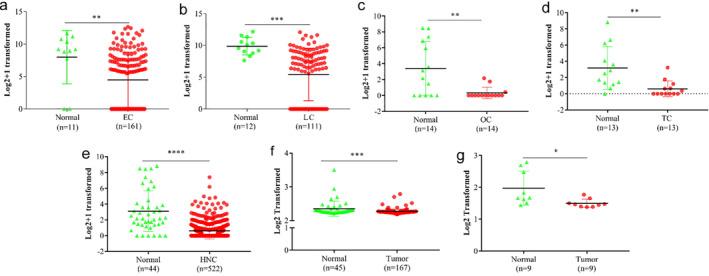
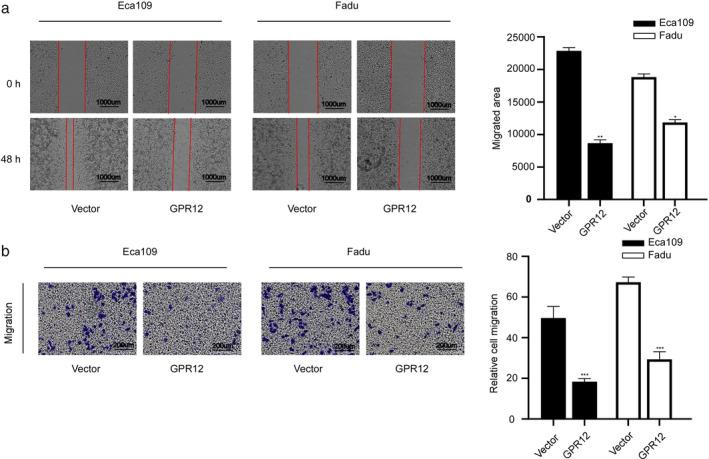
The Cancer Genome Atlas (TCGA) database was applied to explore the expression of GPR12. Quantitative real-time polymerase chain reaction (qRT-PCR) was used to detect the expression of GPR12 in cancer tissues. Wound healing and transwell assays were carried out to verify the effect of GPR12 on cell migration. Flow cytometric analysis and caspase-Glo 3/7 assay were carried out to verify the influence of GPR12 on cell apoptosis. Western blotting was used to measure the expression of proteins related to migration and apoptosis.
RESULT
The qRT-PCR analyses showed that the expression of GPR12 decreased in EC and HC than that in their paired adjacent normal tissues. Wound healing assay and transwell assay demonstrated that GPR12 inhibited tumor cell migration. Flow cytometry analysis and Caspase-Glo 3/7 Assay suggested that GPR12 promoted apoptosis. The mechanism of GPR12 may function via modulating caspase-7, E-cadherin, and α-catenin in EC and HC cells.
CONCLUSION
In conclusion, GPR12 induced apoptosis by activating caspase-7 and inhibited migration through epithelial-to-mesenchymal transition (EMT) in EC and HC. Our findings demonstrated that GPR12 as a potential tumor suppressor mediated cell migration and apoptosis in EC and HC.
背景
G 蛋白偶联受体 12(GPR12)是一种孤儿受体,没有确认的内源性配体。它在神经发生和神经炎症等生理和病理条件下发挥重要作用。然而,目前尚不清楚 GPR12 是否调节头颈部鳞状细胞癌(HNSCC),如食管癌(EC)和下咽癌(HC)的致癌作用和进展。
方法
应用癌症基因组图谱(TCGA)数据库探讨 GPR12 的表达。定量实时聚合酶链反应(qRT-PCR)检测 GPR12 在癌组织中的表达。划痕愈合和 Transwell 实验验证 GPR12 对细胞迁移的影响。流式细胞术分析和 Caspase-Glo 3/7 实验验证 GPR12 对细胞凋亡的影响。Western blot 检测与迁移和凋亡相关的蛋白表达。
结果
qRT-PCR 分析显示,EC 和 HC 中 GPR12 的表达低于配对的相邻正常组织。划痕愈合实验和 Transwell 实验表明 GPR12 抑制肿瘤细胞迁移。流式细胞术分析和 Caspase-Glo 3/7 实验表明 GPR12 促进细胞凋亡。GPR12 的作用机制可能通过调节 EC 和 HC 细胞中的半胱氨酸蛋白酶-7、E-钙粘蛋白和α-连环蛋白。
结论
总之,GPR12 通过激活半胱氨酸蛋白酶-7 诱导凋亡,并通过上皮间质转化(EMT)抑制 EC 和 HC 中的迁移。我们的研究结果表明,GPR12 作为一种潜在的肿瘤抑制因子,介导 EC 和 HC 中的细胞迁移和凋亡。


 Zotero 插件