
MINK1 通过使糖皮质激素受体 Thr524 磷酸化,诱导其与 14-3-3 蛋白调节剂发生相互作用。
Glucocorticoid receptor Thr524 phosphorylation by MINK1 induces interactions with 14-3-3 protein regulators.
机构信息
Research and Early Development, Respiratory & Immunology, BioPharmaceuticals R&D, AstraZeneca, Gothenburg, Sweden; Laboratory of Chemical Biology, Department of Biomedical Engineering and Institute for Complex Molecular Systems, Technische Universiteit Eindhoven, Eindhoven, The Netherlands.
Research and Early Development, Respiratory & Immunology, BioPharmaceuticals R&D, AstraZeneca, Gothenburg, Sweden.
出版信息
J Biol Chem. 2021 Jan-Jun;296:100551. doi: 10.1016/j.jbc.2021.100551. Epub 2021 Mar 17.
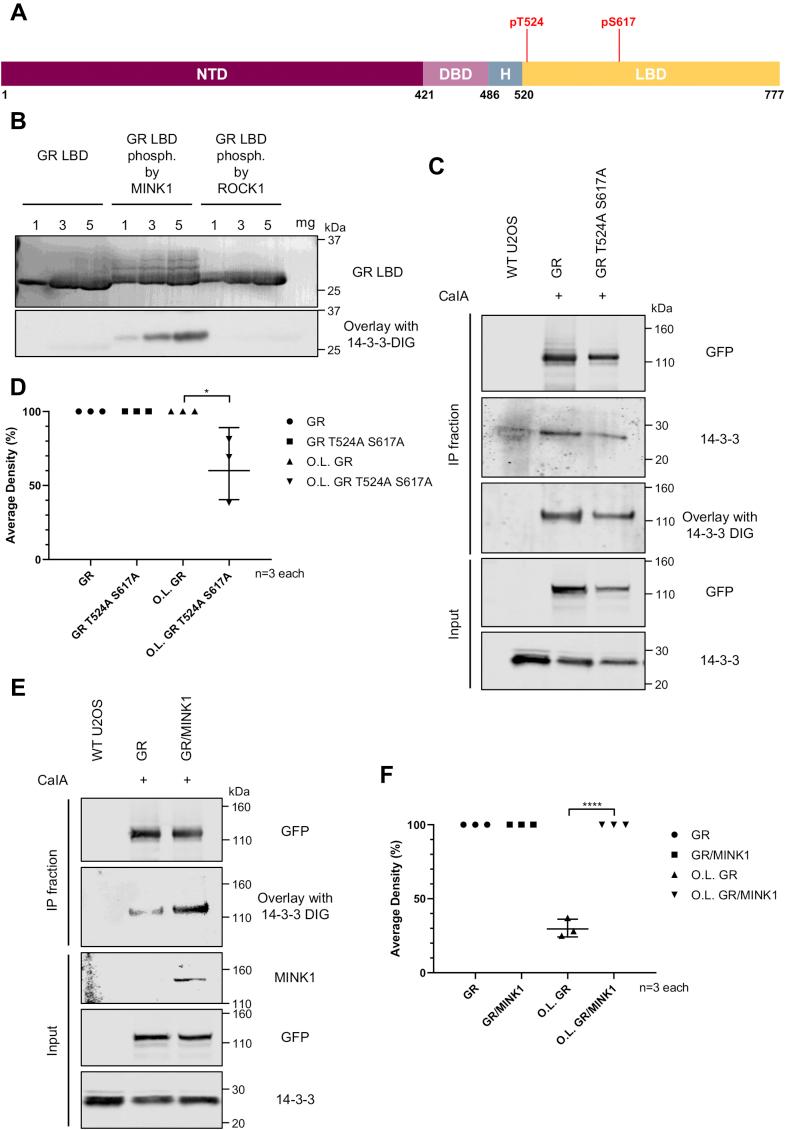
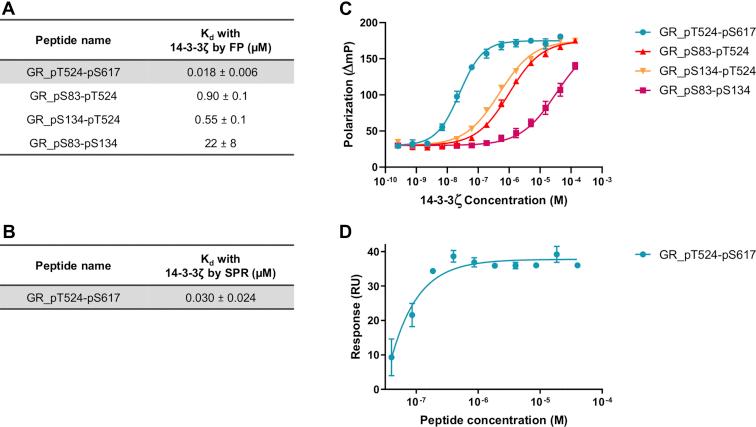
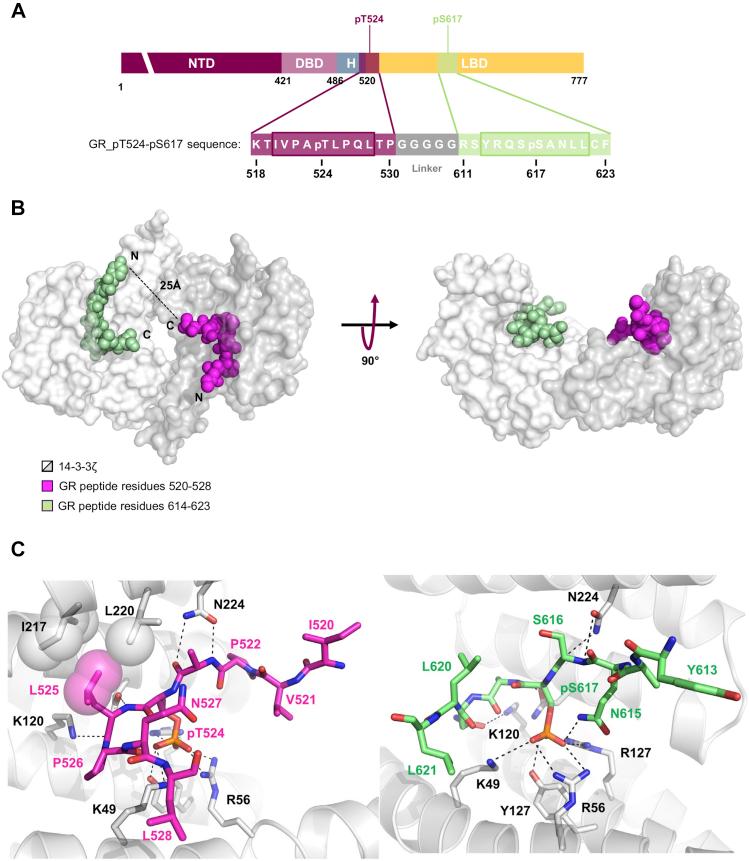
The glucocorticoid receptor (GR) is a ligand-dependent transcription factor that plays a central role in inflammation. The GR activity is also modulated via protein-protein interactions, including binding of 14-3-3 proteins induced by GR phosphorylation. However, the specific phosphorylation sites on the GR that trigger these interactions and their functional consequences are less clear. Hence, we sought to examine this system in more detail. We used phosphorylated GR peptides, biophysical studies, and X-ray crystallography to identify key residues within the ligand-binding domain of the GR, T524 and S617, whose phosphorylation results in binding of the representative 14-3-3 protein 14-3-3ζ. A kinase screen identified misshapen-like kinase 1 (MINK1) as responsible for phosphorylating T524 and Rho-associated protein kinase 1 for phosphorylating S617; cell-based approaches confirmed the importance of both GR phosphosites and MINK1 but not Rho-associated protein kinase 1 alone in inducing GR-14-3-3 binding. Together our results provide molecular-level insight into 14-3-3-mediated regulation of the GR and highlight both MINK1 and the GR-14-3-3 axis as potential targets for future therapeutic intervention.
糖皮质激素受体(GR)是一种配体依赖性转录因子,在炎症中发挥核心作用。GR 的活性还通过蛋白质-蛋白质相互作用进行调节,包括 GR 磷酸化诱导的 14-3-3 蛋白结合。然而,触发这些相互作用的 GR 上的特定磷酸化位点及其功能后果尚不清楚。因此,我们试图更详细地研究这个系统。我们使用磷酸化的 GR 肽、生物物理研究和 X 射线晶体学来鉴定 GR 配体结合域内的关键残基 T524 和 S617,其磷酸化导致代表性的 14-3-3 蛋白 14-3-3ζ 的结合。激酶筛选鉴定出畸形激酶 1(MINK1)负责磷酸化 T524,Rho 相关蛋白激酶 1 负责磷酸化 S617;基于细胞的方法证实了 GR 磷酸化位点和 MINK1 的重要性,但单独的 Rho 相关蛋白激酶 1 则不能诱导 GR-14-3-3 结合。我们的研究结果提供了分子水平上的深入了解,说明了 14-3-3 介导的 GR 调节,并强调了 MINK1 和 GR-14-3-3 轴作为未来治疗干预的潜在靶点。

 Zotero 插件