
研究松弛和模糊相互作用的结构:S100复合物的多样世界。
Studying the Structures of Relaxed and Fuzzy Interactions: The Diverse World of S100 Complexes.
作者信息
Ecsédi Péter, Gógl Gergő, Nyitray László
机构信息
Department of Biochemistry, Eötvös Loránd University, Budapest, Hungary.
Department of Integrative Structural Biology, Institut de Génétique et de Biologie Moléculaire et Cellulaire (IGBMC), INSERM U1258/CNRS UMR 7104/Université de Strasbourg, Illkirch, France.
出版信息
Front Mol Biosci. 2021 Oct 11;8:749052. doi: 10.3389/fmolb.2021.749052. eCollection 2021.
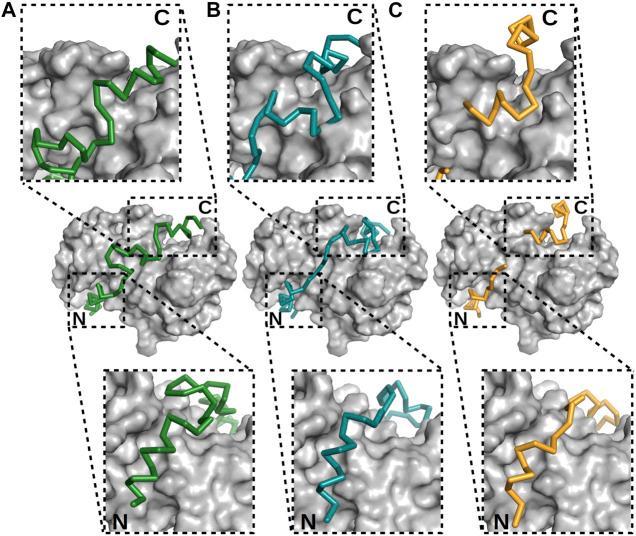
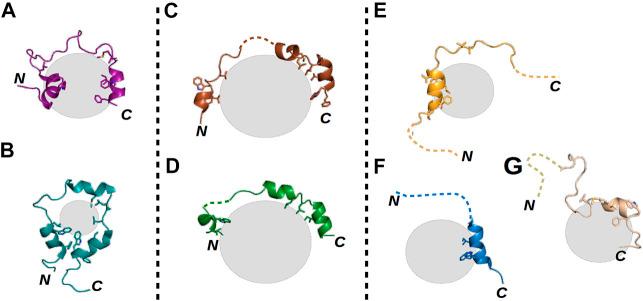
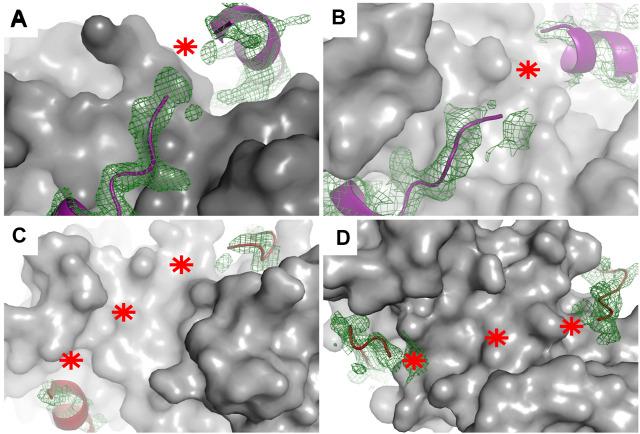
S100 proteins are small, dimeric, Ca-binding proteins of considerable interest due to their associations with cancer and rheumatic and neurodegenerative diseases. They control the functions of numerous proteins by forming protein-protein complexes with them. Several of these complexes were found to display "fuzzy" properties. Examining these highly flexible interactions, however, is a difficult task, especially from a structural biology point of view. Here, we summarize the available techniques that can be deployed to obtain structural information about these dynamic complexes. We also review the current state of knowledge about the structures of S100 complexes, focusing on their often-asymmetric nature.
S100蛋白是一类小型的二聚体钙结合蛋白,因其与癌症、风湿性疾病和神经退行性疾病的关联而备受关注。它们通过与众多蛋白质形成蛋白质-蛋白质复合物来控制其功能。现已发现其中一些复合物具有“模糊”特性。然而,研究这些高度灵活的相互作用是一项艰巨的任务,尤其是从结构生物学的角度来看。在此,我们总结了可用于获取这些动态复合物结构信息的现有技术。我们还回顾了关于S100复合物结构的当前知识状态,重点关注其通常的不对称性质。


 Zotero 插件