
多倍体:压力环境下的进化和生态力量。
Polyploidy: an evolutionary and ecological force in stressful times.
机构信息
Department of Plant Biotechnology and Bioinformatics, Ghent University, VIB - UGent Center for Plant Systems Biology, B-9052 Ghent, Belgium.
Department of Biochemistry, Genetics and Microbiology, University of Pretoria, Pretoria, South Africa.
出版信息
Plant Cell. 2021 Mar 22;33(1):11-26. doi: 10.1093/plcell/koaa015.
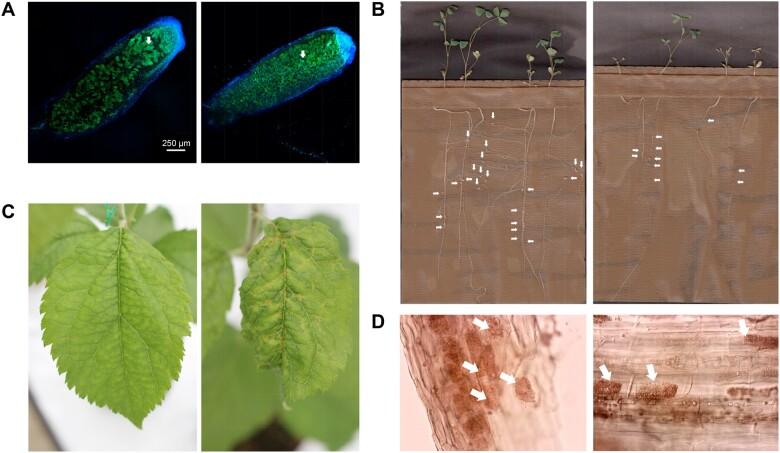
Polyploidy has been hypothesized to be both an evolutionary dead-end and a source for evolutionary innovation and species diversification. Although polyploid organisms, especially plants, abound, the apparent nonrandom long-term establishment of genome duplications suggests a link with environmental conditions. Whole-genome duplications seem to correlate with periods of extinction or global change, while polyploids often thrive in harsh or disturbed environments. Evidence is also accumulating that biotic interactions, for instance, with pathogens or mutualists, affect polyploids differently than nonpolyploids. Here, we review recent findings and insights on the effect of both abiotic and biotic stress on polyploids versus nonpolyploids and propose that stress response in general is an important and even determining factor in the establishment and success of polyploidy.
多倍体被认为既是进化的死胡同,也是进化创新和物种多样化的源泉。虽然多倍体生物,尤其是植物,大量存在,但基因组加倍的明显非随机长期建立表明其与环境条件有关。全基因组加倍似乎与灭绝或全球变化时期相关,而多倍体通常在恶劣或受干扰的环境中茁壮成长。越来越多的证据表明,生物相互作用,例如与病原体或共生体的相互作用,会使多倍体与非多倍体产生不同的影响。在这里,我们回顾了最近关于非生物和生物胁迫对多倍体与非多倍体影响的发现和见解,并提出一般来说,胁迫反应是多倍体建立和成功的一个重要甚至决定性因素。
 Zotero 插件