
通过分析老年人在计时起立行走测试中佩戴在腰部的三轴可穿戴加速度计的数据来评估其功能平衡和移动能力。
Assessing elderly's functional balance and mobility via analyzing data from waist-mounted tri-axial wearable accelerometers in timed up and go tests.
机构信息
School of Data Science, City University of Hong Kong, Kowloon, Hong Kong.
School of Public Health (Shenzhen), Sun Yat-Sen University, Guangdong, People's Republic of China.
出版信息
BMC Med Inform Decis Mak. 2021 Mar 25;21(1):108. doi: 10.1186/s12911-021-01463-4.
BACKGROUND
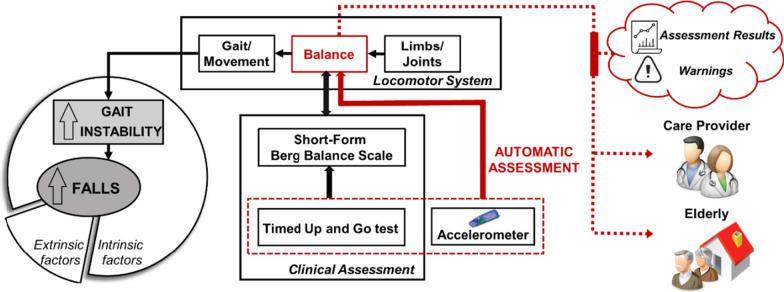
Poor balance has been cited as one of the key causal factors of falls. Timely detection of balance impairment can help identify the elderly prone to falls and also trigger early interventions to prevent them. The goal of this study was to develop a surrogate approach for assessing elderly's functional balance based on Short Form Berg Balance Scale (SFBBS) score.
METHODS
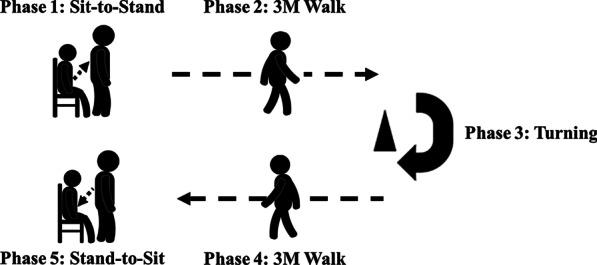
Data were collected from a waist-mounted tri-axial accelerometer while participants performed a timed up and go test. Clinically relevant variables were extracted from the segmented accelerometer signals for fitting SFBBS predictive models. Regularized regression together with random-shuffle-split cross-validation was used to facilitate the development of the predictive models for automatic balance estimation.
RESULTS
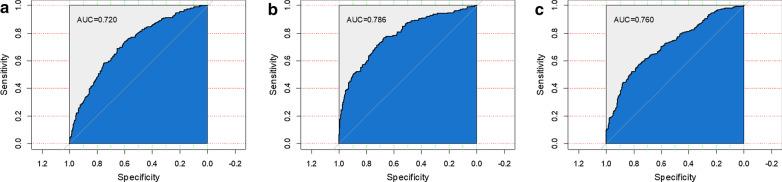
Eighty-five community-dwelling older adults (72.12 ± 6.99 year) participated in our study. Our results demonstrated that combined clinical and sensor-based variables, together with regularized regression and cross-validation, achieved moderate-high predictive accuracy of SFBBS scores (mean MAE = 2.01 and mean RMSE = 2.55). Step length, gender, gait speed and linear acceleration variables describe the motor coordination were identified as significantly contributed variables of balance estimation. The predictive model also showed moderate-high discriminations in classifying the risk levels in the performance of three balance assessment motions in terms of AUC values of 0.72, 0.79 and 0.76 respectively.
CONCLUSIONS
The study presented a feasible option for quantitatively accurate, objectively measured, and unobtrusively collected functional balance assessment at the point-of-care or home environment. It also provided clinicians and elderly with stable and sensitive biomarkers for long-term monitoring of functional balance.
背景
平衡能力差被认为是跌倒的一个关键原因。及时发现平衡障碍有助于识别易跌倒的老年人,并及时采取干预措施预防跌倒。本研究旨在基于简化 Berg 平衡量表(Short Form Berg Balance Scale,SFBBS)评分开发一种评估老年人功能性平衡的替代方法。
方法
研究采集了参与者进行计时起立行走测试时佩戴在腰部的三轴加速度计的数据。从分段加速度计信号中提取临床相关变量,拟合 SFBBS 预测模型。采用正则化回归和随机打乱拆分交叉验证来促进预测模型的开发,以实现自动平衡估计。
结果
本研究共纳入 85 名社区居住的老年人(72.12±6.99 岁)。结果表明,综合临床和基于传感器的变量,以及正则化回归和交叉验证,可实现 SFBBS 评分的中高度预测准确性(平均 MAE=2.01,平均 RMSE=2.55)。步长、性别、步态速度和线性加速度变量描述了运动协调,被确定为平衡估计的重要贡献变量。该预测模型在对三种平衡评估动作的表现进行风险水平分类时,AUC 值分别为 0.72、0.79 和 0.76,具有中高度的区分能力。
结论
本研究提出了一种可行的选择,可以在护理点或家庭环境中进行定量准确、客观测量和非侵入性采集的功能性平衡评估。它还为临床医生和老年人提供了稳定且敏感的生物标志物,用于长期监测功能性平衡。





 Zotero 插件