
犬猫麻醉手术应激的神经生物学及诱导的行为变化:综述
Neurobiology of anesthetic-surgical stress and induced behavioral changes in dogs and cats: A review.
作者信息
Hernández-Avalos I, Flores-Gasca E, Mota-Rojas D, Casas-Alvarado A, Miranda-Cortés A E, Domínguez-Oliva A
机构信息
Department of Biological Sciences, Clinical Pharmacology and Veterinary Anesthesia, Faculty of Higher Studies Cuautitlán, Universidad Nacional Autónoma de México, State of Mexico 54714, Mexico.
Department of Veterinary Surgery, Faculty of Higher Studies Cuautitlán, Universidad Nacional Autónoma de México, State of Mexico 54714, Mexico.
出版信息
Vet World. 2021 Feb;14(2):393-404. doi: 10.14202/vetworld.2021.393-404. Epub 2021 Feb 11.
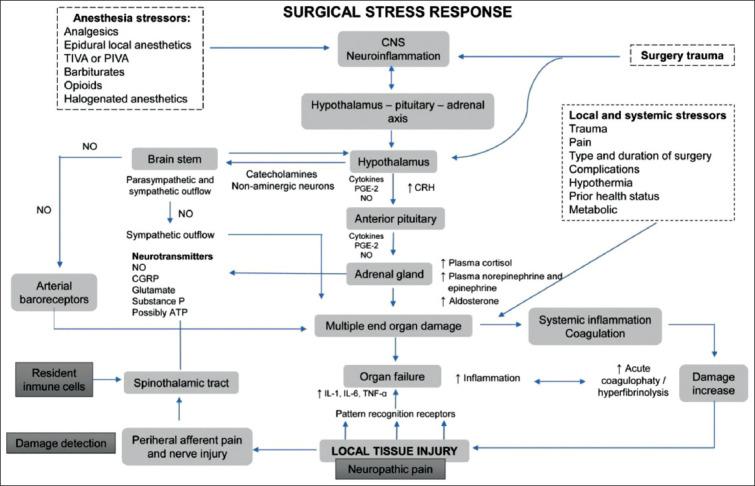
The anesthetic-surgical stress response consists of metabolic, neuroendocrine, hemodynamic, immunological, and behavioral adaptations through chemical mediators such as the adrenocorticotropic hormone, growth hormone, antidiuretic hormone, cortisol, aldosterone, angiotensin II, thyroid-stimulating hormone, thyroxine, triiodothyronine, follicle-stimulating hormone, luteinizing hormone, catecholamines, insulin, interleukin (IL)-1, IL-6, tumor necrosis factor-alpha, and prostaglandin E-2. Behavioral changes include adopting the so-called prayer posture, altered facial expressions, hyporexia or anorexia, drowsiness, sleep disorders, restriction of movement, licking or biting the injured area, and vocalizations. Overall, these changes are essential mechanisms to counteract harmful stimuli. However, if uncontrolled surgical stress persists, recovery time may be prolonged, along with increased susceptibility to infections in the post-operative period. This review discusses the neurobiology and most relevant organic responses to pain and anesthetic-surgical stress in dogs and cats. It highlights the role of stress biomarkers and their influence on autonomous and demeanor aspects and emphasizes the importance of understanding and correlating all factors to provide a more accurate assessment of pain and animal welfare in dogs and cats throughout the surgical process.
麻醉-手术应激反应包括通过促肾上腺皮质激素、生长激素、抗利尿激素、皮质醇、醛固酮、血管紧张素 II、促甲状腺激素、甲状腺素、三碘甲状腺原氨酸、促卵泡激素、黄体生成素、儿茶酚胺、胰岛素、白细胞介素(IL)-1、IL-6、肿瘤坏死因子-α 和前列腺素 E-2 等化学介质产生的代谢、神经内分泌、血流动力学、免疫和行为适应。行为变化包括采取所谓的祈祷姿势、面部表情改变、食欲减退或厌食、嗜睡、睡眠障碍、活动受限、舔舐或咬伤受伤部位以及发声。总体而言,这些变化是对抗有害刺激的重要机制。然而,如果持续存在未得到控制的手术应激,恢复时间可能会延长,同时术后感染易感性增加。本综述讨论了犬猫对疼痛和麻醉-手术应激的神经生物学及最相关的机体反应。它强调了应激生物标志物的作用及其对自主和行为方面的影响,并强调了理解和关联所有因素以在整个手术过程中更准确评估犬猫疼痛和动物福利的重要性。


 Zotero 插件