
低髓鞘性脑白质营养不良15(HLD15)相关的EPRS1突变导致其在Rab7阳性囊泡结构中发生聚合物聚集,抑制少突胶质细胞的形态分化。
Hypomyelinating Leukodystrophy 15 (HLD15)-Associated Mutation of EPRS1 Leads to Its Polymeric Aggregation in Rab7-Positive Vesicle Structures, Inhibiting Oligodendroglial Cell Morphological Differentiation.
作者信息
Sawaguchi Sui, Goto Mizuki, Kato Yukino, Tanaka Marina, Tago Kenji, Oizumi Hiroaki, Ohbuchi Katsuya, Mizoguchi Kazushige, Miyamoto Yuki, Yamauchi Junji
机构信息
Laboratory of Molecular Neurology, Tokyo University of Pharmacy and Life Sciences, Hachioji, Tokyo 192-0392, Japan.
Department of Biochemistry, Jichi Medical University, Shimotsuke, Tochigi 321-0498, Japan.
出版信息
Polymers (Basel). 2021 Mar 29;13(7):1074. doi: 10.3390/polym13071074.
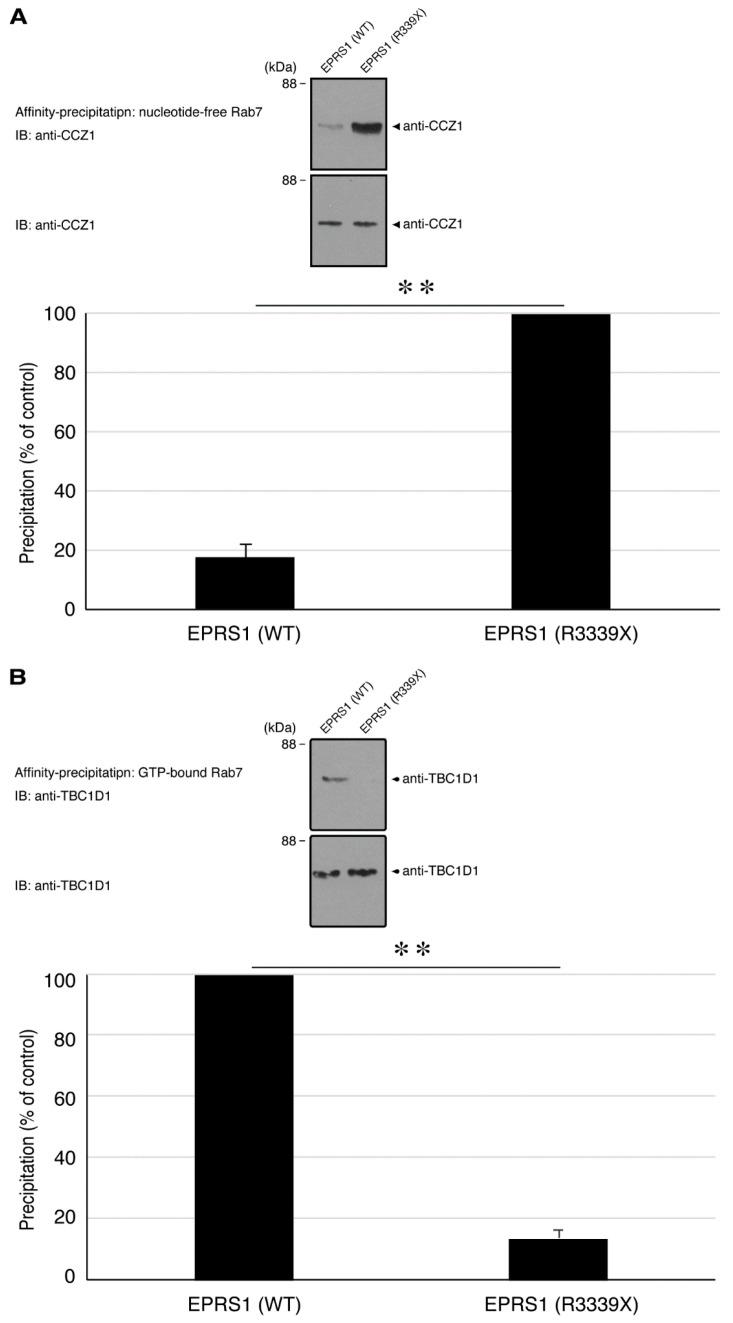
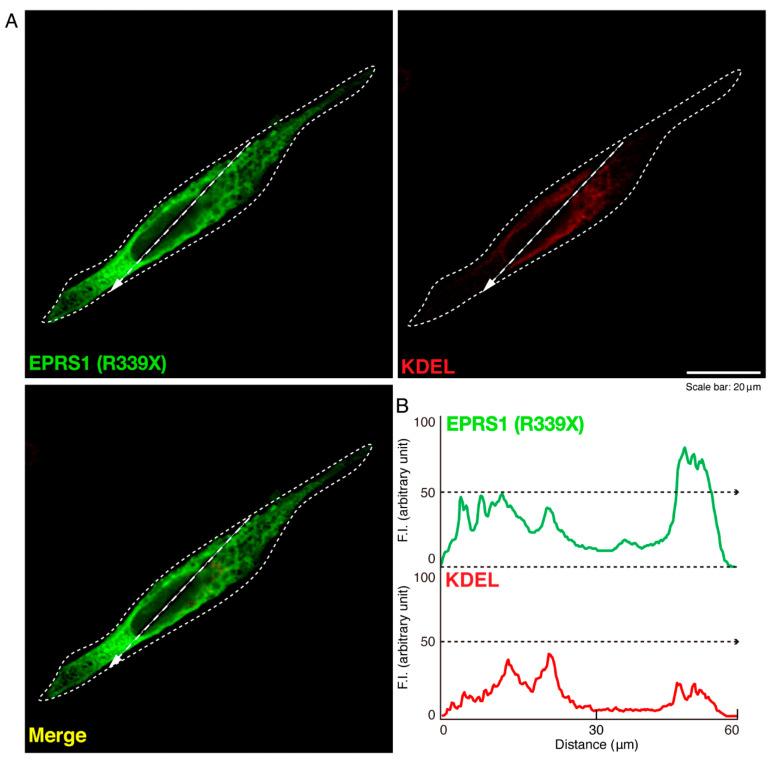
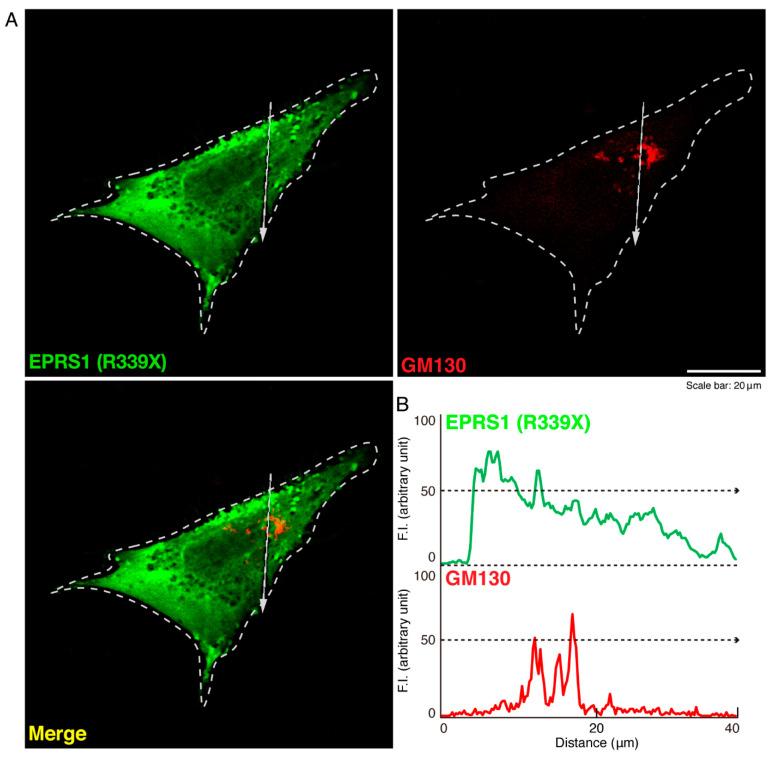
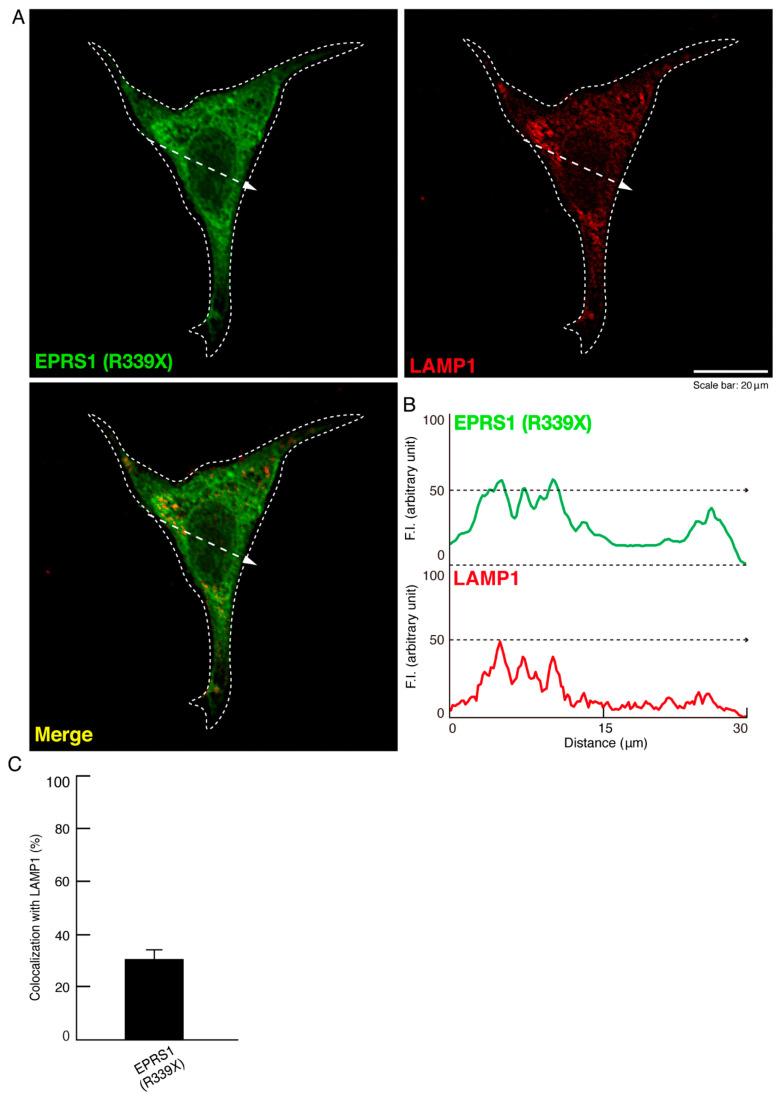
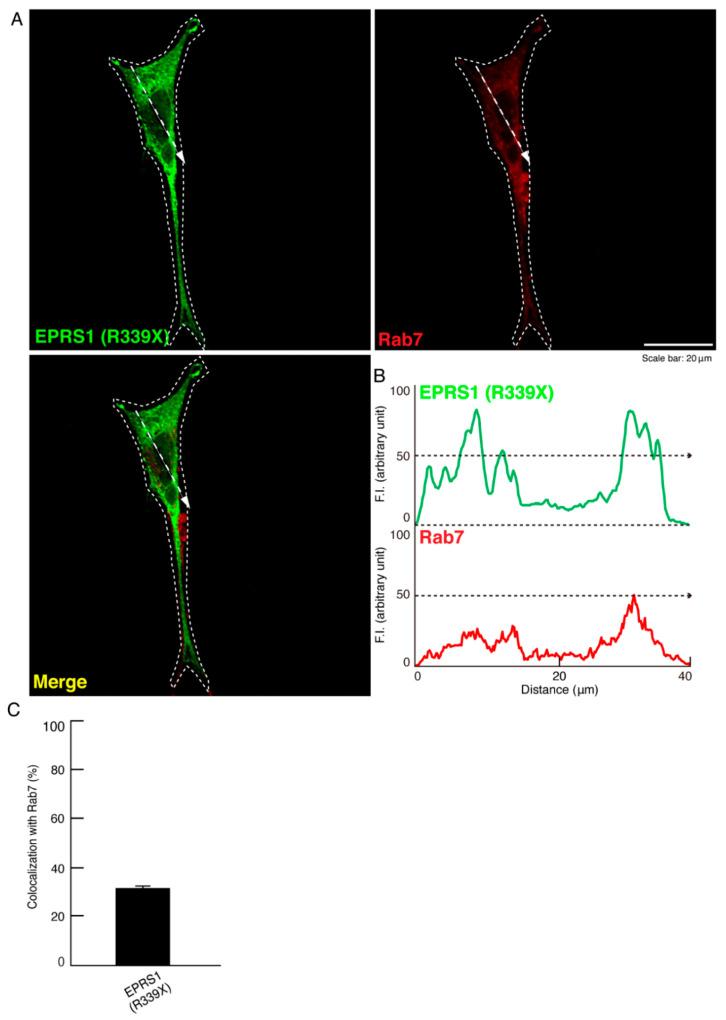
Pelizaeus-Merzbacher disease (PMD), also known as hypomyelinating leukodystrophy 1 (HLD1), is an X-linked recessive disease affecting in the central nervous system (CNS). The gene responsible for HLD1 encodes proteolipid protein 1 (plp1), which is the major myelin structural protein produced by oligodendroglial cells (oligodendrocytes). HLD15 is an autosomal recessive disease affecting the glutamyl-prolyl-aminoacyl-tRNA synthetase 1 () gene, whose product, the EPRS1 protein, is a bifunctional aminoacyl-tRNA synthetase that is localized throughout cell bodies and that catalyzes the aminoacylation of glutamic acid and proline tRNA species. Here, we show that the HLD15-associated nonsense mutation of Arg339-to-Ter (R339X) localizes EPRS1 proteins as polymeric aggregates into Rab7-positive vesicle structures in mouse oligodendroglial FBD-102b cells. Wild-type proteins, in contrast, are distributed throughout the cell bodies. Expression of the R339X mutant proteins, but not the wild-type proteins, in cells induces strong signals regulating Rab7. Whereas cells expressing the wild-type proteins exhibited phenotypes with myelin web-like structures bearing processes following the induction of differentiation, cells expressing the R339X mutant proteins did not. These results indicate that HLD15-associated EPRS1 mutant proteins are localized in Rab7-positive vesicle structures where they modulate Rab7 regulatory signaling, inhibiting cell morphological differentiation. These findings may reveal some of the molecular and cellular pathological mechanisms underlying HLD15.
佩利措伊斯-梅茨巴赫病(PMD),也称为低髓鞘性脑白质营养不良1型(HLD1),是一种影响中枢神经系统(CNS)的X连锁隐性疾病。导致HLD1的基因编码蛋白脂质蛋白1(plp1),它是少突胶质细胞产生的主要髓鞘结构蛋白。HLD15是一种常染色体隐性疾病,影响谷氨酰-脯氨酰-氨酰-tRNA合成酶1()基因,其产物EPRS1蛋白是一种双功能氨酰-tRNA合成酶,定位于整个细胞体,催化谷氨酸和脯氨酸tRNA种类的氨酰化。在此,我们表明,与HLD15相关的精氨酸339突变为终止密码子(R339X)的无义突变,将EPRS1蛋白以聚合物聚集体的形式定位于小鼠少突胶质细胞FBD-102b细胞中Rab7阳性囊泡结构。相比之下,野生型蛋白分布于整个细胞体。细胞中R339X突变蛋白而非野生型蛋白的表达诱导了调节Rab7的强烈信号。虽然表达野生型蛋白的细胞在诱导分化后呈现出带有突起的髓鞘网状结构的表型,但表达R339X突变蛋白的细胞却没有。这些结果表明,与HLD15相关的EPRS1突变蛋白定位于Rab7阳性囊泡结构中,在那里它们调节Rab7调节信号,抑制细胞形态分化。这些发现可能揭示了HLD15潜在的一些分子和细胞病理机制。
 Zotero 插件