
BMI 对实体瘤免疫治疗生存结局的影响:系统评价。
Impact of BMI on Survival Outcomes of Immunotherapy in Solid Tumors: A Systematic Review.
机构信息
Medical Oncology Unit, Fondazione IRCCS Ca' Granda Ospedale Maggiore Policlinico, 20122 Milan, Italy.
出版信息
Int J Mol Sci. 2021 Mar 5;22(5):2628. doi: 10.3390/ijms22052628.
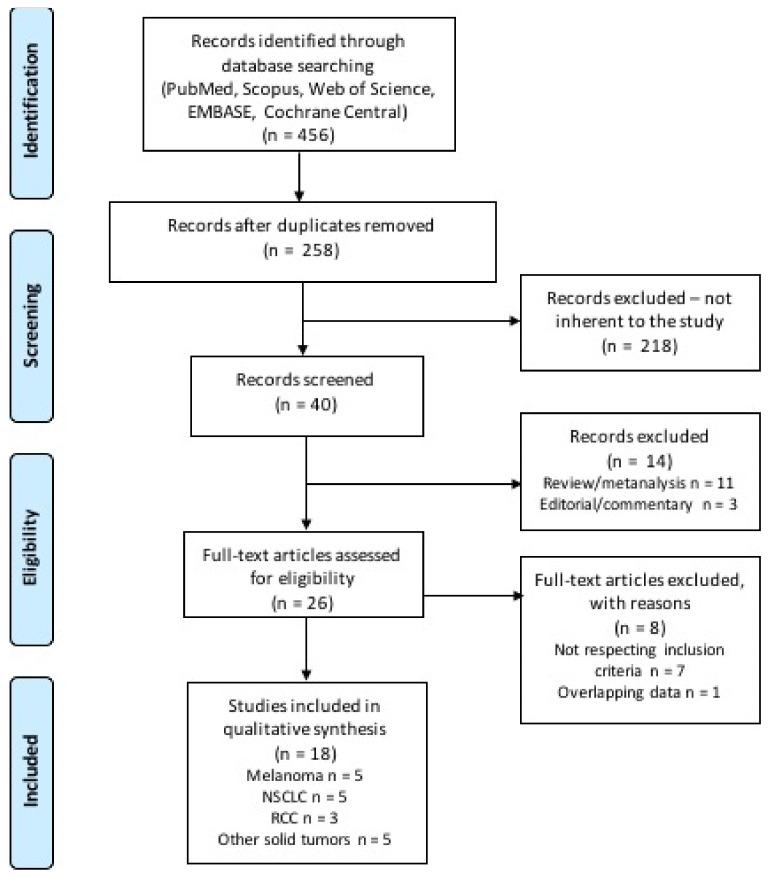
Growing research has focused on obesity as a prognostic factor during therapy with immune-checkpoint inhibitors (ICIs). The role of body-mass index (BMI) in predicting response and toxicity to ICIs is not clear, as studies have shown inconsistent results and significant interpretation biases. We performed a systematic review to evaluate the relationship between BMI and survival outcomes during ICIs, with a side focus on the incidence of immune-related adverse events (irAEs). A total of 17 studies were included in this systematic review. Altogether, the current evidence does not support a clearly positive association of BMI with survival outcomes. Regarding toxicities, available studies confirm a superimposable rate of irAEs among obese and normal weight patients. Intrinsic limitations of the analyzed studies include the retrospective nature, the heterogeneity of patients' cohorts, and differences in BMI categorization for obese patients across different studies. These factors might explain the heterogeneity of available results, and the subsequent absence of a well-established role of baseline BMI on the efficacy of ICIs among cancer patients. Further prospective studies are needed, in order to clarify the role of obesity in cancer patients treated with immunotherapy.
越来越多的研究集中在肥胖作为免疫检查点抑制剂(ICIs)治疗中的预后因素。体重指数(BMI)在预测对 ICIs 的反应和毒性方面的作用尚不清楚,因为研究结果不一致且存在重大解释偏差。我们进行了一项系统评价,以评估 BMI 与 ICIs 期间生存结果之间的关系,并侧重于免疫相关不良事件(irAEs)的发生率。这项系统评价共纳入了 17 项研究。总的来说,目前的证据并不支持 BMI 与生存结果之间存在明显的正相关关系。关于毒性,现有研究证实肥胖和正常体重患者的 irAEs 发生率相当。分析研究的内在局限性包括回顾性、患者队列的异质性以及不同研究中肥胖患者 BMI 分类的差异。这些因素可能解释了现有结果的异质性,以及随后在癌症患者中,基线 BMI 对 ICIs 疗效的作用尚未确立。需要进一步的前瞻性研究,以阐明肥胖在接受免疫治疗的癌症患者中的作用。
 Zotero 插件