
MicroRNA miR-696 受 SNARK 调控,通过抑制 Pgc1α 减少小鼠骨骼肌中的线粒体活性。
The MicroRNA miR-696 is regulated by SNARK and reduces mitochondrial activity in mouse skeletal muscle through Pgc1α inhibition.
机构信息
Department of Biochemistry and Immunology, Ribeirão Preto Medical School, USP, Ribeirão Preto, Brazil; Research Division, Joslin Diabetes Center, and Department of Medicine, Brigham and Women's Hospital and Harvard Medical School, Boston, MA, USA.
Research Division, Joslin Diabetes Center, and Department of Medicine, Brigham and Women's Hospital and Harvard Medical School, Boston, MA, USA.
出版信息
Mol Metab. 2021 Sep;51:101226. doi: 10.1016/j.molmet.2021.101226. Epub 2021 Mar 31.
OBJECTIVE
MicroRNAs (miRNA) are known to regulate the expression of genes involved in several physiological processes including metabolism, mitochondrial biogenesis, proliferation, differentiation, and cell death.
METHODS
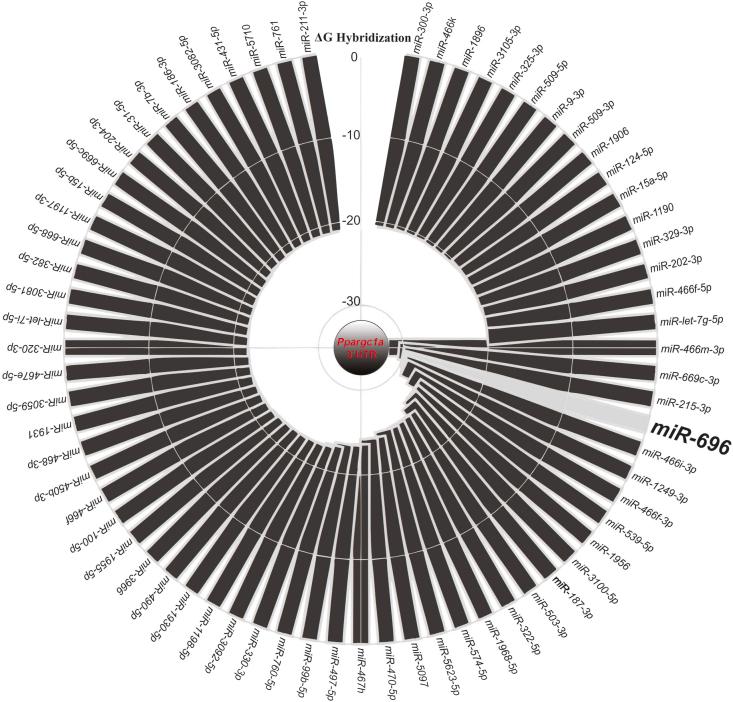
Using "in silico" analyses, we identified 219 unique miRNAs that potentially bind to the 3'UTR region of a critical mitochondrial regulator, the peroxisome proliferator-activated receptor gamma coactivator (PGC) 1 alpha (Pgc1α). Of the 219 candidate miRNAs, miR-696 had one of the highest interactions at the 3'UTR of Pgc1α, suggesting that miR-696 may be involved in the regulation of Pgc1α.
RESULTS
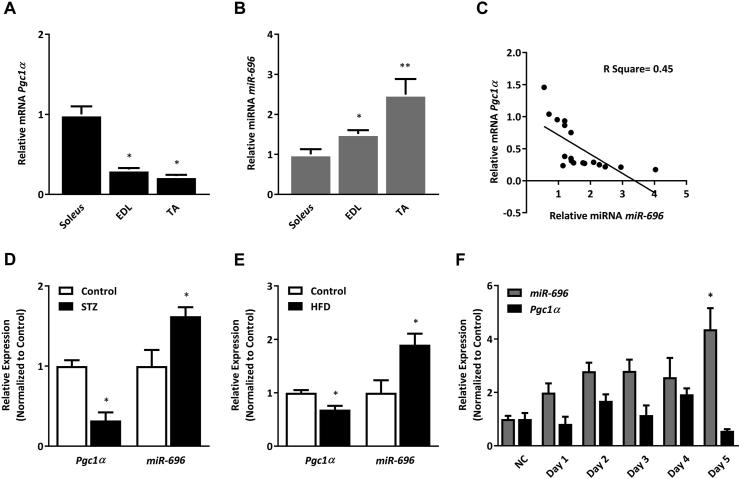
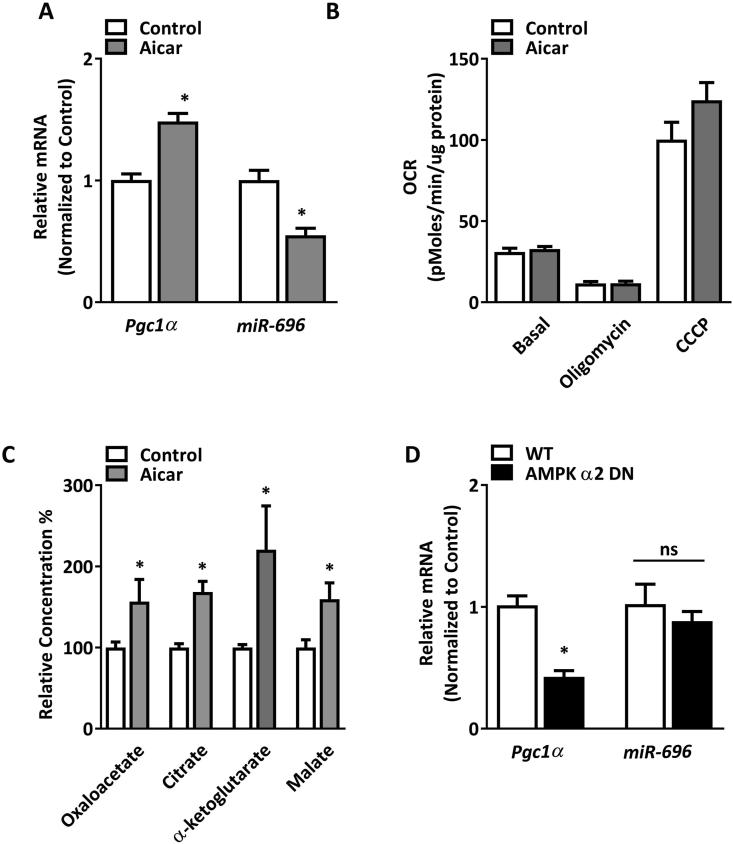
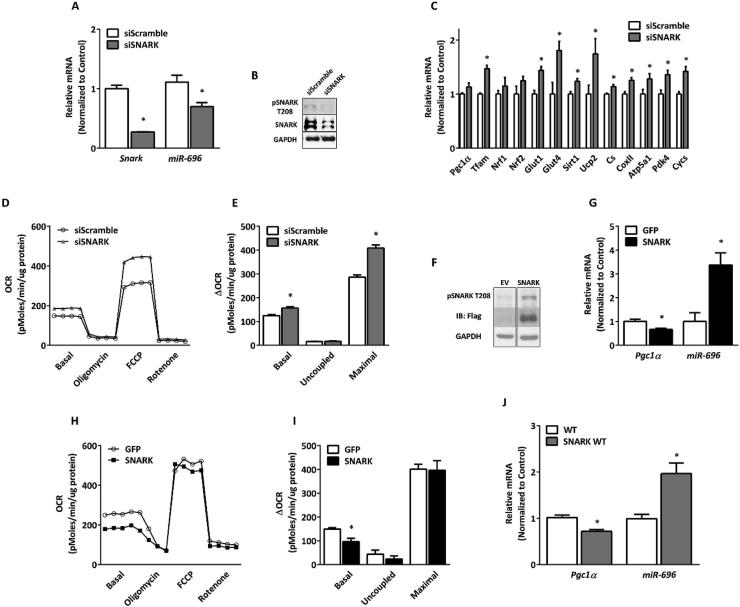
Consistent with this hypothesis, we found that miR-696 was highly expressed in the skeletal muscle of STZ-induced diabetic mice and chronic high-fat-fed mice. C2C12 muscle cells exposed to palmitic acid also exhibited a higher expression of miR-696. This increased expression corresponded with a reduced expression of oxidative metabolism genes and reduced mitochondrial respiration. Importantly, reducing miR-696 reversed decreases in mitochondrial activity in response to palmitic acid. Using C2C12 cells treated with the AMP-activated protein kinase (AMPK) activator AICAR and skeletal muscle from AMPKα2 dominant-negative (DN) mice, we found that the signaling mechanism regulating miR-696 did not involve AMPK. In contrast, overexpression of SNF1-AMPK-related kinase (SNARK) in C2C12 cells increased miR-696 transcription while knockdown of SNARK significantly decreased miR-696. Moreover, muscle-specific transgenic mice overexpressing SNARK exhibited a lower expression of Pgc1α, elevated levels of miR-696, and reduced amounts of spontaneous activity.
CONCLUSIONS
Our findings demonstrate that metabolic stress increases miR-696 expression in skeletal muscle cells, which in turn inhibits Pgc1α, reducing mitochondrial function. SNARK plays a role in this process as a metabolic stress signaling molecule inducing the expression of miR-696.
目的
已知 microRNAs(miRNA)可调节参与代谢、线粒体生物发生、增殖、分化和细胞死亡等多种生理过程的基因表达。
方法
我们通过“计算机分析”,鉴定出 219 种可能与关键线粒体调节因子过氧化物酶体增殖物激活受体γ共激活因子 1α(PGC1α)的 3'UTR 区结合的独特 miRNA。在 219 个候选 miRNA 中,miR-696 与 Pgc1α 3'UTR 的相互作用最高,表明 miR-696 可能参与 Pgc1α 的调节。
结果
与该假说一致,我们发现 miR-696 在 STZ 诱导的糖尿病小鼠和慢性高脂肪喂养小鼠的骨骼肌中表达较高。暴露于棕榈酸的 C2C12 肌肉细胞也表现出 miR-696 的高表达。这种表达增加对应于氧化代谢基因表达减少和线粒体呼吸减少。重要的是,降低 miR-696 可逆转棕榈酸引起的线粒体活性降低。使用 AMPK 激活剂 AICAR 处理的 C2C12 细胞和 AMPKα2 显性负(DN)小鼠的骨骼肌,我们发现调节 miR-696 的信号机制不涉及 AMPK。相反,C2C12 细胞中 SNARK(SNF1-AMPK 相关激酶)的过表达增加了 miR-696 的转录,而 SNARK 的敲低显著降低了 miR-696 的表达。此外,肌肉特异性过表达 SNARK 的转基因小鼠表现出 Pgc1α 表达降低、miR-696 水平升高和自发活动减少。
结论
我们的研究结果表明,代谢应激增加骨骼肌细胞中 miR-696 的表达,进而抑制 Pgc1α,降低线粒体功能。SNARK 作为代谢应激信号分子在这个过程中起作用,诱导 miR-696 的表达。




 Zotero 插件