
肌肉生长抑制素敲除通过抑制骨骼肌中 AMPK/SIRT1/PGC1α 通路影响线粒体功能。
Myostatin Knockout Affects Mitochondrial Function by Inhibiting the AMPK/SIRT1/PGC1α Pathway in Skeletal Muscle.
机构信息
State Key Laboratory of Reproductive Regulation and Breeding of Grassland Livestock, College of Life Science, Inner Mongolia University, Hohhot 010070, China.
College of Animal Science, Inner Mongolia Agricultural University, Hohhot 010018, China.
出版信息
Int J Mol Sci. 2022 Nov 8;23(22):13703. doi: 10.3390/ijms232213703.
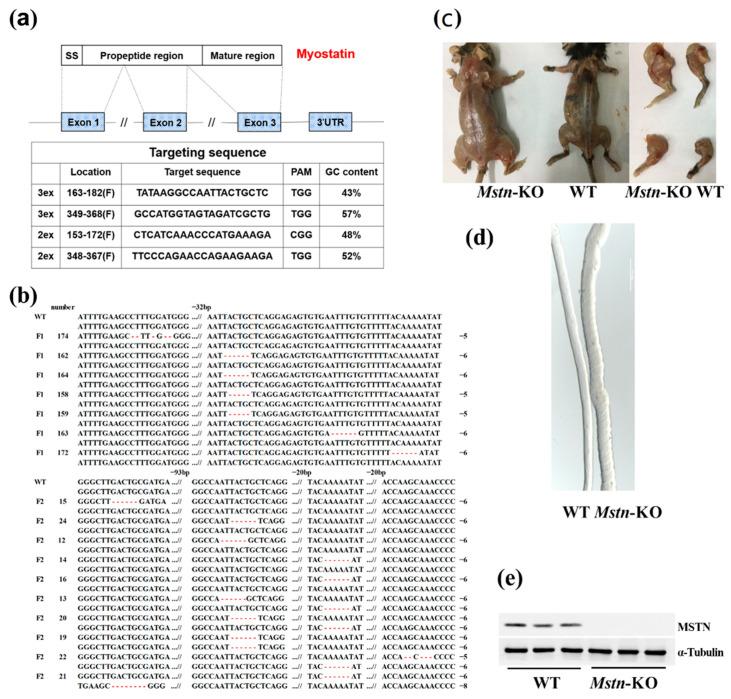
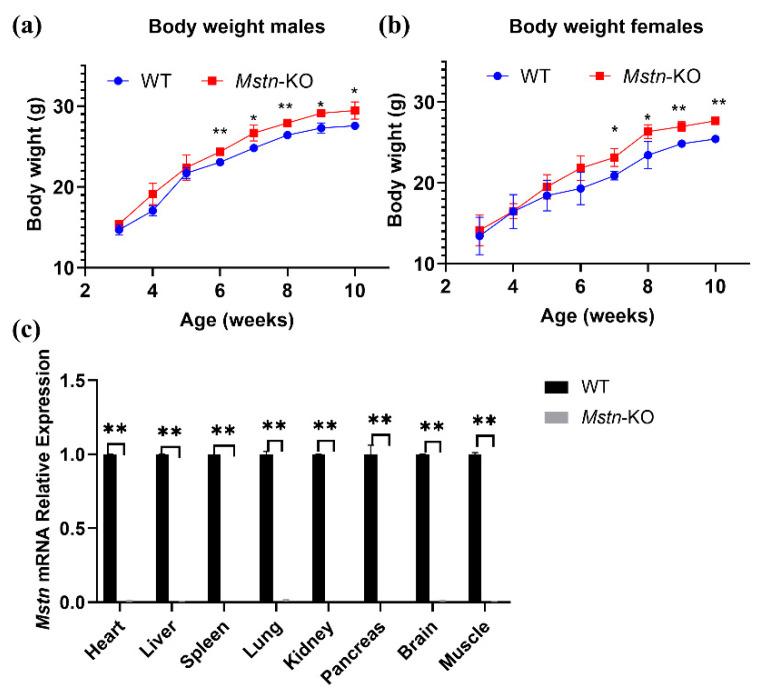
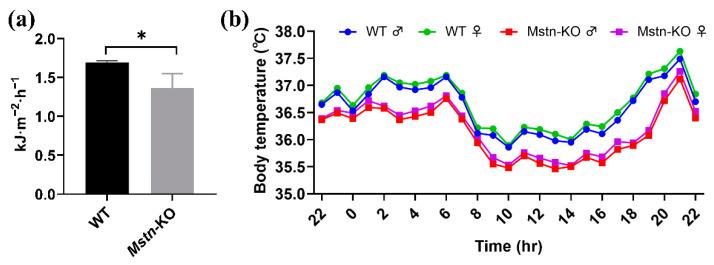
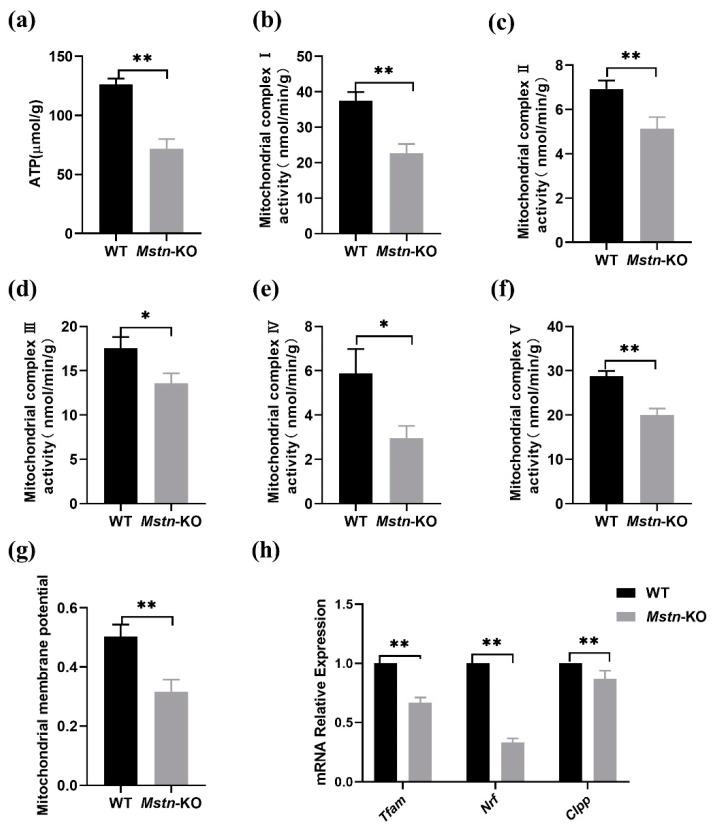
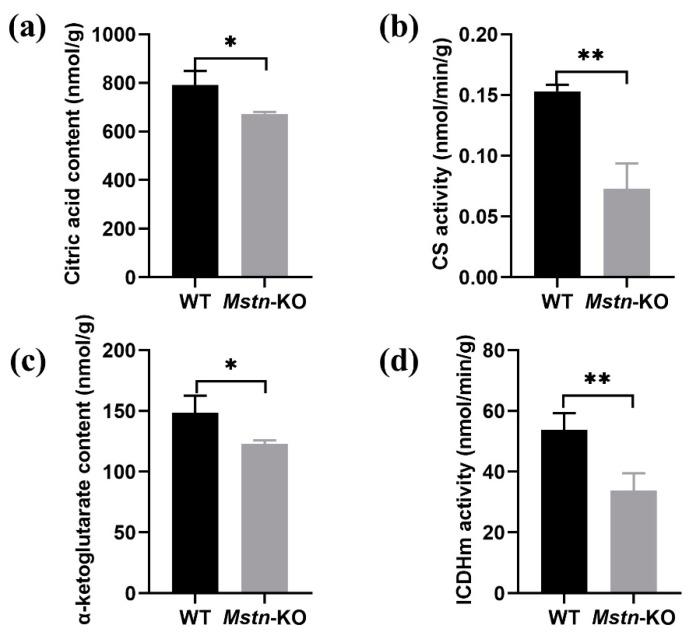
Myostatin () is a major negative regulator of skeletal muscle mass and initiates multiple metabolic changes. The deletion of the gene in mice leads to reduced mitochondrial functions. However, the underlying regulatory mechanisms remain unclear. In this study, we used CRISPR/Cas9 to generate myostatin-knockout (-KO) mice via pronuclear microinjection. -KO mice exhibited significantly larger skeletal muscles. Meanwhile, knockout regulated the organ weights of mice. Moreover, we found that knockout reduced the basal metabolic rate, muscle adenosine triphosphate (ATP) synthesis, activities of mitochondrial respiration chain complexes, tricarboxylic acid cycle (TCA) cycle, and thermogenesis. Mechanistically, expressions of silent information regulator 1 (SIRT1) and phosphorylated adenosine monophosphate-activated protein kinase (pAMPK) were down-regulated, while peroxisome proliferator-activated receptor γ coactivator-1α (PGC-1α) acetylation modification increased in the -KO mice. Skeletal muscle cells from -KO and WT were treated with AMPK activator 5-aminoimidazole-4-carboxamide riboside (AICAR), and the AMPK inhibitor Compound C, respectively. Compared with the wild-type (WT) group, Compound C treatment further down-regulated the expression or activity of pAMPK, SIRT1, citrate synthase (CS), isocitrate dehydrogenase (ICDHm), and α-ketoglutarate acid dehydrogenase (α-KGDH) in -KO mice, while knockout inhibited the AICAR activation effect. Therefore, knockout affects mitochondrial function by inhibiting the AMPK/SIRT1/PGC1α signaling pathway. The present study reveals a new mechanism for knockout in regulating energy homeostasis.
肌肉生长抑制素(Myostatin)是骨骼肌质量的主要负调控因子,并启动多种代谢变化。在小鼠中删除 基因会导致线粒体功能降低。然而,其潜在的调节机制尚不清楚。在这项研究中,我们使用 CRISPR/Cas9 通过原核显微注射生成肌肉生长抑制素敲除(-KO)小鼠。-KO 小鼠表现出明显更大的骨骼肌。同时, 敲除调节了小鼠的器官重量。此外,我们发现 敲除降低了基础代谢率、肌肉三磷酸腺苷(ATP)合成、线粒体呼吸链复合物、三羧酸循环(TCA 循环)和产热的活性。在机制上,沉默信息调节因子 1(SIRT1)和磷酸化腺苷单磷酸激活蛋白激酶(pAMPK)的表达下调,而过氧化物酶体增殖物激活受体 γ 共激活因子-1α(PGC-1α)乙酰化修饰增加。从 -KO 和 WT 小鼠的骨骼肌细胞分别用 AMPK 激活剂 5-氨基咪唑-4-甲酰胺核糖苷(AICAR)和 AMPK 抑制剂化合物 C 处理。与野生型(WT)组相比,化合物 C 处理进一步下调了 pAMPK、SIRT1、柠檬酸合酶(CS)、异柠檬酸脱氢酶(ICDHm)和 α-酮戊二酸脱氢酶(α-KGDH)在 -KO 小鼠中的表达或活性,而 敲除抑制了 AICAR 的激活作用。因此, 敲除通过抑制 AMPK/SIRT1/PGC1α信号通路影响线粒体功能。本研究揭示了 敲除调节能量平衡的新机制。


 Zotero 插件