
嵌合抗原受体T细胞疗法在血液系统恶性肿瘤治疗中的作用:优势、试验与困境以及未来之路
The Role of Chimeric Antigen Receptor-T Cell Therapy in the Treatment of Hematological Malignancies: Advantages, Trials, and Tribulations, and the Road Ahead.
作者信息
Rohit Reddy Sai, Llukmani Adiona, Hashim Ayat, Haddad Dana R, Patel Dutt S, Ahmad Farrukh, Abu Sneineh Majdi, Gordon Domonick K
机构信息
Internal Medicine, California Institute of Behavioral Neurosciences & Psychology, Fairfield, USA.
Internal Medicine, Scarborough General Hospital, Scarborough, TTO.
出版信息
Cureus. 2021 Feb 25;13(2):e13552. doi: 10.7759/cureus.13552.
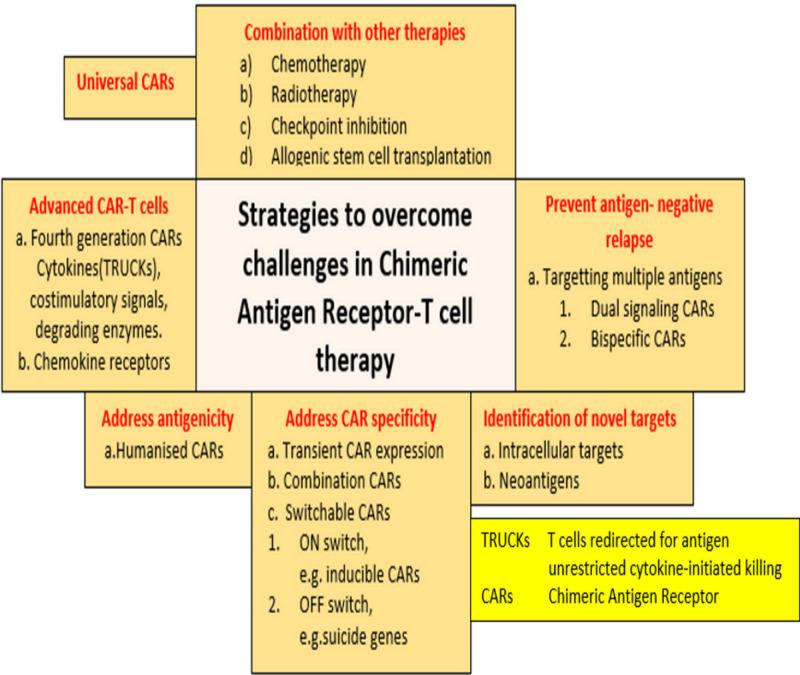
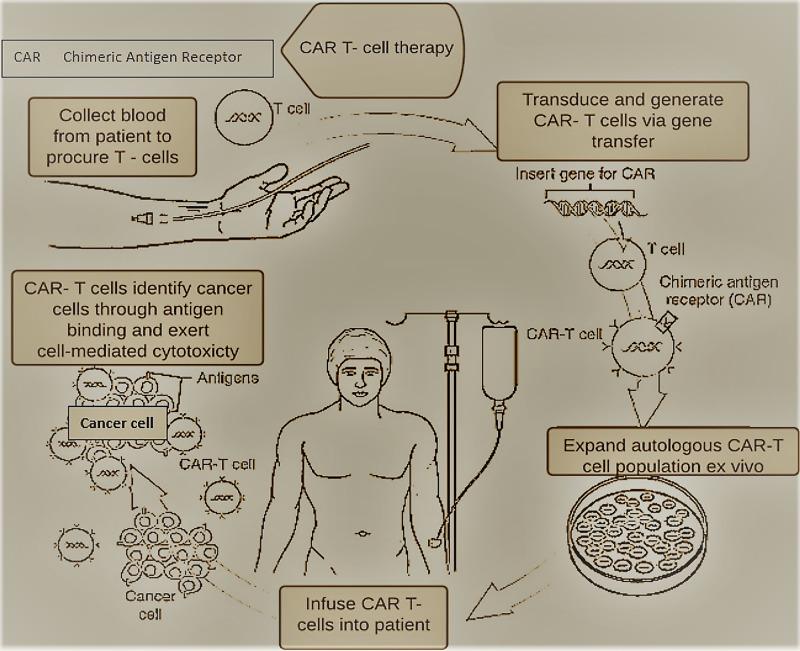
Immunotherapy is the upcoming trend in cancer treatment. Traditional cancer treatment methods include surgical resection, radiotherapy, chemotherapy, small molecule targeted drugs, monoclonal antibodies, and hematopoietic stem cell transplantation (HSCT). Surgical resection is useful for early-stage patients but not for metastatic cancer cells; radiotherapy and chemotherapy are more common but produce substantial damage to normal tissues and have poor selectivity. Targeted drugs, including monoclonal antibodies, have better comprehensive efficacy but can also encourage gene mutation of tumor cells and drug tolerance. HSCT is effective, but choosing a donor is often difficult, and the graft is also prone to rejection. Thus, chimeric antigen receptor (CAR)-T cell therapy, a form of cellular/adoptive immunotherapy, is at the forefront of cancer therapy treatments due to its sustained remission, fewer side effects, and a better quality of life. CAR-T cell therapy involves genetically modifying the T cells and multiplying their numbers to kill cancer cells. This review article gives an insight into how the CAR-T cells have evolved from simple T cells with modest immune function to genetically engineered robust counterparts that brought great hope in the treatment of hematological malignancies. Much research has been undertaken during the past decade to design and deliver CAR-T cells. This has led to successful outcomes in leukemias, lymphomas, and multiple myeloma, paving the way for expanding CAR therapy. Despite tremendous progress, CAR-T cell therapies are faced with many challenges. Areas for improvement include limited T cell persistence, tumor escape, immunosuppressive components in the tumor microenvironment, cancer relapse rate, manufacturing time, and production cost. In this manuscript, we summarize the innovations in the design and delivery of CAR technologies, their applications in hematological malignancies, limitations to its widespread application, latest developments, and the future scope of research to counter the challenges and improve its effectiveness and persistence.
免疫疗法是癌症治疗领域即将兴起的趋势。传统的癌症治疗方法包括手术切除、放射疗法、化学疗法、小分子靶向药物、单克隆抗体以及造血干细胞移植(HSCT)。手术切除对早期患者有用,但对转移性癌细胞无效;放射疗法和化学疗法更为常见,但会对正常组织造成严重损害且选择性较差。包括单克隆抗体在内的靶向药物具有更好的综合疗效,但也会促使肿瘤细胞发生基因突变并产生耐药性。HSCT有效,但通常很难找到供体,且移植也容易出现排斥反应。因此,嵌合抗原受体(CAR)-T细胞疗法作为一种细胞/过继性免疫疗法,因其能够实现持续缓解、副作用较少且生活质量更高,而处于癌症治疗的前沿。CAR-T细胞疗法包括对T细胞进行基因改造并扩增其数量以杀死癌细胞。这篇综述文章深入探讨了CAR-T细胞是如何从具有适度免疫功能的简单T细胞演变为基因工程改造后的强大细胞,从而为血液系统恶性肿瘤的治疗带来巨大希望的。在过去十年中,人们进行了大量研究来设计和递送CAR-T细胞。这已在白血病、淋巴瘤和多发性骨髓瘤的治疗中取得了成功,为扩大CAR疗法铺平了道路。尽管取得了巨大进展,但CAR-T细胞疗法仍面临许多挑战。有待改进的方面包括T细胞持久性有限、肿瘤逃逸、肿瘤微环境中的免疫抑制成分、癌症复发率、制造时间和生产成本。在本手稿中,我们总结了CAR技术在设计和递送方面的创新、其在血液系统恶性肿瘤中的应用、其广泛应用的局限性、最新进展以及应对挑战并提高其有效性和持久性的未来研究方向。


 Zotero 插件