
灵长类动物腹侧纹状体为习惯性寻求行为保持对先前奖励物体价值的神经表示。
Primate ventral striatum maintains neural representations of the value of previously rewarded objects for habitual seeking.
机构信息
Department of Bio and Brain Engineering, College of Engineering, Korea Advanced Institute of Science and Technology (KAIST), Daejeon, 34141, Republic of Korea.
Program of Brain and Cognitive Engineering, College of Engineering, Korea Advanced Institute of Science and Technology (KAIST), Daejeon, 34141, Republic of Korea.
出版信息
Nat Commun. 2021 Apr 8;12(1):2100. doi: 10.1038/s41467-021-22335-5.
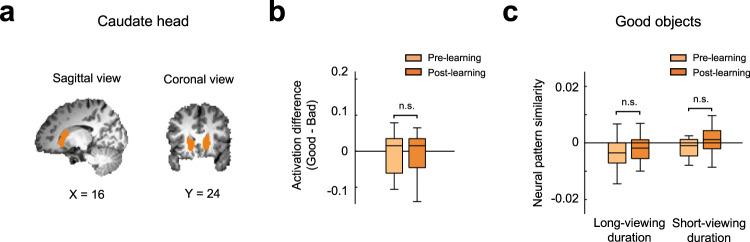
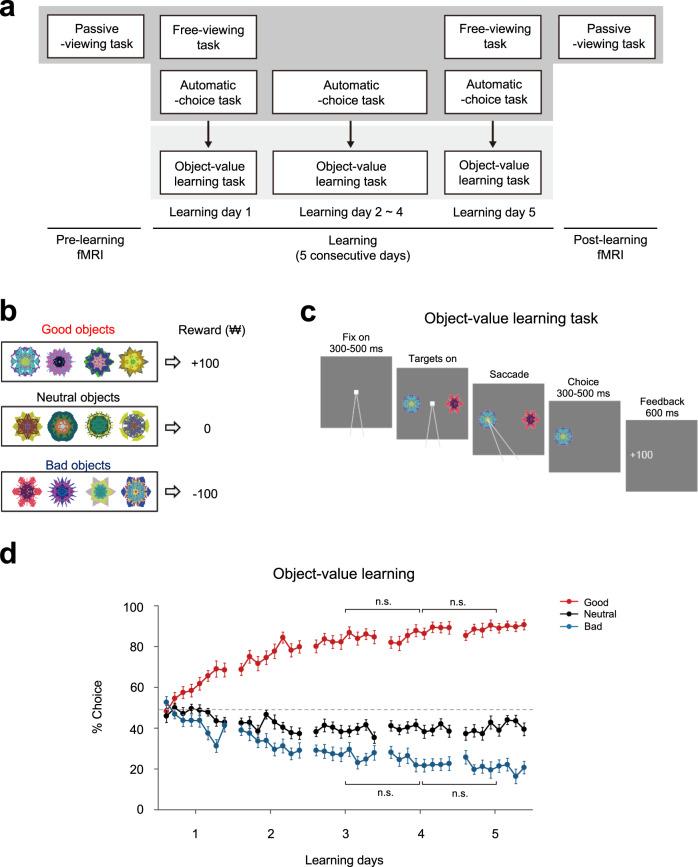
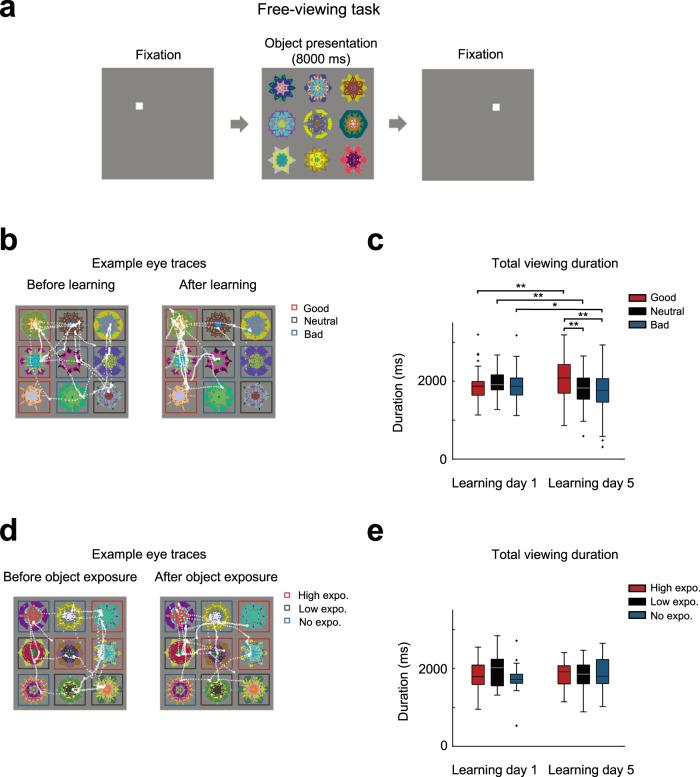
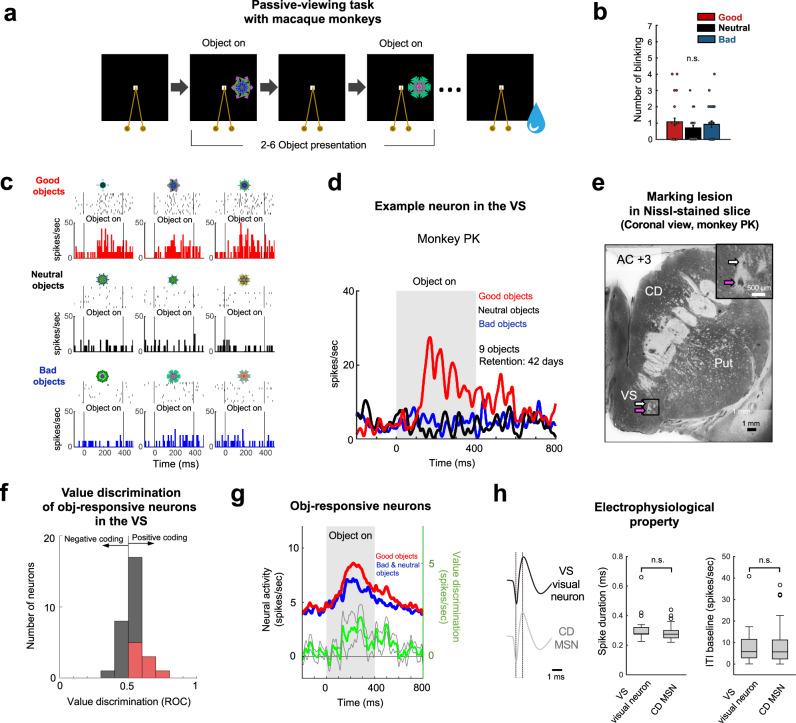
The ventral striatum (VS) is considered a key region that flexibly updates recent changes in reward values for habit learning. However, this update process may not serve to maintain learned habitual behaviors, which are insensitive to value changes. Here, using fMRI in humans and single-unit electrophysiology in macaque monkeys we report another role of the primate VS: that the value memory subserving habitual seeking is stably maintained in the VS. Days after object-value associative learning, human and monkey VS continue to show increased responses to previously rewarded objects, even when no immediate reward outcomes are expected. The similarity of neural response patterns to each rewarded object increases after learning among participants who display habitual seeking. Our data show that long-term memory of high-valued objects is retained as a single representation in the VS and may be utilized to evaluate visual stimuli automatically to guide habitual behavior.
腹侧纹状体(VS)被认为是一个关键区域,它可以灵活地更新奖励价值的最新变化,以进行习惯学习。然而,这个更新过程可能并不能维持已经习得的习惯行为,因为习惯行为对价值变化不敏感。在这里,我们使用人类 fMRI 和猕猴的单细胞电生理学报告了灵长类动物 VS 的另一个作用:即支持习惯寻求的价值记忆在 VS 中稳定维持。在物体-价值联想学习数天后,人类和猴子的 VS 仍然对以前奖励过的物体表现出增加的反应,即使没有预期到即时的奖励结果。在表现出习惯性寻求的参与者中,学习后对每个奖励物体的神经反应模式的相似性增加。我们的数据表明,高价值物体的长期记忆作为单个表示保留在 VS 中,并可用于自动评估视觉刺激,以指导习惯行为。


 Zotero 插件