
中风后神经发生:是敌是友?
Post-stroke Neurogenesis: Friend or Foe?
作者信息
Cuartero María Isabel, García-Culebras Alicia, Torres-López Cristina, Medina Violeta, Fraga Enrique, Vázquez-Reyes Sandra, Jareño-Flores Tania, García-Segura Juan M, Lizasoain Ignacio, Moro María Ángeles
机构信息
Neurovascular Pathophysiology, Centro Nacional de Investigaciones Cardiovasculares (CNIC), Madrid, Spain.
Unidad de Investigación Neurovascular, Departamento de Farmacología, Facultad de Medicina, Universidad Complutense de Madrid (UCM), Madrid, Spain.
出版信息
Front Cell Dev Biol. 2021 Mar 23;9:657846. doi: 10.3389/fcell.2021.657846. eCollection 2021.
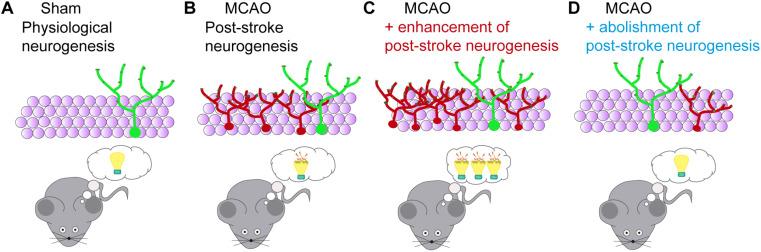
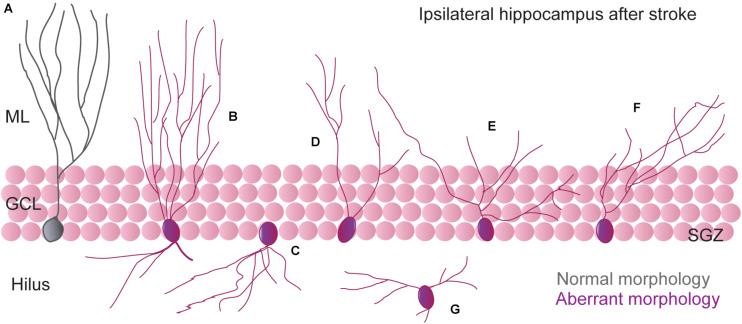
The substantial clinical burden and disability after stroke injury urges the need to explore therapeutic solutions. Recent compelling evidence supports that neurogenesis persists in the adult mammalian brain and is amenable to regulation in both physiological and pathological situations. Its ability to generate new neurons implies a potential to contribute to recovery after brain injury. However, post-stroke neurogenic response may have different functional consequences. On the one hand, the capacity of newborn neurons to replenish the damaged tissue may be limited. In addition, aberrant forms of neurogenesis have been identified in several insult settings. All these data suggest that adult neurogenesis is at a crossroads between the physiological and the pathological regulation of the neurological function in the injured central nervous system (CNS). Given the complexity of the CNS together with its interaction with the periphery, we ultimately lack in-depth understanding of the key cell types, cell-cell interactions, and molecular pathways involved in the neurogenic response after brain damage and their positive or otherwise deleterious impact. Here we will review the evidence on the stroke-induced neurogenic response and on its potential repercussions on functional outcome. First, we will briefly describe subventricular zone (SVZ) neurogenesis after stroke beside the main evidence supporting its positive role on functional restoration after stroke. Then, we will focus on hippocampal subgranular zone (SGZ) neurogenesis due to the relevance of hippocampus in cognitive functions; we will outline compelling evidence that supports that, after stroke, SGZ neurogenesis may adopt a maladaptive plasticity response further contributing to the development of post-stroke cognitive impairment and dementia. Finally, we will discuss the therapeutic potential of specific steps in the neurogenic cascade that might ameliorate brain malfunctioning and the development of post-stroke cognitive impairment in the chronic phase.
中风损伤后巨大的临床负担和残疾状况促使人们探索治疗方案。最近有令人信服的证据表明,神经发生在成年哺乳动物大脑中持续存在,并且在生理和病理情况下都可调节。它产生新神经元的能力意味着有促进脑损伤后恢复的潜力。然而,中风后的神经源性反应可能会产生不同的功能后果。一方面,新生神经元补充受损组织的能力可能有限。此外,在几种损伤情况下已发现异常形式的神经发生。所有这些数据表明,成年神经发生正处于受损中枢神经系统(CNS)神经功能生理调节和病理调节的十字路口。鉴于中枢神经系统的复杂性及其与外周的相互作用,我们最终缺乏对脑损伤后神经源性反应中涉及的关键细胞类型、细胞间相互作用和分子途径及其积极或有害影响的深入了解。在这里,我们将综述关于中风诱导的神经源性反应及其对功能结局潜在影响的证据。首先,我们将简要描述中风后脑室下区(SVZ)神经发生,以及支持其对中风后功能恢复具有积极作用的主要证据。然后,由于海马体在认知功能中的相关性,我们将重点关注海马体颗粒下区(SGZ)神经发生;我们将概述令人信服的证据,表明中风后,SGZ神经发生可能会采取适应不良的可塑性反应,进一步导致中风后认知障碍和痴呆的发展。最后,我们将讨论神经源性级联反应中特定步骤的治疗潜力,这些步骤可能会改善慢性期的脑功能障碍和中风后认知障碍的发展。
 Zotero 插件