
新型冠状病毒感染患者粪便 SARS-CoV-2 RNA 的流行和持续脱落:系统评价和荟萃分析。
Prevalence and Persistent Shedding of Fecal SARS-CoV-2 RNA in Patients With COVID-19 Infection: A Systematic Review and Meta-analysis.
机构信息
Department of Gastroenterology, Sir Run Run Shaw Hospital, School of Medicine, Zhejiang University, Hangzhou, China.
Department of Gastroenterology, The First Hospital of Jiaxing, Zhejiang, China.
出版信息
Clin Transl Gastroenterol. 2021 Apr 9;12(4):e00343. doi: 10.14309/ctg.0000000000000343.
INTRODUCTION
The prevalence and shedding of fecal severe acute respiratory syndrome coronavirus 2 (SARS-CoV-2) RNA indicate coronavirus disease 2019 (COVID-19) infection in the gastrointestinal (GI) tract and likely infectivity. We performed a systemic review and meta-analysis to evaluate the prevalence and the duration of shedding of fecal RNA in patients with COVID-19 infection.
METHODS
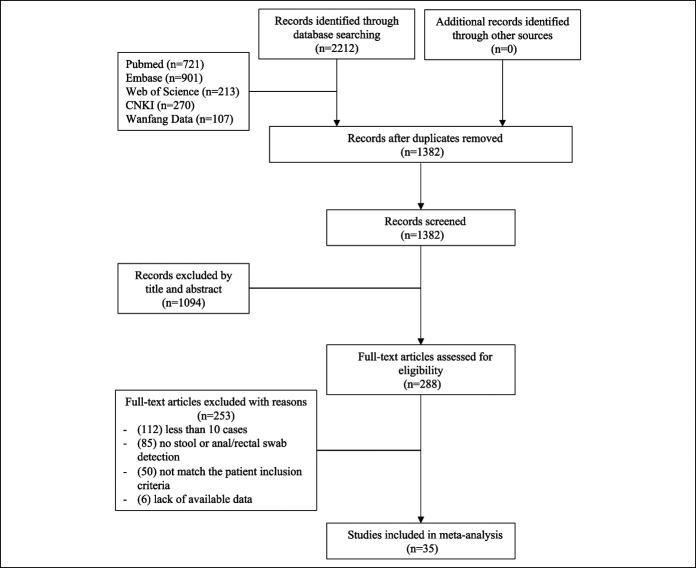
PubMed, Embase, Web of Science, and Chinese databases Chinese National Knowledge Infrastructure and Wanfang Data up to June 2020 were searched for studies evaluating fecal SARS-CoV-2 RNA, including anal and rectal samples, in patients with confirmed COVID-19 infection. The pooled prevalence of fecal RNA in patients with detectable respiratory RNA was estimated. The days of shedding and days to loss of fecal and respiratory RNA from presentation were compared.
RESULTS
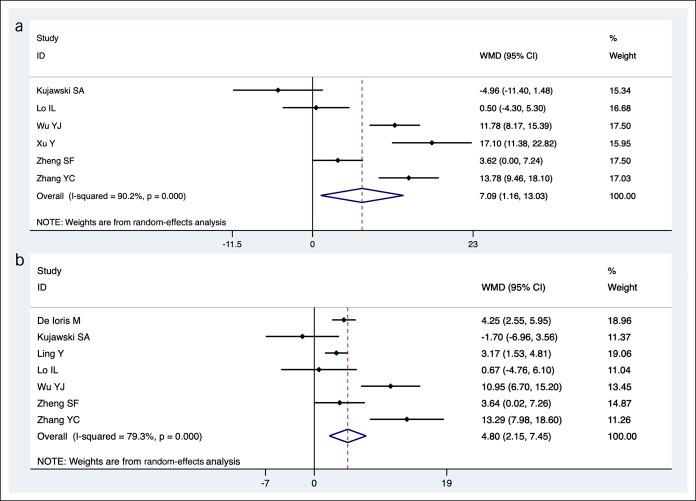
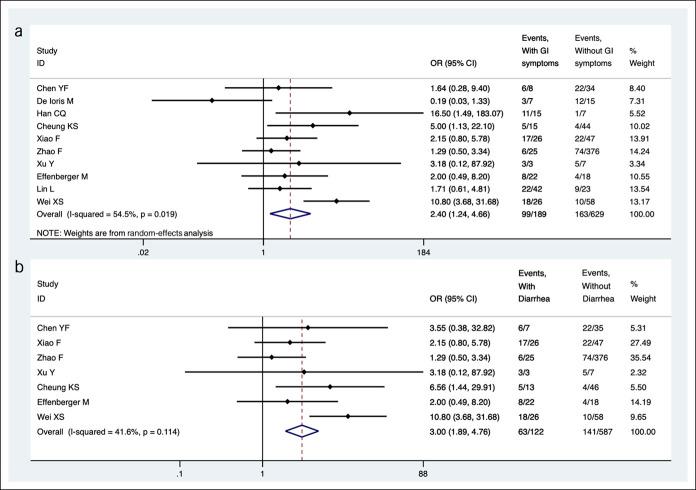
Thirty-five studies (N = 1,636) met criteria. The pooled prevalence of fecal RNA in COVID-19 patients was 43% (95% confidence interval [CI] 34%-52%). Higher proportion of patients with GI symptoms (52.4% vs 25.9%, odds ratio = 2.4, 95% CI 1.2-4.7) compared with no GI symptoms, specifically diarrhea (51.6% vs 24.0%, odds ratio = 3.0, 95% CI 1.9-4.8), had detectable fecal RNA. After loss of respiratory RNA, 27% (95% CI 15%-44%) of the patients had persistent shedding of fecal RNA. Days of RNA shedding in the feces were longer than respiratory samples (21.8 vs 14.7 days, mean difference = 7.1 days, 95% CI 1.2-13.0). Furthermore, days to loss of fecal RNA lagged respiratory RNA by a mean of 4.8 days (95% CI 2.2-7.5).
DISCUSSION
Fecal SARS-CoV-2 RNA is commonly detected in COVID-19 patients with a 3-fold increased risk with diarrhea. Shedding of fecal RNA lasted more than 3 weeks after presentation and a week after last detectable respiratory RNA.
介绍
粪便严重急性呼吸系统综合征冠状病毒 2(SARS-CoV-2)RNA 的流行和脱落表明,在胃肠道(GI)中存在 2019 年冠状病毒病(COVID-19)感染,并且可能具有传染性。我们进行了系统评价和荟萃分析,以评估 COVID-19 感染患者粪便 RNA 的流行率和脱落持续时间。
方法
截至 2020 年 6 月,检索了评估粪便 SARS-CoV-2 RNA 的研究,包括分析和直肠样本,这些研究均包含已确诊 COVID-19 感染的患者,这些研究来自 PubMed、Embase、Web of Science 和中国的数据库中国国家知识基础设施和万方数据。估计了可检测到呼吸道 RNA 的患者中粪便 RNA 的总体流行率。比较了粪便和呼吸道 RNA 从出现到消失的脱落天数。
结果
符合标准的 35 项研究(N = 1636)。COVID-19 患者粪便 RNA 的总体流行率为 43%(95%置信区间[CI] 34%-52%)。有胃肠道症状的患者(52.4%比 25.9%,比值比=2.4,95%CI 1.2-4.7)比无胃肠道症状(特别是腹泻)患者更有可能检测到粪便 RNA(51.6%比 24.0%,比值比=3.0,95%CI 1.9-4.8)。在失去呼吸道 RNA 后,27%(95%CI 15%-44%)的患者粪便中持续存在 RNA 脱落。粪便中 RNA 的脱落天数长于呼吸道样本(21.8 比 14.7 天,平均差异=7.1 天,95%CI 1.2-13.0)。此外,粪便 RNA 消失的时间比呼吸道 RNA 延迟了 4.8 天(95%CI 2.2-7.5)。
讨论
粪便 SARS-CoV-2 RNA 在 COVID-19 患者中通常可检测到,腹泻患者的风险增加了 3 倍。粪便 RNA 的脱落持续时间超过出现后 3 周,且在最后一次可检测到呼吸道 RNA 后 1 周。


 Zotero 插件