
慢性肾脏病患者使用降糖药物情况:2007年至2016年美国医疗保险受益人的分析
Glucose-Lowering Medication Use in CKD: Analysis of US Medicare Beneficiaries Between 2007 and 2016.
作者信息
Zhao Julie Z, Weinhandl Eric D, Carlson Angeline M, St Peter Wendy L
机构信息
Department of Pharmaceutical Care & Health Systems, University of Minnesota, College of Pharmacy, Minneapolis, MN.
Chronic Disease Research Group, Hennepin Healthcare Research Institute, Minneapolis, MN.
出版信息
Kidney Med. 2020 Dec 30;3(2):173-182.e1. doi: 10.1016/j.xkme.2020.09.016. eCollection 2021 Mar-Apr.
BACKGROUND
Information regarding the use of glucose-lowering medications in patients with chronic kidney disease (CKD) is limited.
STUDY DESIGN
Retrospective cohort study.
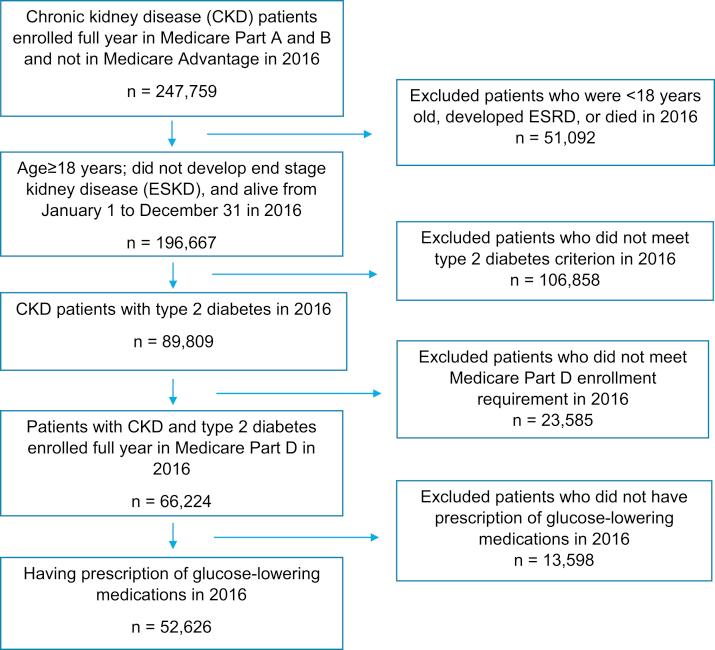
SETTING & PARTICIPANTS: Medicare 5% random sample of patients with CKD with type 2 diabetes, 2007 to 2016.
PREDICTORS
Study year, CKD stage, low-income subsidy status, and demographic characteristics (age, sex, and race/ethnicity).
OUTCOMES
Trends in use of glucose-lowering medications.
ANALYTICAL APPROACH
Yearly cohorts of patients with CKD and type 2 diabetes were created. Descriptive statistics were used to report proportions of patients using glucose-lowering medications. To test overall trends in glucose-lowering medication classes, linear probability models with adjustment for age, sex, race/ethnicity, CKD stage, and low-income subsidy status were used.
RESULTS
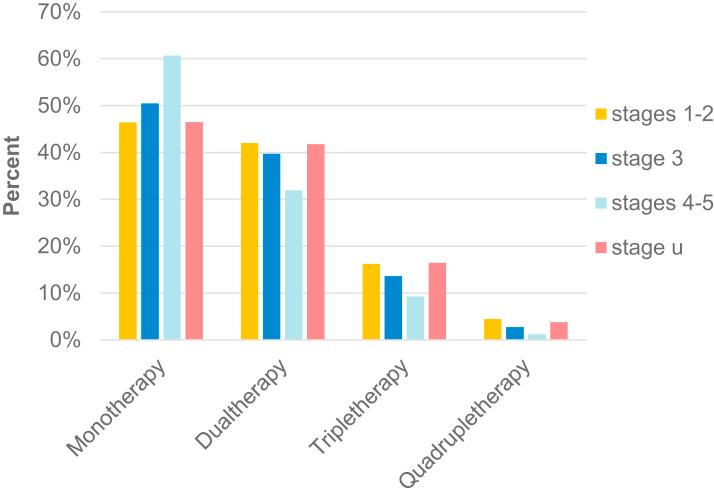
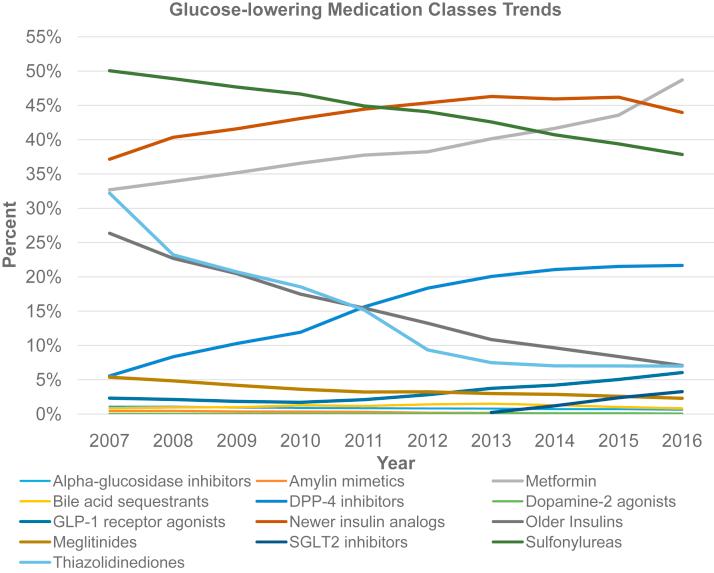
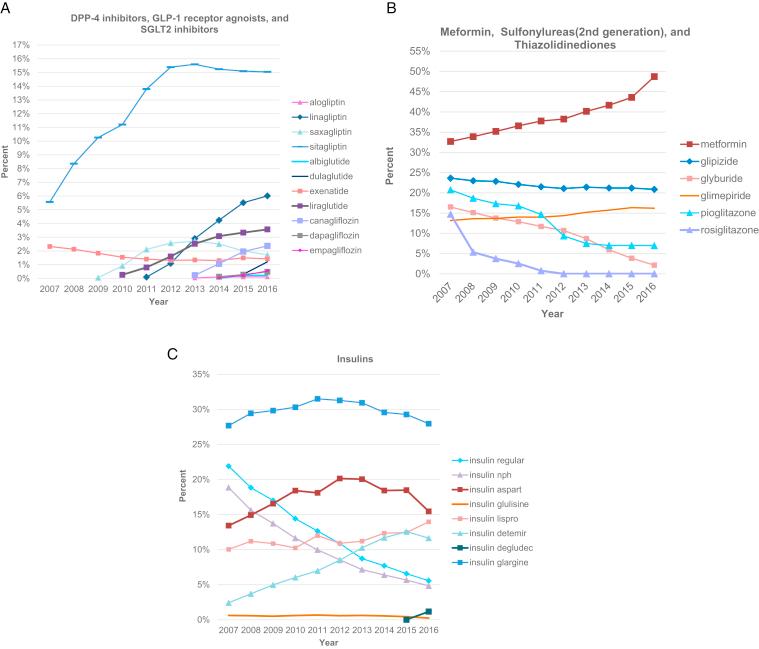
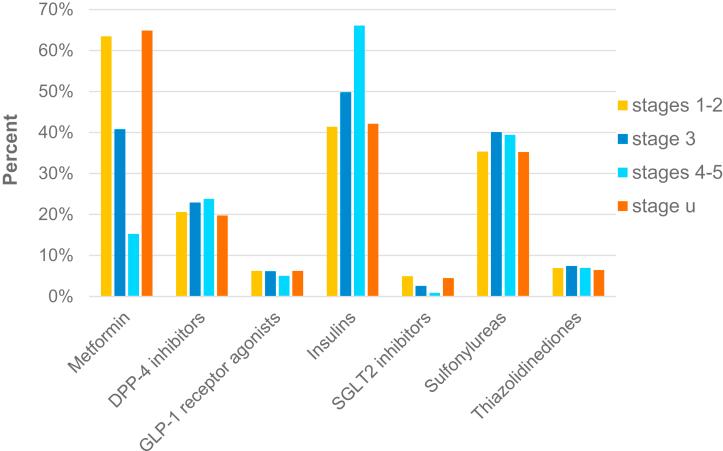
Metformin use increased significantly from 32.7% in 2007 to 48.7% in 2016. Use of newer classes of glucose-lowering medications increased significantly, including dipeptidyl peptidase 4 inhibitors (5.6%, 2007; 21.7%, 2016), glucagon-like peptide 1 receptor agonists (2.3%, 2007; 6.1%, 2016), and sodium-glucose cotransporter 2 inhibitors (0.2%, 2013; 3.3%, 2016). Newer insulin analogue use increased from 37.2% in 2007 to 46.3% in 2013 and then remained steady. Use of sulfonylureas, thiazolidinediones, older insulins (human regular and neutral protamine Hagedorn), α-glucosidase inhibitors, amylin mimetics, and meglitinides decreased significantly. Insulin was the most highly used single medication class. Insulin use was higher among low-income subsidy than among non-low-income subsidy patients. Combination therapy was less common as CKD stage increased.
LIMITATIONS
Patients with CKD and type 2 diabetes and the CKD stages were identified with diagnosis codes and could not be verified through medical record review. Our results may not be generalizable to younger patients with CKD with type 2 diabetes.
CONCLUSIONS
Use of metformin and newer glucose-lowering medication classes is increasing in patients with CKD with type 2 diabetes. We anticipate that percentages of patients with CKD using these newer agents will increase.
背景
关于慢性肾脏病(CKD)患者使用降糖药物的信息有限。
研究设计
回顾性队列研究。
研究地点与参与者
2007年至2016年患有2型糖尿病的CKD患者的医疗保险5%随机样本。
预测因素
研究年份、CKD分期、低收入补贴状态以及人口统计学特征(年龄、性别和种族/民族)。
研究结果
降糖药物的使用趋势。
分析方法
创建了CKD和2型糖尿病患者的年度队列。使用描述性统计来报告使用降糖药物的患者比例。为了检验降糖药物类别总体趋势,使用了对年龄、性别、种族/民族、CKD分期和低收入补贴状态进行调整的线性概率模型。
结果
二甲双胍的使用从2007年的32.7%显著增加到2016年的48.7%。新型降糖药物的使用显著增加,包括二肽基肽酶4抑制剂(2007年为5.6%;2016年为21.7%)、胰高血糖素样肽1受体激动剂(2007年为2.3%;2016年为6.1%)和钠-葡萄糖协同转运蛋白2抑制剂(2013年为0.2%;2016年为3.3%)。新型胰岛素类似物的使用从2007年的37.2%增加到2013年的46.3%,然后保持稳定。磺脲类、噻唑烷二酮类、旧胰岛素(人正规胰岛素和中性鱼精蛋白锌胰岛素)、α-葡萄糖苷酶抑制剂、胰淀素类似物和格列奈类的使用显著减少。胰岛素是使用最多的单一药物类别。低收入补贴患者的胰岛素使用高于非低收入补贴患者。随着CKD分期增加,联合治疗不太常见。
局限性
患有CKD和2型糖尿病的患者以及CKD分期是通过诊断编码确定的,无法通过病历审查进行核实。我们的结果可能不适用于更年轻的患有2型糖尿病的CKD患者。
结论
患有2型糖尿病的CKD患者中,二甲双胍和新型降糖药物类别的使用正在增加。我们预计使用这些新型药物的CKD患者百分比将会增加。

 Zotero 插件