
L3骨骼肌指数和晚期肺癌炎症指数在老年食管癌患者中的预后意义
Prognostic Significance of the L3 Skeletal Muscle Index and Advanced Lung Cancer Inflammation Index in Elderly Patients with Esophageal Cancer.
作者信息
Tan Xiang, Peng Huajian, Gu Peixin, Chen Mingwu, Wang Yongyong
机构信息
Department of Thoracic Surgery, The First Affiliated Hospital of Guangxi Medical University, Nanning, 530021, Guangxi Zhuang Autonomous Region, People's Republic of China.
Department of Neurology, The First Affiliated Hospital of Guangxi Medical University, Nanning, People's Republic of China.
出版信息
Cancer Manag Res. 2021 Apr 9;13:3133-3143. doi: 10.2147/CMAR.S304996. eCollection 2021.
OBJECTIVE
To evaluate the correlation between the advanced lung cancer inflammation index (ALI) and the L3 skeletal muscle index (L3SMI) and their prognostic value in elderly patients with esophageal cancer (EC).
MATERIALS AND METHODS
The clinical data of 158 elderly patients with EC were collected retrospectively. The L3SMI measures the area of skeletal muscle at the level of the third lumbar (L3) vertebra using computed tomography (CT). A high L3SMI and low L3SMI group were created using sex-based quartiles. The ALI, prognostic nutrition index (PNI), and geriatric nutrition risk index (GNRI) were calculated according to standard laboratory protocols.
RESULTS
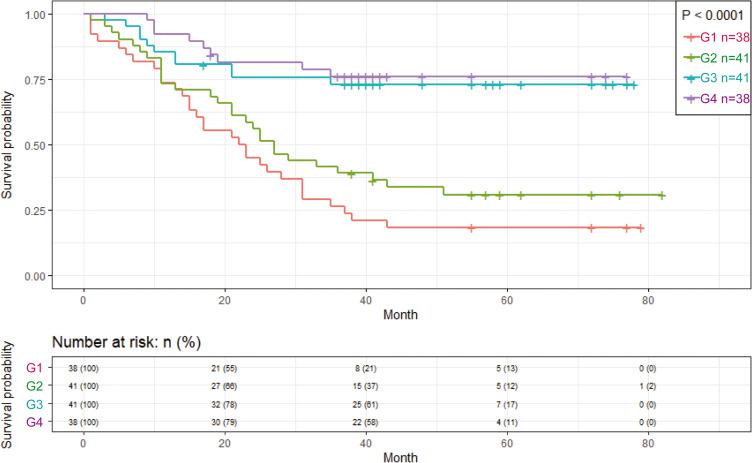
The CT diagnostic criteria for senile sarcopenia in South China are height ≤32.96 cm/m for females and height ≤35.4 cm/m for males. The logistic regression analysis showed that a low L3SMI was significantly associated with a low ALI. Survival analysis revealed EC patients with a low L3SMI and a low ALI had poorer overall survival (OS) than patients with a high L3SMI and a high ALI. Univariate and multivariate Cox analyses showed that the L3SMI and ALI were independent predictors of EC prognosis in elderly individuals.
CONCLUSION
There was a significant correlation between the PNI, GNRI, ALI, and L3SMI. Overall, our findings show the L3SMI and ALI are clinical indicators that can potentially be used to independently predict the prognosis of elderly EC patients and display good predictive value.
目的
评估晚期肺癌炎症指数(ALI)与L3骨骼肌指数(L3SMI)之间的相关性及其在老年食管癌(EC)患者中的预后价值。
材料与方法
回顾性收集158例老年EC患者的临床资料。L3SMI通过计算机断层扫描(CT)测量第三腰椎(L3)水平的骨骼肌面积。根据性别四分位数创建高L3SMI组和低L3SMI组。根据标准实验室方案计算ALI、预后营养指数(PNI)和老年营养风险指数(GNRI)。
结果
中国南方老年肌少症的CT诊断标准为女性身高≤32.96 cm/m,男性身高≤35.4 cm/m。逻辑回归分析显示,低L3SMI与低ALI显著相关。生存分析显示,低L3SMI和低ALI的EC患者总生存期(OS)比高L3SMI和高ALI的患者差。单因素和多因素Cox分析表明,L3SMI和ALI是老年个体EC预后的独立预测因素。
结论
PNI、GNRI、ALI和L3SMI之间存在显著相关性。总体而言,我们的研究结果表明,L3SMI和ALI是可用于独立预测老年EC患者预后的临床指标,具有良好的预测价值。




 Zotero 插件