
Mpro的多构象表征确定了有前景的抗COVID-19药物重新利用候选物。
Multi-conformation representation of Mpro identifies promising candidates for drug repurposing against COVID-19.
作者信息
Paul Debarati, Basu Debadrita, Ghosh Dastidar Shubhra
机构信息
Division of Bioinformatics, Bose Institute, P-1/12 CIT Scheme VII M, Kolkata, 700054, India.
出版信息
J Mol Model. 2021 Apr 17;27(5):128. doi: 10.1007/s00894-021-04732-1.
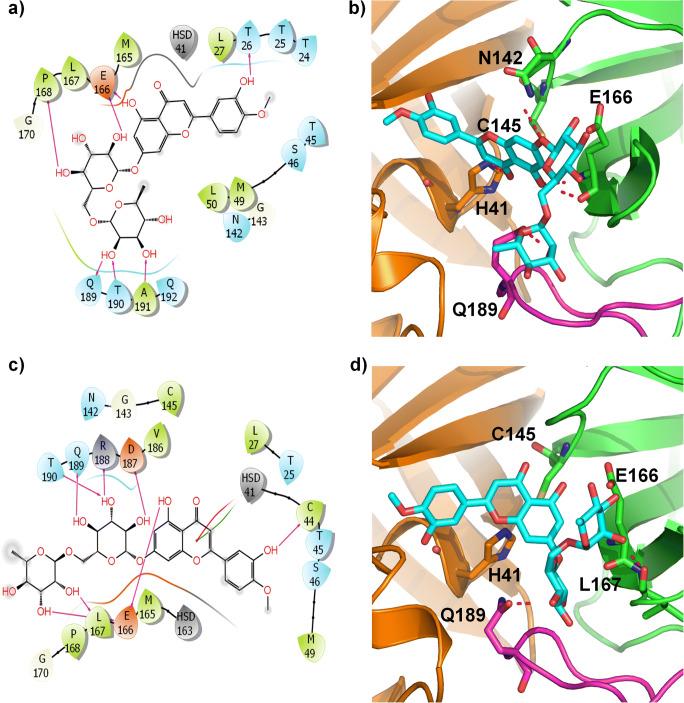
The COVID-19 main protease (Mpro), one of the conserved proteins of the novel coronavirus is crucial for its replication and so is a very lucrative drug target. Till now, there is no drug molecule that has been convincingly identified as the inhibitor of the function of this protein. The current pandemic situation demands a shortcut to quickly reach to a lead compound or a drug, which may not be the best but might serve as an interim solution at least. Following this notion, the present investigation uses virtual screening to find a molecule which is alraedy approved as a drug for some other disease but could be repurposed to inhibit Mpro. The potential of the present method of work to identify such a molecule, which otherwise would have been missed out, lies in the fact that instead of just using the crystallographically identified conformation of the receptor's ligand binding pocket, molecular dynamics generated ensemble of conformations has been used. It implicitly included the possibilities of "induced-fit" and/or "population shift" mechanisms of ligand fitting. As a result, the investigation has not only identified antiviral drugs like ribavirin, ritonavir, etc., but it has also captured a wide variety of drugs for various other diseases like amrubicin, cangrelor, desmopressin, diosmin, etc. as the potent possibilities. Some of these ligands are versatile to form stable interactions with various different conformations of the receptor and therefore have been statistically surfaced in the investigation. Overall the investigation offers a wide range of compounds for further testing to confirm their scopes of applications to combat the COVID-19 pandemic.
新型冠状病毒的主要蛋白酶(Mpro)是该新型冠状病毒的保守蛋白之一,对其复制至关重要,因此是一个极具吸引力的药物靶点。到目前为止,还没有药物分子被令人信服地确定为该蛋白功能的抑制剂。当前的大流行形势需要一条捷径,以便快速找到一种先导化合物或药物,这可能不是最佳选择,但至少可以作为一种临时解决方案。基于这一理念,本研究采用虚拟筛选来寻找一种已被批准用于治疗其他疾病的分子,但可重新用于抑制Mpro。本研究方法识别此类否则可能会被遗漏的分子的潜力在于,除了使用受体配体结合口袋的晶体学确定构象外,还使用了分子动力学生成的构象集合。它隐含地包含了配体拟合的“诱导契合”和/或“群体转移”机制的可能性。结果,该研究不仅确定了利巴韦林、利托那韦等抗病毒药物,还发现了阿柔比星、坎格雷洛、去氨加压素、地奥司明等多种用于其他各种疾病的药物具有潜在可能性。其中一些配体具有通用性,能够与受体的各种不同构象形成稳定相互作用,因此在研究中从统计学角度被筛选出来。总体而言,该研究提供了多种化合物以供进一步测试,以确认它们在对抗新冠疫情中的应用范围。



 Zotero 插件