
右美托咪定联合舒芬太尼及地佐辛用于患者自控静脉镇痛可提高女性患者胸腔镜手术后的总体满意度。
Dexmedetomidine combined with sufentanil and dezocine-based patient-controlled intravenous analgesia increases female patients' global satisfaction degree after thoracoscopic surgery.
作者信息
Li Qiongzhen, Yao Haixia, Xu Meiying, Wu Jingxiang
机构信息
Department of Anesthesiology of Shanghai Chest Hospital, Shanghai Jiaotong University, No. 241 Huaihai Rd. West, Shanghai, 200025, China.
出版信息
J Cardiothorac Surg. 2021 Apr 21;16(1):102. doi: 10.1186/s13019-021-01472-4.
BACKGROUND
There are no studies on the use of dexmedetomidine combined with sufentanil and dezocine-based patient-controlled intravenous analgesia (PCIA) in females undergoing thoracic surgery. We postulate that introducing dexmedetomidine to a combination of dezocine-based PCA drugs and sufentanil will increase female patients' global satisfaction degree.
METHODS
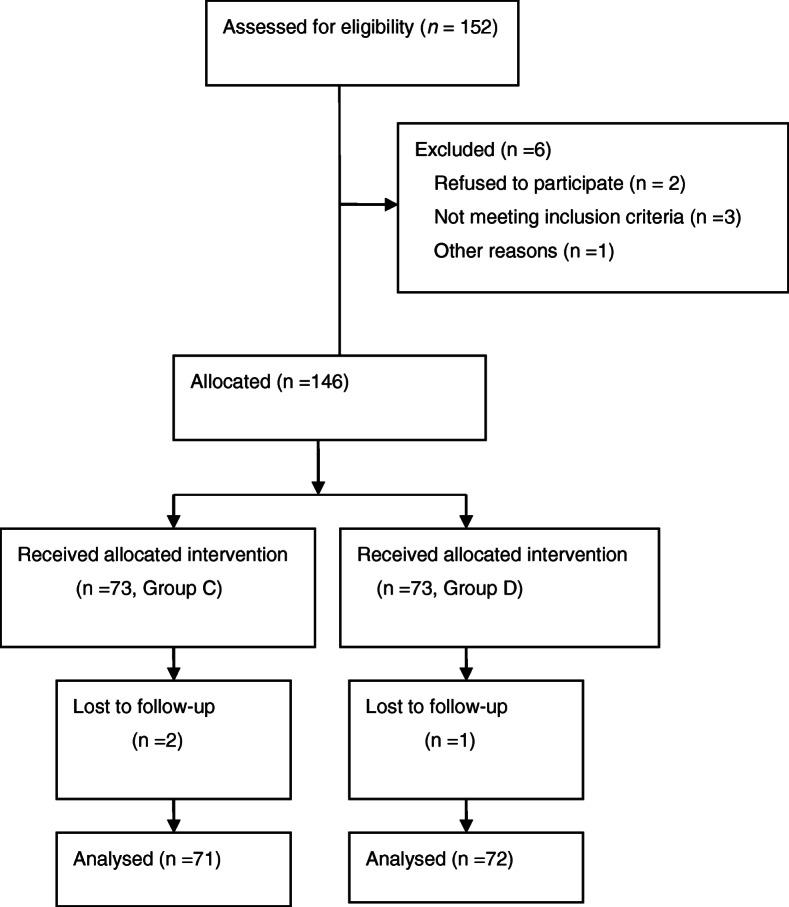
One hundred fifty-two female patients with physical classification type I or II according to the American Society of Anesthesiologists undergoing thoracoscopic surgery were arbitrarily classified into two categories, either receiving sufentanil and dezocine-based PCIA (group C) or incorporating dexmedetomidine with sufentanil and dezocine-based PCIA (group D). The patients' global satisfaction degree, postoperative nausea and vomiting (PONV), PCA bolus, rescue analgesia requirements, drug-related adverse effects, rest and coughing visual analogue scale (VAS) ratings, and Ramsay sedation scores (RSS) were measured at 6, 12, 24, 36 and 48 h after surgery.
RESULTS
Compared with the C group, the patient satisfaction degree was significantly higher; pain scores at rest and coughing were significantly different at 6, 12, 24, 36 and 48 h postoperatively; less rescue analgesia and PCA bolus were required; and a lower incidence of PONV was found in the D group. There were non-significant trends for the sedation scores and drug-related adverse effects in both groups.
CONCLUSIONS
Dexmedetomidine combined with sufentanil and dezocine increased female patients' global satisfaction degree after thoracoscopic surgery. This effect could be linked to the improvement in postoperative analgesia and reduction in postoperative nausea and vomiting; the combined treatment did not increase drug-related adverse effects in female patients.
TRIAL REGISTRATION
Chinese Clinical Trial Registry number, ChiCTR2000030429 . Registered on March 1, 2020.
背景
目前尚无关于右美托咪定联合舒芬太尼及地佐辛用于女性胸外科手术患者自控静脉镇痛(PCIA)的研究。我们推测,在基于地佐辛的PCA药物和舒芬太尼的组合中加入右美托咪定将提高女性患者的整体满意度。
方法
152例根据美国麻醉医师协会身体状况分级为I或II级的行胸腔镜手术的女性患者被随机分为两组,一组接受基于舒芬太尼和地佐辛的PCIA(C组),另一组接受右美托咪定联合舒芬太尼及地佐辛的PCIA(D组)。在术后6、12、24、36和48小时测量患者的整体满意度、术后恶心呕吐(PONV)、PCA单次给药量、补救镇痛需求、药物相关不良反应、休息和咳嗽时的视觉模拟评分(VAS)以及 Ramsay 镇静评分(RSS)。
结果
与C组相比,D组患者满意度显著更高;术后6、12、24、36和48小时休息和咳嗽时的疼痛评分有显著差异;所需补救镇痛和PCA单次给药量更少;PONV发生率更低。两组的镇静评分和药物相关不良反应无显著趋势。
结论
右美托咪定联合舒芬太尼和地佐辛可提高女性患者胸腔镜手术后的整体满意度。这种效果可能与术后镇痛的改善和术后恶心呕吐的减少有关;联合治疗未增加女性患者的药物相关不良反应。
试验注册
中国临床试验注册中心编号,ChiCTR2000030429。于2020年3月1日注册。
 Zotero 插件