
利用玉米芯制备的酸功能化活性炭进行工艺优化,以生产 4-羟甲基-2,2-二甲基-1,3-二恶烷和 5-羟基-2,2-二甲基-1,3-二恶烷。
Process optimization with acid functionalised activated carbon derived from corncob for production of 4-hydroxymethyl-2,2-dimethyl-1,3-dioxolane and 5-hydroxy-2,2-dimethyl-1,3-dioxane.
机构信息
Department of Chemical Engineering, Dr. B. R. Ambedkar National Institute of Technology, Jalandhar, Punjab, India.
Chemical Conversion Division, Sardar Swaran Singh National Institute of Bio-Energy (An Autonomous Institute of MNRE, Government of India), Kapurthala, Punjab, India.
出版信息
Sci Rep. 2021 Apr 21;11(1):8567. doi: 10.1038/s41598-021-87622-z.
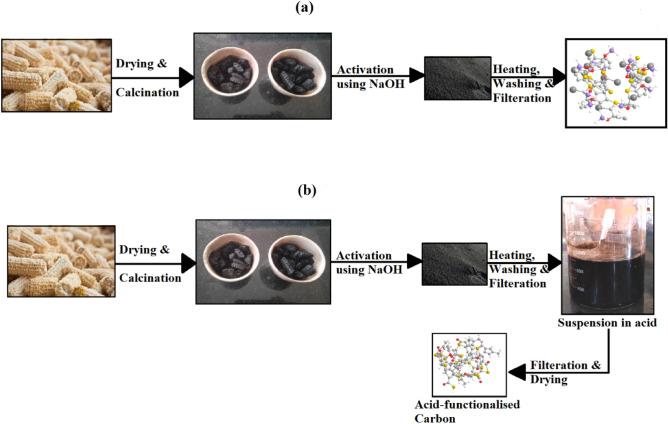
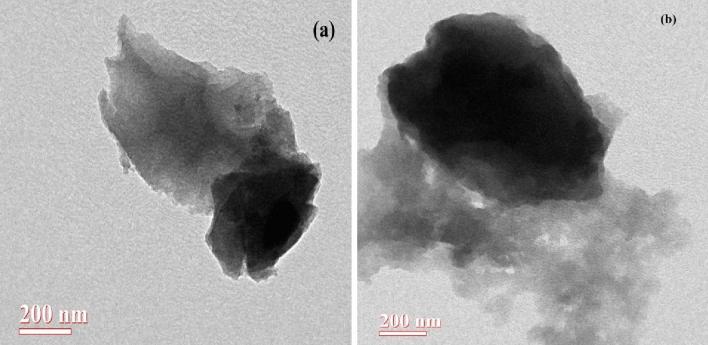
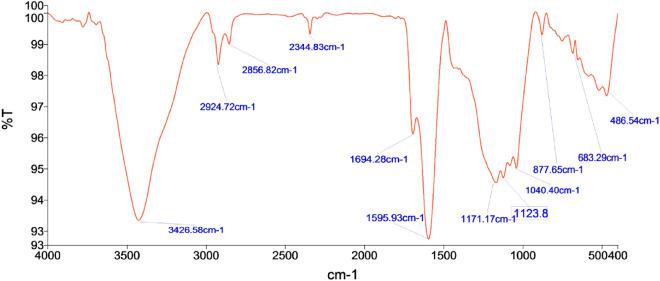
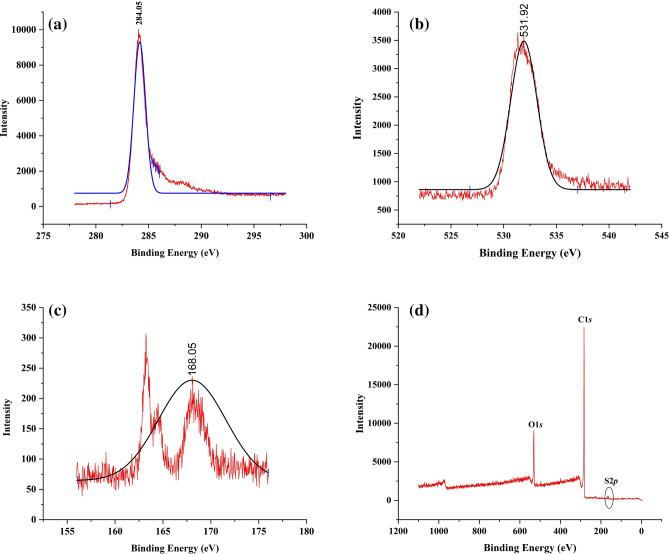
In this article, a two-step activated carbon preparation technique from corncob has been elucidated. The derived catalysts AAC-CC has been characterized using various techniques for the determination of their structural properties and compared with AC-CC, already reported with another article. The conjugated boat structure of AAC-CC resulted in a very high surface area (779.8 m/g) and high pore volume (0.428 cc/g). This unveils the suitability of AAC-CC as better among the two catalytic pathways for solketal production. The activated carbons so prepared have been used for the valorization of glycerol to produce 2,2-Dimethyl-1,3-dioxolane-4-methanol (solketal), oxygenated additives to fuel. The face-centered composite design (FCCD) of RSM was applied for the optimization of the reaction parameters for the ketalisation reaction using AAC-CC as a catalyst. From the optimized results, the acidic catalyst AAC-CC resulted in a glycerol conversion, i.e. 80.3% under the actual laboratory experiment. Moreover, the catalyst could be reused for three consecutive batch reactions without (< 5%) much reduction of activity and no distinctive structural deformity.
本文阐述了一种两步法从玉米芯中制备活性炭的技术。所得催化剂 AAC-CC 采用多种技术进行了表征,以确定其结构特性,并与已在另一篇文章中报道的 AC-CC 进行了比较。AAC-CC 的共轭船型结构导致其具有非常高的表面积(779.8 m/g)和高孔体积(0.428 cc/g)。这表明 AAC-CC 作为两种催化途径中更适合生产缩醛的催化剂。所制备的活性炭已用于甘油的增值,以生产 2,2-二甲基-1,3-二恶烷-4-甲醇(缩醛),作为燃料的含氧添加剂。响应面法(RSM)的面心复合设计(FCCD)用于优化使用 AAC-CC 作为催化剂的缩醛化反应的反应参数。从优化结果来看,在实际的实验室实验中,酸性催化剂 AAC-CC 使甘油转化率达到 80.3%。此外,该催化剂在三个连续的间歇反应中可重复使用,活性降低不超过(<5%),且没有明显的结构变形。





 Zotero 插件