
利用邮轮作为隔离设施成功控制船上的 COVID-19 疫情,澳大利亚西澳大利亚州。
Successful Control of an Onboard COVID-19 Outbreak Using the Cruise Ship as a Quarantine Facility, Western Australia, Australia.
出版信息
Emerg Infect Dis. 2021 May;27(5):1279-1287. doi: 10.3201/eid2705.204142.
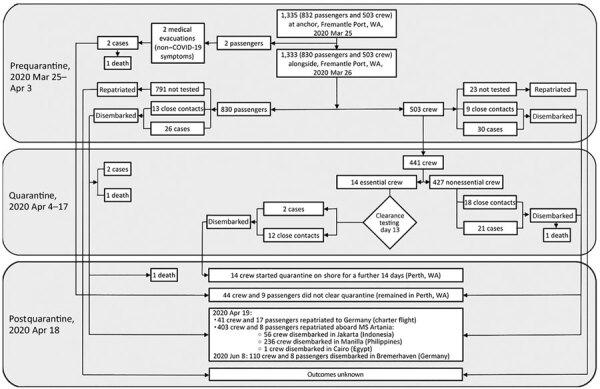
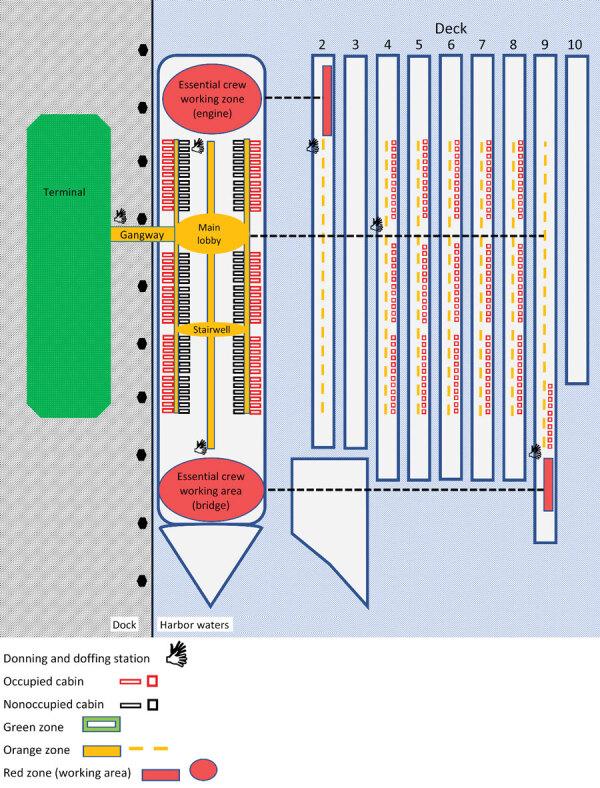
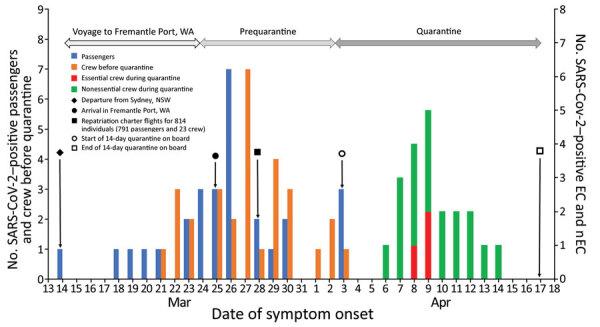
Onboard quarantining has been only partially effective to control outbreaks of coronavirus disease on cruise ships. We describe the successful use of the ship as a quarantine facility during the response to the outbreak on the MS Artania, which docked in Western Australia, Australia. The health-led 14-day quarantine regime was based on established principles of outbreak management and experiences of coronavirus disease outbreaks on cruise ships elsewhere. The attack rate in the crew was 3.3% (28/832) before quarantine commencement and 4.8% (21/441) during quarantine on board. No crew members became symptomatic after completion of quarantine. Infection surveillance involved telephone correspondence, face-to-face visits, and testing for severe acute respiratory syndrome coronavirus 2. No serious health issues were reported, no response staff became infected, and only 1 quarantine breach occurred among crew. Onboard quarantine could offer financial and operational advantages in outbreak response and provide reassurance to the shore-based wider community regarding risk for infection.
船上隔离对于控制邮轮上的冠状病毒病爆发仅部分有效。我们描述了在澳大利亚西澳大利亚州停靠的 MS Artania 号邮轮上爆发疫情时,成功将该船用作隔离设施的情况。该卫生主导的 14 天隔离制度是基于既定的疫情管理原则和其他邮轮上冠状病毒病爆发的经验制定的。在开始隔离前,船员中的发病率为 3.3%(28/832),在船上隔离期间为 4.8%(21/441)。没有船员在隔离结束后出现症状。感染监测包括电话联系、面对面访问和对严重急性呼吸综合征冠状病毒 2 的检测。没有报告严重的健康问题,没有工作人员感染,只有 1 名船员违反隔离规定。船上隔离在疫情应对方面具有财务和运营优势,并向岸上更广泛的社区保证感染风险。
 Zotero 插件