
GABA 受体- G 蛋白偶联的结构基础。
Structural basis of GABA receptor-G protein coupling.
机构信息
ZJU-HUST Joint Laboratory of Cellular Signaling, Key Laboratory of Molecular Biophysics of MOE, International Research Center for Sensory Biology and Technology of MOST, College of Life Science and Technology, Huazhong University of Science and Technology (HUST), Wuhan, China.
Department of Biophysics and Department of Pathology of Sir Run Run Shaw Hospital, Zhejiang University School of Medicine, Hangzhou, China.
出版信息
Nature. 2021 Jun;594(7864):594-598. doi: 10.1038/s41586-021-03507-1. Epub 2021 Apr 28.
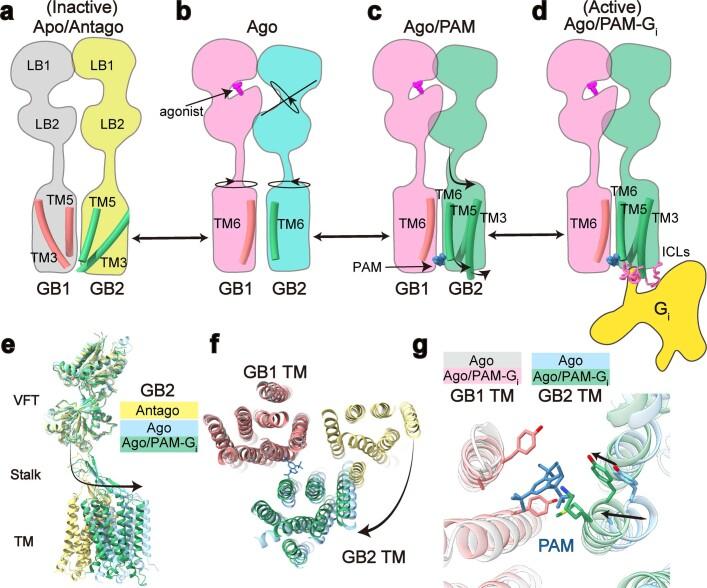
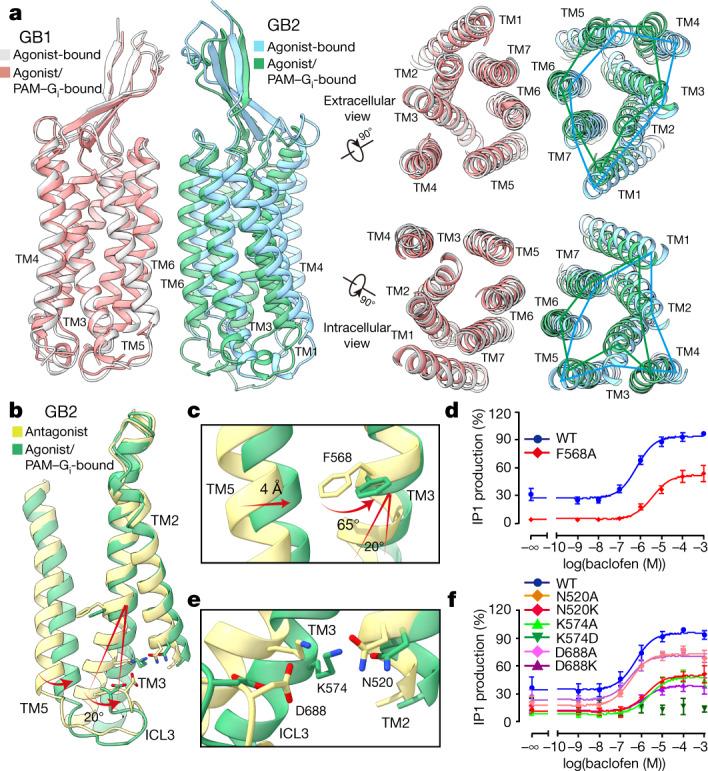
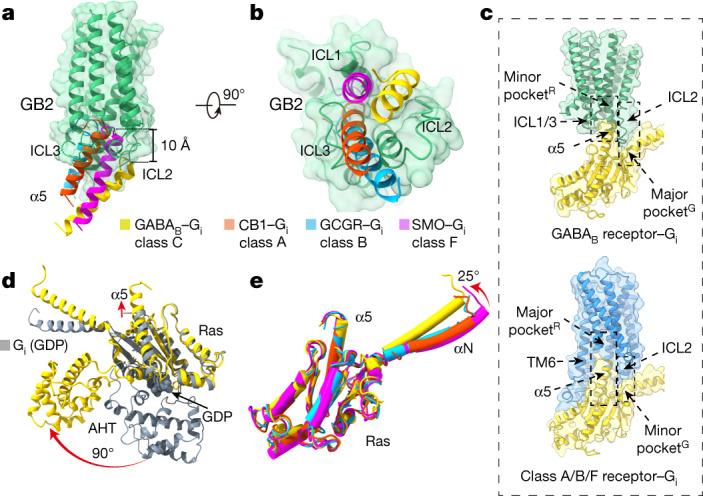
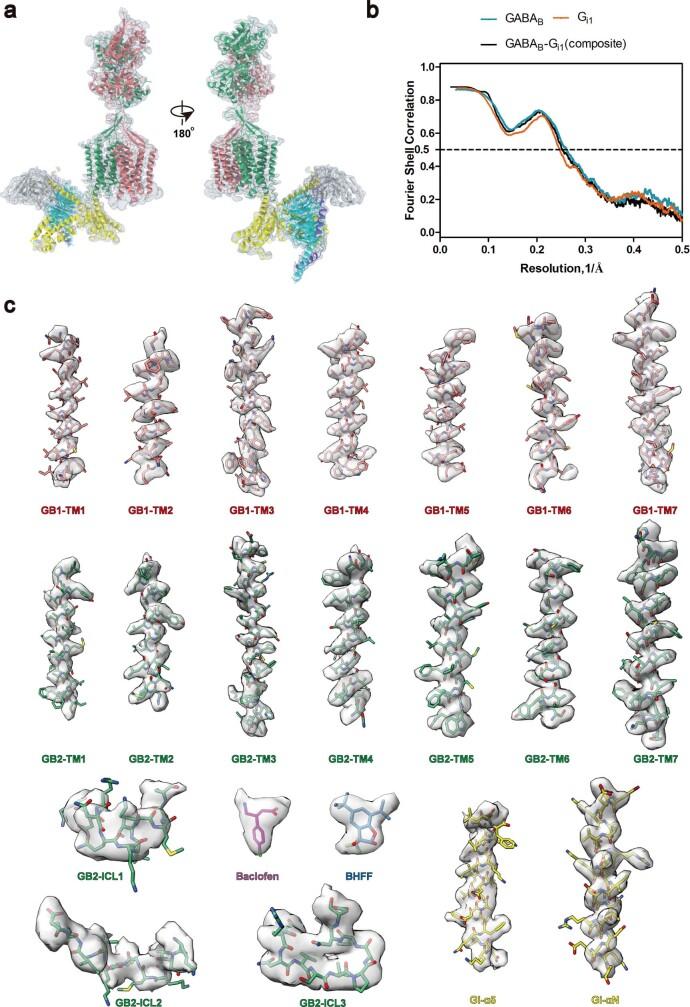
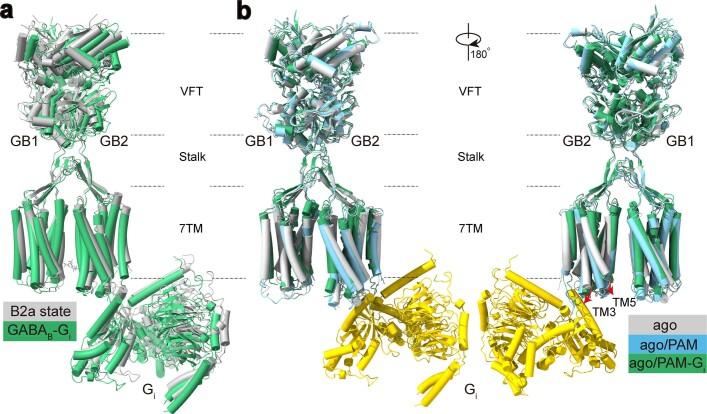
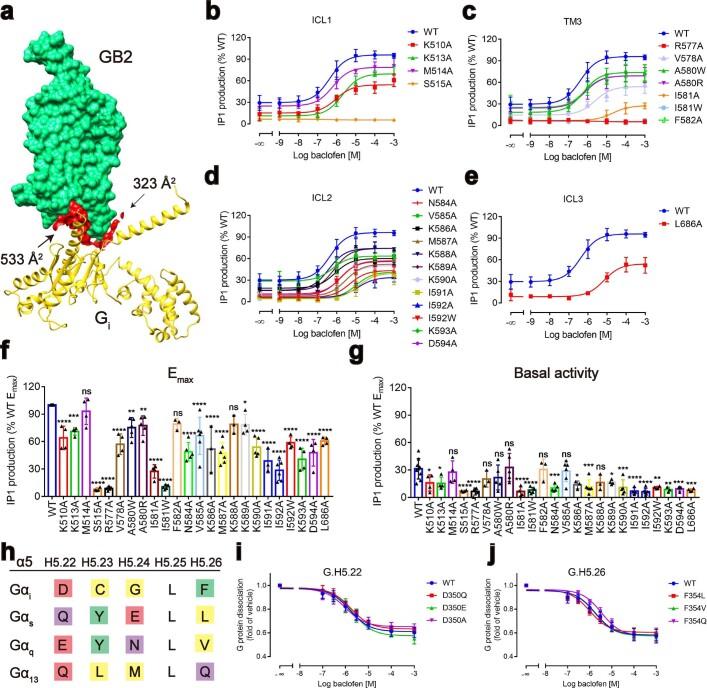
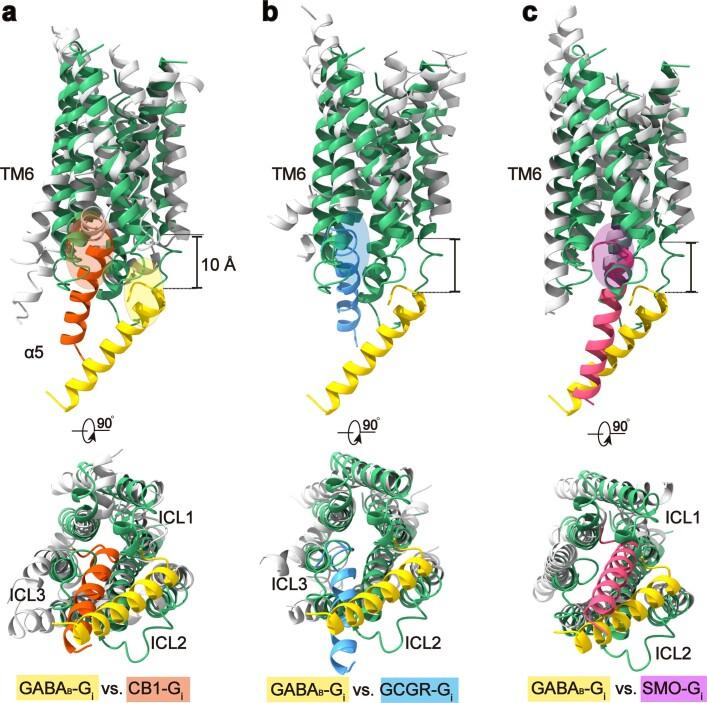
G-protein-coupled receptors (GPCRs) have central roles in intercellular communication. Structural studies have revealed how GPCRs can activate G proteins. However, whether this mechanism is conserved among all classes of GPCR remains unknown. Here we report the structure of the class-C heterodimeric GABA receptor, which is activated by the inhibitory transmitter GABA, in its active form complexed with G protein. We found that a single G protein interacts with the GB2 subunit of the GABA receptor at a site that mainly involves intracellular loop 2 on the side of the transmembrane domain. This is in contrast to the G protein binding in a central cavity, as has been observed with other classes of GPCR. This binding mode results from the active form of the transmembrane domain of this GABA receptor being different from that of other GPCRs, as it shows no outside movement of transmembrane helix 6. Our work also provides details of the inter- and intra-subunit changes that link agonist binding to G-protein activation in this heterodimeric complex.
G 蛋白偶联受体(GPCRs)在细胞间通讯中起着核心作用。结构研究揭示了 GPCR 如何激活 G 蛋白。然而,这种机制是否在所有 GPCR 类别中都保守仍然未知。在这里,我们报告了由抑制性递质 GABA 激活的 G 蛋白偶联受体的结构,该受体处于与 G 蛋白形成复合物的活性形式。我们发现,单个 G 蛋白与 GABA 受体的 GB2 亚基在一个主要涉及跨膜域侧面细胞内环 2 的位点相互作用。这与在其他 GPCR 中观察到的中央腔中的 G 蛋白结合形成对比。这种结合模式是由于这种 GABA 受体的跨膜域的活性形式不同于其他 GPCR,因为它没有跨膜螺旋 6 的外部运动。我们的工作还提供了连接激动剂结合与该异源二聚体复合物中 G 蛋白激活的亚基间和亚基内变化的详细信息。





 Zotero 插件