
希腊肉鸡群分离株的抗菌药物耐药性、FlaA测序及系统发育分析
Antimicrobial Resistance, FlaA Sequencing, and Phylogenetic Analysis of Isolates from Broiler Chicken Flocks in Greece.
作者信息
Natsos George, Mouttotou Niki K, Magiorkinis Emmanouil, Ioannidis Anastasios, Magana Maria, Chatzipanagiotou Stylianos, Koutoulis Konstantinos C
机构信息
Department of Poultry Diseases, Veterinary Faculty, University of Thessaly, 43100 Karditsa, Greece.
Ministry of Rural Development and Foods, National Reference Laboratory for Salmonella and Antimicrobial Resistance, 34100 Chalkida, Greece.
出版信息
Vet Sci. 2021 Apr 21;8(5):68. doi: 10.3390/vetsci8050068.
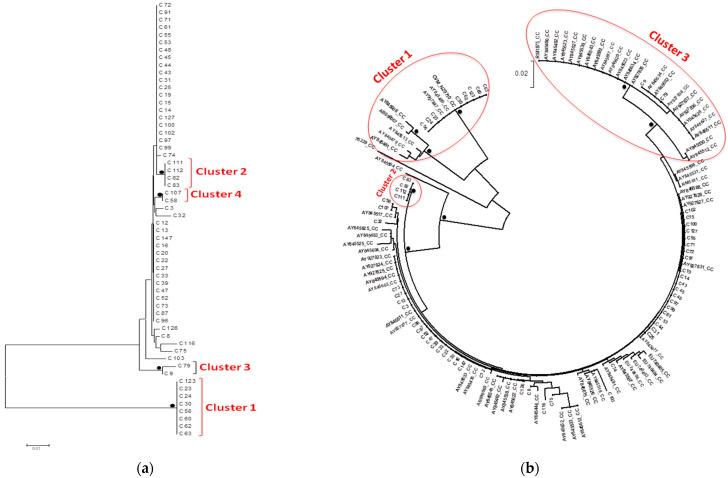
Human campylobacteriosis caused by thermophilic species is the most commonly reported foodborne zoonosis. Consumption of contaminated poultry meat is regarded as the main source of human infection. This study was undertaken to determine the antimicrobial susceptibility and the molecular epidemiology of 205 isolates derived from Greek flocks slaughtered in three different slaughterhouses over a 14-month period. A total of 98.5% of the isolates were resistant to at least one antimicrobial agent. In terms of multidrug resistance, 11.7% of isolates were resistant to three or more groups of antimicrobials. Extremely high resistance to fluoroquinolones (89%), very high resistance to tetracycline (69%), and low resistance to macrolides (7%) were detected. FlaA sequencing was performed for the subtyping of 64 and 58 isolates. No prevalence of a specific flaA type was observed, indicating the genetic diversity of the isolates, while some flaA types were found to share similar antimicrobial resistance patterns. Phylogenetic trees were constructed using the neighbor-joining method. Seven clusters of the phylogenetic tree and three clusters of the tree were considered significant with bootstrap values >75%. Some isolates clustered together were originated from the same or adjacent farms, indicating transmission via personnel or shared equipment. These results are important and help further the understanding of the molecular epidemiology and antimicrobial resistance of spp. derived from poultry in Greece.
由嗜热弯曲杆菌引起的人类弯曲杆菌病是最常报告的食源性人畜共患病。食用受污染的禽肉被认为是人类感染的主要来源。本研究旨在确定在14个月期间从希腊三个不同屠宰场宰杀的鸡群中分离出的205株菌株的抗菌药敏性和分子流行病学。总共98.5%的分离株对至少一种抗菌剂耐药。就多重耐药性而言,11.7%的分离株对三组或更多组抗菌剂耐药。检测到对氟喹诺酮类药物的极高耐药率(89%)、对四环素的非常高耐药率(69%)以及对大环内酯类药物的低耐药率(7%)。对64株和58株分离株进行了FlaA测序以进行亚型分析。未观察到特定FlaA类型的流行,表明分离株的遗传多样性,同时发现一些FlaA类型具有相似的抗菌耐药模式。使用邻接法构建了系统发育树。系统发育树的七个簇和树的三个簇被认为具有显著性,自展值>75%。一些聚集在一起的分离株来自相同或相邻的农场,表明通过人员或共享设备传播。这些结果很重要,有助于进一步了解希腊家禽源弯曲杆菌的分子流行病学和抗菌耐药性。

 Zotero 插件