
全球、区域和国家层面妊娠高血压疾病的流行病学趋势:基于人群的研究。
Epidemiological trends of maternal hypertensive disorders of pregnancy at the global, regional, and national levels: a population-based study.
机构信息
Department of Obstetrics and Gynecology, The First Affiliated Hospital of Xi'an Jiaotong University, 710061, Xi'an, Shaanxi, China.
Department of Nuclear Medicine, The First Affiliated Hospital of Xi'an Jiaotong University, 710061, Xi'an, Shaanxi, China.
出版信息
BMC Pregnancy Childbirth. 2021 May 8;21(1):364. doi: 10.1186/s12884-021-03809-2.
BACKGROUND
Relevant studies focusing on epidemiological of profiles hypertensive disorders of pregnancy from global data that report the cause-specific prevalence and trends of hypertensive disorders of pregnancy at global, regional and national levels from 1990 to 2019 by age and sociodemographic index are still limited.
METHODS
For hypertensive disorders of pregnancy, point prevalence, annual incidence, and years lived with disability numbers and age standardized rates per 100,000 population were compared at regional and national levels by age and sociodemographic index using data from the global Burden of Disease 2019 Study, covering populations from 204 countries and territories. Estimates are reported with uncertainty intervals to exhibit the changing trends during a specific period.
RESULTS
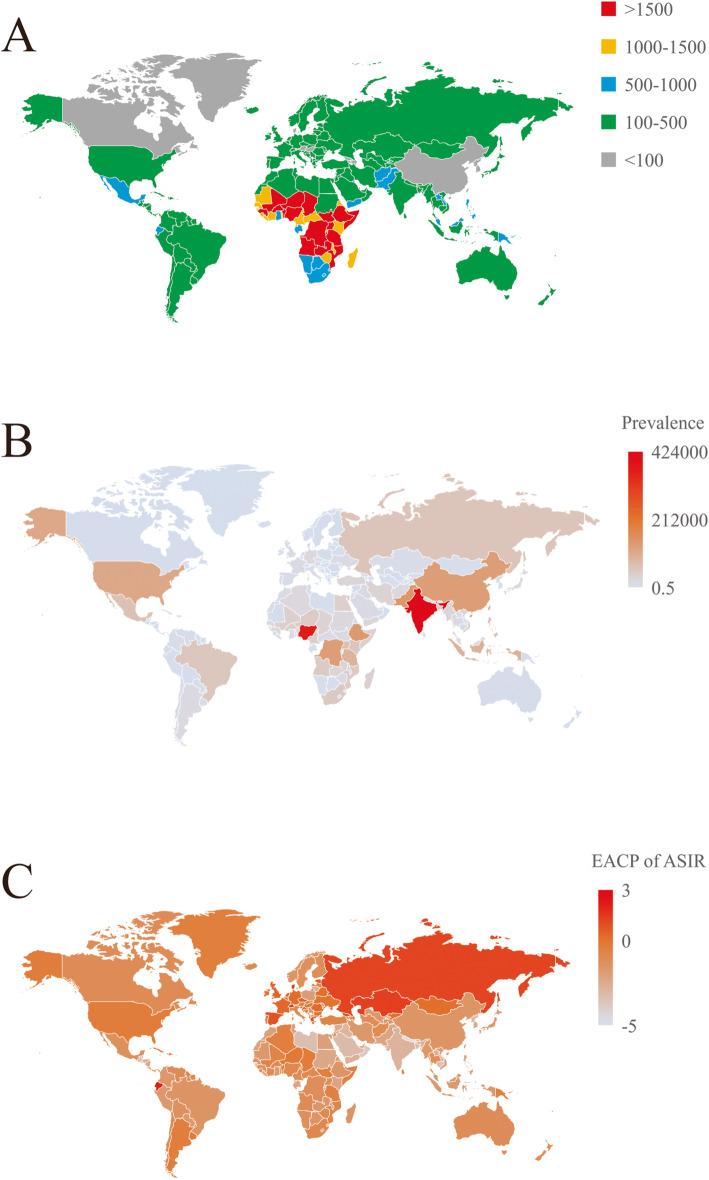
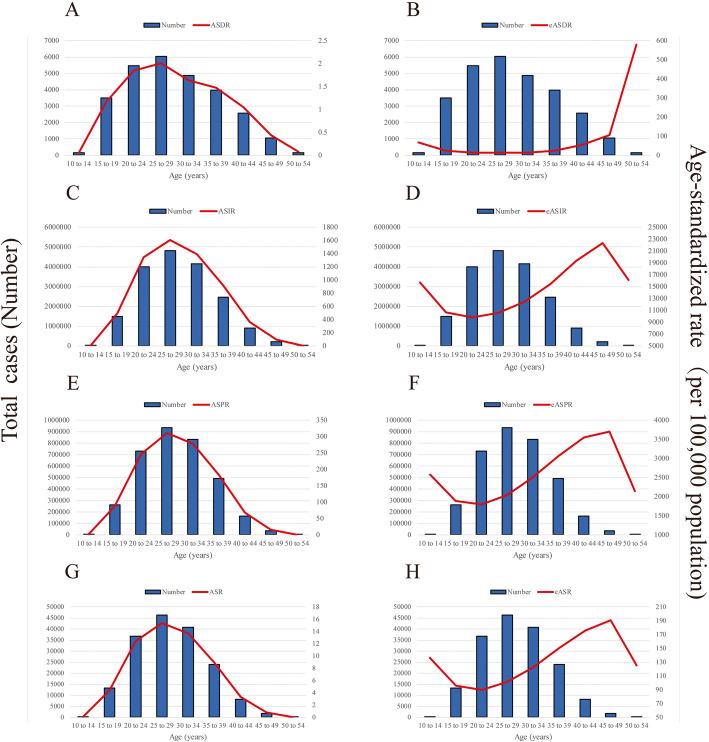
The incidence of hypertensive disorders of pregnancy increased from 16.30 million to 18.08 million globally, with a total increase of 10.92 % from 1990 to 2019. The age-standardized incidence rate decreased, with an estimated annual percent change of -0.68 (95 % confidence interval [CI] -0.49 to -0.86). The number of deaths due to hypertensive disorders of pregnancy was approximately 27.83 thousand in 2019, representing a 30.05 % decrease from 1990. Based on the incidence and prevalence, the number of deaths and years lived with disability were highest in the group aged 25-29 years, followed by the groups aged 30-34 and 20-24 years, while the lowest estimated incidence rate was observed in the group aged 25-29 years and higher incidence rates were observed in the youngest and oldest groups. Positive associations between incidence rates and the sociodemographic index and human development index were found for all countries and regions in 2019. Age-standardized incidence rates were higher in countries/regions with lower sociodemographic indices and human development indices.
CONCLUSIONS
Our study provides a comprehensive overview of the global burden of hypertensive disorders of pregnancy. The death and incidence rates are decreasing in most countries and all regions except for those with low sociodemographic and human development indexes. This difference is mainly due to the increasing attention to prenatal examinations and health education. Further investigations should focus on forecasting the global disease burden of specific hypertensive disorders of pregnancy and modifiable risk factors.
背景
目前,全球范围内仍缺乏相关研究,这些研究主要针对全球数据中妊娠高血压疾病的流行病学特征,报告了全球、区域和国家各级特定病因的妊娠高血压疾病的流行率和趋势,以及年龄和社会人口指数。
方法
本研究使用全球疾病负担 2019 研究的数据,比较了全球 204 个国家和地区的年龄和社会人口指数,分析了妊娠高血压疾病在区域和国家层面上的点患病率、年发病率、残疾人数和年龄标准化率(每 10 万人)。使用不确定性区间报告估计值,以展示特定时期的变化趋势。
结果
全球范围内妊娠高血压疾病的发病率从 1990 年的 1630 万例增加到 2019 年的 1808 万例,增加了 10.92%。年龄标准化发病率呈下降趋势,估计的年变化率为-0.68(95%置信区间[-0.49,-0.86])。2019 年因妊娠高血压疾病导致的死亡人数约为 27.83 万,较 1990 年下降了 30.05%。基于发病率和患病率,25-29 岁年龄组的死亡人数和残疾生存年数最高,其次是 30-34 岁和 20-24 岁年龄组,而 25-29 岁年龄组的发病率最低,发病率最高的是年龄最小和最大的组。2019 年,所有国家和地区的发病率与社会人口指数和人类发展指数呈正相关。在 2019 年,社会人口指数和人类发展指数较低的国家/地区,年龄标准化发病率更高。
结论
本研究全面概述了妊娠高血压疾病的全球负担。除社会人口和人类发展指数较低的国家/地区外,大多数国家和地区的死亡和发病率都在下降。这种差异主要是由于越来越重视产前检查和健康教育。进一步的研究应集中在预测特定妊娠高血压疾病的全球疾病负担和可改变的危险因素上。

 Zotero 插件