
埃塞俄比亚中部哈迪亚地区公立医院孕妇妊娠高血压的患病率及相关因素:一项横断面研究
Prevalence and associated factors of pregnancy induced hypertension among pregnant women in public hospitals of Hadiya Zone, Central Ethiopia: A cross-sectional study.
作者信息
Debebe Argago Zerfework, Dereje Nebiyu, Philip Neena Elezebeth
机构信息
Department of Epidemiology and Public Health, School of Life Science, Central University of Tamil Nadu, Thiruvarur, India.
Department of Midwifery, College of Medicine and Health Sciences, Wachemo University, Hossana, Ethiopia.
出版信息
PLoS One. 2025 Aug 1;20(8):e0326236. doi: 10.1371/journal.pone.0326236. eCollection 2025.
BACKGROUND
Pregnancy-induced hypertension is one of the global public health burdens contributing to several adverse perinatal outcomes. However, data on the prevalence and associated factors of PIH is limited in Hadiya Zone, central Ethiopia.
METHODS
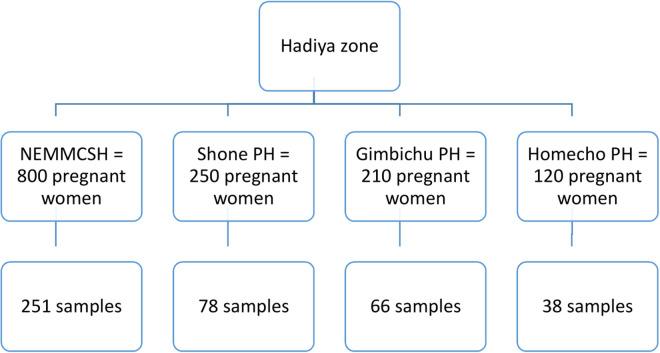
We conducted a cross-sectional study among women attending antenatal care in the four public hospitals in the Hadiya zone from August 1, 2023, to January 30, 2024. The total sample size (433) was proportionally allocated to each hospital. Data were collected by face-to-face interview using a structured questionnaire. Blood pressure was measured by a digital Sphygmomanometer, and Pregnancy-induced hypertension status was considered if systolic blood pressure was ≥ 140 mmHg and/or diastolic blood pressure ≥90 mmHg on two measurements among pregnant women with gestational age > 20 weeks. Factors associated with Pregnancy-induced hypertension were identified by multivariable binary logistic regression analysis, as expressed by adjusted odds ratio (aOR) and its 95% confidence interval.
RESULTS
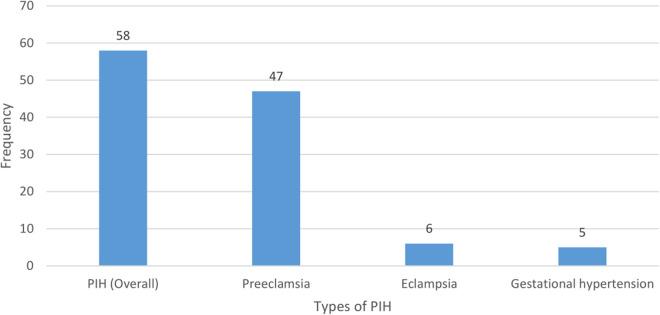
The mean age of the participants was 29.4 years (SD = ±4.6), and the majority of women were multiparous (59.6%). The prevalence of Pregnancy-induced hypertension was 13.4% (95% CI: 10.2% - 16.9%), of which 81% were preeclampsia. In the multivariable analysis, PIH was associated with, the poorest wealth index (aOR = 0.26, 95%CI: 0.08-0.90), having a family history of hypertension (aOR = 12.52,95%CI: 4.52-34.62), overweight maternal BMI (aOR = 4.24, 95%CI: 2.06-8.72), and gestational age (aOR = 0.21 at 95% CI: 0.06-0.82).
CONCLUSIONS
More than 13 out of 100 pregnant women were found to have pregnancy-induced hypertension in the Hadiya zone, Southern Ethiopia. The high prevalence of Pregnancy-induced hypertension and its association with wealth index, gestational age, overweight/obesity and family history of hypertension/Pregnancy-induced hypertension underscores the need for targeted, tailored, and contextualized interventions to address Pregnancy-induced hypertension in the Hadiya zone. Creating awareness on Pregnancy-induced hypertension among pregnant women and the general population and enhancing early screening and detection services in the community and healthcare facilities need to be strengthened in the Hadiya zone.
背景
妊娠期高血压是一种全球公共卫生负担,会导致多种不良围产期结局。然而,在埃塞俄比亚中部的哈迪亚地区,关于妊娠期高血压的患病率及相关因素的数据有限。
方法
2023年8月1日至2024年1月30日,我们在哈迪亚地区的四家公立医院对接受产前检查的女性进行了一项横断面研究。总样本量(433)按比例分配到每家医院。通过面对面访谈使用结构化问卷收集数据。使用数字血压计测量血压,对于孕周>20周的孕妇,若两次测量的收缩压≥140 mmHg和/或舒张压≥90 mmHg,则判定为妊娠期高血压状态。通过多变量二元逻辑回归分析确定与妊娠期高血压相关的因素,以调整后的优势比(aOR)及其95%置信区间表示。
结果
参与者的平均年龄为29.4岁(标准差=±4.6),大多数女性为经产妇(59.6%)。妊娠期高血压的患病率为13.4%(95%置信区间:10.2%-16.9%),其中81%为子痫前期。在多变量分析中,妊娠期高血压与最贫困的财富指数(aOR = 0.26,95%置信区间:0.08-0.90)、有高血压家族史(aOR = 12.52,95%置信区间:4.52-34.62)、孕妇超重的体重指数(aOR = 4.24,95%置信区间:2.06-8.72)以及孕周(95%置信区间为0.21,0.06-0.82)有关。
结论
在埃塞俄比亚南部的哈迪亚地区,每100名孕妇中就有超过13人患有妊娠期高血压。妊娠期高血压的高患病率及其与财富指数、孕周、超重/肥胖以及高血压家族史/妊娠期高血压的关联强调了在哈迪亚地区采取有针对性、量身定制且因地制宜的干预措施来应对妊娠期高血压的必要性。哈迪亚地区需要提高孕妇和普通人群对妊娠期高血压的认识,并加强社区和医疗机构的早期筛查和检测服务。
 Zotero 插件