
浴室热水龙头水的细菌群落多样性显著低于冷水龙头水和淋浴水。
The Bacterial Community Diversity of Bathroom Hot Tap Water Was Significantly Lower Than That of Cold Tap and Shower Water.
作者信息
Zhang Chiqian, Qin Ke, Struewing Ian, Buse Helen, Santo Domingo Jorge, Lytle Darren, Lu Jingrang
机构信息
Pegasus Technical Services, Inc., Cincinnati, OH, United States.
Oak Ridge Institute for Science and Education Participation Program, Office of Research and Development, United States Environmental Protection Agency, Cincinnati, OH, United States.
出版信息
Front Microbiol. 2021 Apr 23;12:625324. doi: 10.3389/fmicb.2021.625324. eCollection 2021.
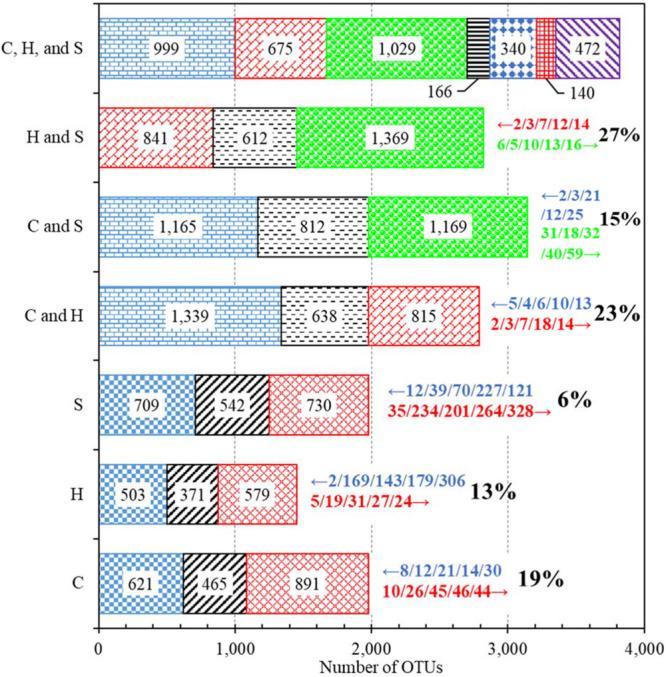
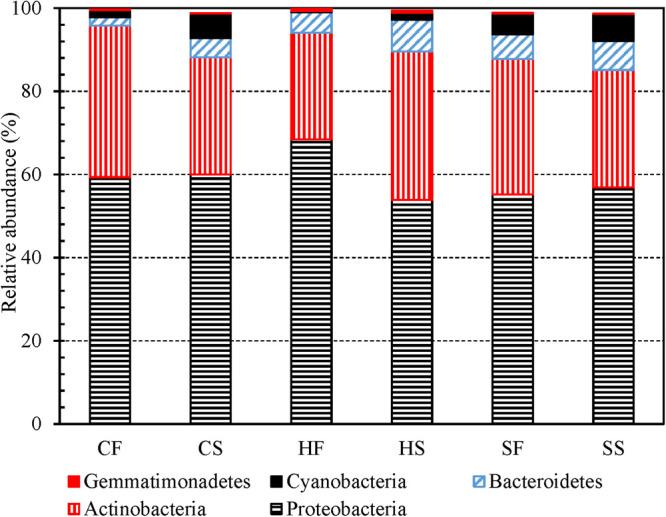
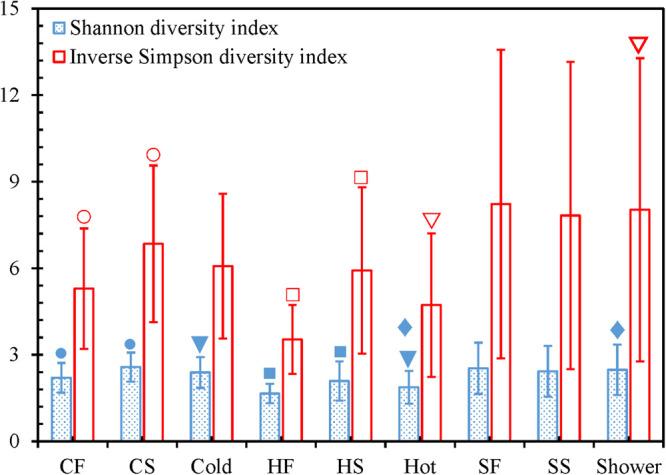
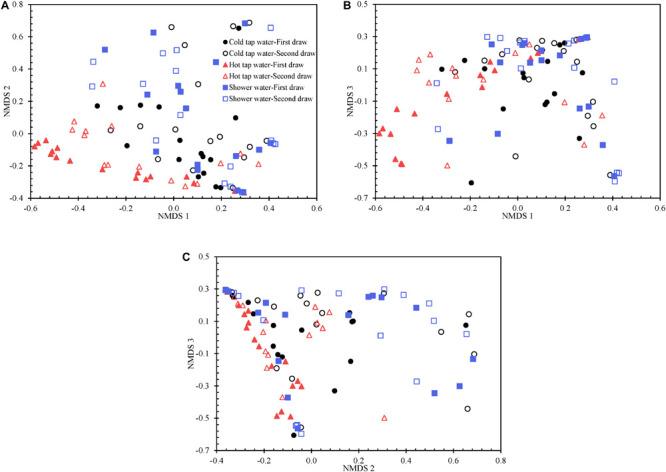
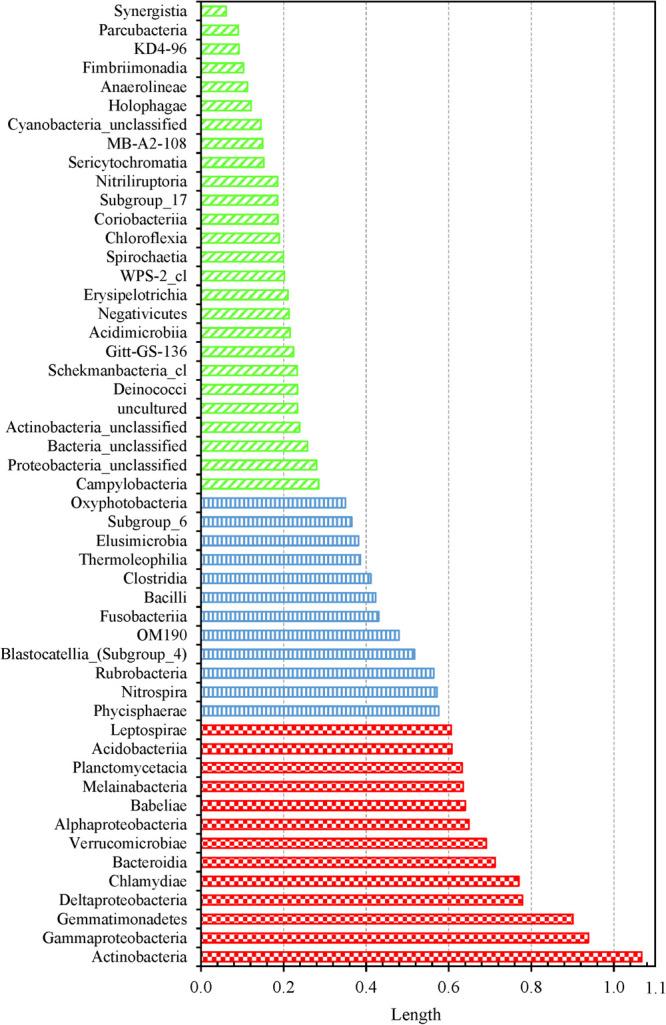
Microbial drinking water quality in premise plumbing systems (PPSs) strongly affects public health. Bacterial community structure is the essential aspect of microbial water quality. Studies have elucidated the microbial community structure in cold tap water, while the microbial community structures in hot tap and shower water are poorly understood. We sampled cold tap, hot tap, and shower water from a simulated PPS monthly for 16 consecutive months and assessed the bacterial community structures in those samples via high-throughput sequencing of bacterial 16S rRNA genes. The total relative abundance of the top five most abundant phyla (Proteobacteria, Actinobacteria, Bacteroidetes, Cyanobacteria, and Firmicutes) was greater than 90% among the 24 identified phyla. The most abundant families were Burkholderiaceae, Sphingomonadaceae, unclassified Alphaproteobacteria, unclassified Corynebacteriales, and Mycobacteriaceae. A multiple linear regression suggests that the bacterial community diversity increased with water temperature and the age of the simulated PPS, decreased with total chlorine residual concentration, and had a limited seasonal variation. The bacterial community in hot tap water had significantly lower Shannon and Inverse Simpson diversity indices ( < 0.05) and thus a much lower diversity than those in cold tap and shower water. The paradoxical results (i.e., diversity increased with water temperature, but hot tap water bacterial community was less diverse) were presumably because (1) other environmental factors made hot tap water bacterial community less diverse, (2) the diversity of bacterial communities in all types of water samples increased with water temperature, and (3) the first draw samples of hot tap water could have a comparable or even lower temperature than shower water samples and the second draw samples of cold tap water. In both a three-dimensional Non-metric multidimensional scaling ordination plot and a phylogenetic dendrogram, the samples of cold tap and shower water cluster and are separate from hot tap water samples ( < 0.05). In summary, the bacterial community in hot tap water in the simulated PPS had a distinct structure from and a much lower diversity than those in cold tap and shower water.
住宅管道系统(PPS)中的微生物饮用水质量对公众健康有重大影响。细菌群落结构是微生物水质的关键方面。已有研究阐明了冷自来水的微生物群落结构,但对热自来水和淋浴水中的微生物群落结构了解较少。我们连续16个月每月从模拟的PPS中采集冷自来水、热自来水和淋浴水样本,并通过对细菌16S rRNA基因进行高通量测序来评估这些样本中的细菌群落结构。在已鉴定的24个门中,最丰富的五个门(变形菌门、放线菌门、拟杆菌门、蓝细菌门和厚壁菌门)的总相对丰度大于90%。最丰富的科是伯克霍尔德氏菌科、鞘脂单胞菌科、未分类的α-变形菌纲、未分类的棒杆菌目和分枝杆菌科。多元线性回归表明,细菌群落多样性随水温及模拟PPS的使用年限增加而增加,随总氯残留浓度降低而降低,且季节变化有限。热自来水中的细菌群落香农指数和反辛普森多样性指数显著较低(<0.05),因此其多样性远低于冷自来水和淋浴水中的细菌群落。这些矛盾的结果(即多样性随水温增加,但热自来水细菌群落多样性较低)可能是因为:(1)其他环境因素使热自来水细菌群落多样性较低;(2)所有类型水样中的细菌群落多样性均随水温增加;(3)热自来水的首次取水样本温度可能与淋浴水样本相当甚至低于冷自来水的第二次取水样本。在三维非度量多维尺度排序图和系统发育树状图中,冷自来水和淋浴水样本聚类并与热自来水样本分开(<0.05)。总之,模拟PPS中的热自来水中的细菌群落结构与冷自来水和淋浴水中的细菌群落结构不同,且多样性低得多。


 Zotero 插件