
母体应激使谷氨酸能传递在与应激相关的老年大鼠脑区去男性化。
Maternal stress programs a demasculinization of glutamatergic transmission in stress-related brain regions of aged rats.
机构信息
IRCCS Neuromed, (IS), Pozzilli, Italy.
Unité de Glycobiologie Structurale et Fonctionnelle, University of Lille, CNRS, UMR 8576, UGSF, F-59000, Lille, France.
出版信息
Geroscience. 2022 Apr;44(2):1047-1069. doi: 10.1007/s11357-021-00375-5. Epub 2021 May 13.
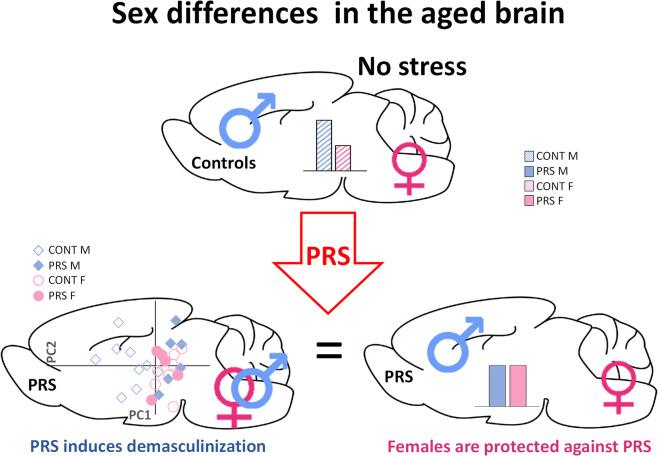
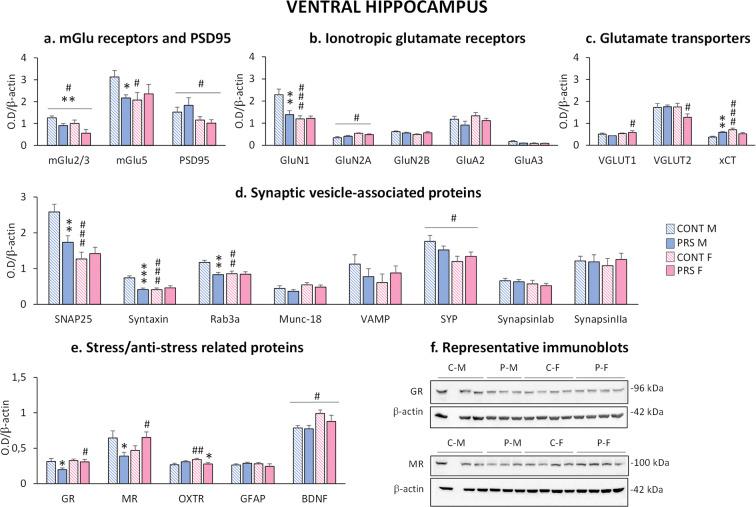
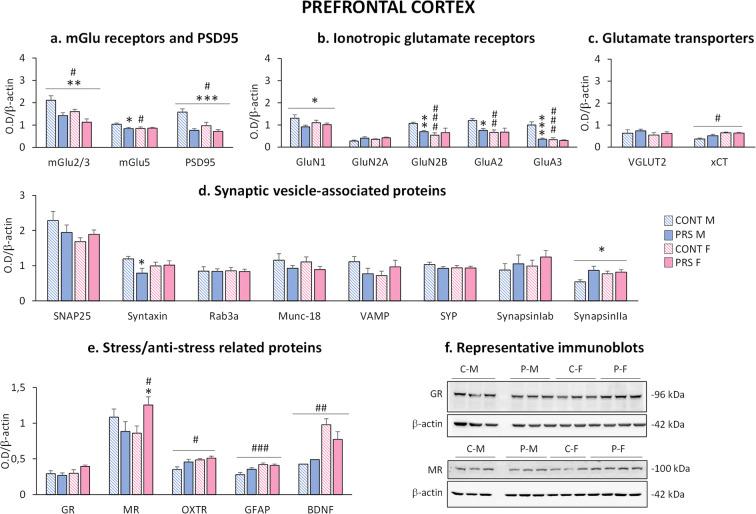
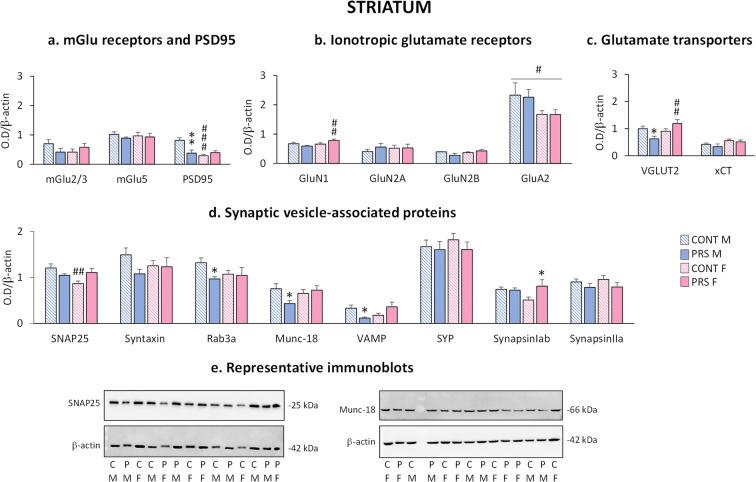
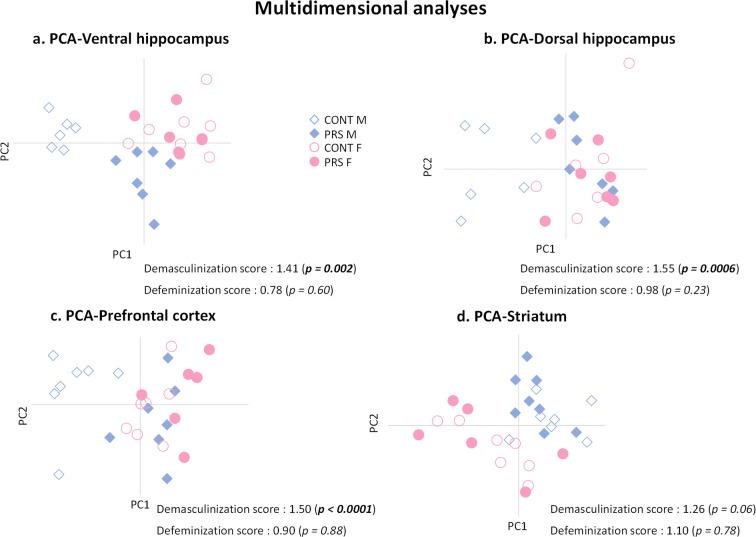
Brain aging may be programmed by early-life stress. Aging affects males and females differently, but how perinatal stress (PRS) affects brain aging between sexes is unknown. We showed behavioral and neurobiological sex differences in non-stressed control rats that were strongly reduced or inverted in PRS rats. In particular, PRS decreased risk-taking behavior, spatial memory, exploratory behavior, and fine motor behavior in male aged rats. In contrast, female aged PRS rats displayed only increased risk-taking behavior and reduced exploratory behavior. PRS induced large reductions in the expression of glutamate receptors in the ventral and dorsal hippocampus and prefrontal cortex only in male rats. PRS also reduced the expression of synaptic vesicle-associated proteins, glucocorticoid receptors (GR), and mineralocorticoid receptors (MR) in the ventral hippocampus of aged male rats. In contrast, in female aged rats, PRS enhanced the expression of MRs and brain-derived neurotrophic factor (BDNF) in the ventral hippocampus and the expression of glial fibrillary acidic protein (GFAP) and BDNF in the prefrontal cortex. A common PRS effect in both sexes was a reduction in exploratory behavior and metabotropic glutamate (mGlu2/3) receptors in the ventral hippocampus and prefrontal cortex. A multidimensional analysis revealed that PRS induced a demasculinization profile in glutamate-related proteins in the ventral and dorsal hippocampus and prefrontal cortex, as well as a demasculinization profile of stress markers only in the dorsal hippocampus. In contrast, defeminization was observed only in the ventral hippocampus. Measurements of testosterone and 17-β-estradiol in the plasma and aromatase in the dorsal hippocampus were consistent with a demasculinizing action of PRS. These findings confirm that the brains of males and females differentially respond to PRS and aging suggesting that females might be more protected against early stress and age-related inflammation and neurodegeneration. Taken together, these results may contribute to understanding how early environmental factors shape vulnerability to brain aging in both sexes and may lay the groundwork for future studies aimed at identifying new treatment strategies to improve the quality of life of older individuals, which is of particular interest given that there is a high growth of aging in populations around the world.
大脑衰老可能受到早期生活压力的影响。衰老会对男性和女性产生不同的影响,但围产期应激(PRS)如何影响两性之间的大脑衰老尚不清楚。我们在未受应激的对照大鼠中观察到行为和神经生物学性别差异,这些差异在 PRS 大鼠中明显减弱或反转。特别是,PRS 降低了雄性老年大鼠的冒险行为、空间记忆、探索行为和精细运动行为。相比之下,雌性老年 PRS 大鼠仅表现出冒险行为增加和探索行为减少。PRS 仅在雄性大鼠的腹侧和背侧海马体和前额叶皮层中,大大降低了谷氨酸受体的表达。PRS 还降低了老年雄性大鼠腹侧海马体中突触小泡相关蛋白、糖皮质激素受体(GR)和盐皮质激素受体(MR)的表达。相比之下,在雌性老年大鼠中,PRS 增强了腹侧海马体中 MR 和脑源性神经营养因子(BDNF)的表达,以及前额叶皮层中神经胶质纤维酸性蛋白(GFAP)和 BDNF 的表达。PRS 在两性中都具有降低探索行为和腹侧海马体和前额叶皮层中代谢型谷氨酸(mGlu2/3)受体的共同作用。多维分析显示,PRS 诱导了腹侧和背侧海马体和前额叶皮层中谷氨酸相关蛋白的去雄性化谱,以及仅在背侧海马体中应激标志物的去雄性化谱。相比之下,仅在腹侧海马体中观察到去雌性化。血浆中睾酮和 17-β-雌二醇的测量值和背侧海马体中的芳香酶与 PRS 的去雄性化作用一致。这些发现证实,男性和女性的大脑对 PRS 和衰老的反应不同,这表明女性可能对早期应激和与年龄相关的炎症和神经退行性变更具保护作用。总的来说,这些结果可能有助于理解早期环境因素如何影响两性大脑衰老的易感性,并为未来的研究奠定基础,旨在确定改善老年个体生活质量的新治疗策略,鉴于全球人口老龄化增长迅速,这一点尤其重要。




 Zotero 插件