
通过基于捕获的靶向测序检测肝细胞癌血浆样本中的差异突变
Differential Mutation Detection Capability Through Capture-Based Targeted Sequencing in Plasma Samples in Hepatocellular Carcinoma.
作者信息
Gao Jian, Xi Lei, Yu Rentao, Xu Huailong, Wu Min, Huang Hong
机构信息
Department of Life Sciences and Technology, Yangtze Normal University, Fuling, China.
College of Biological Science and Technology, Hubei Minzu University, Enshi, China.
出版信息
Front Oncol. 2021 Apr 30;11:596789. doi: 10.3389/fonc.2021.596789. eCollection 2021.
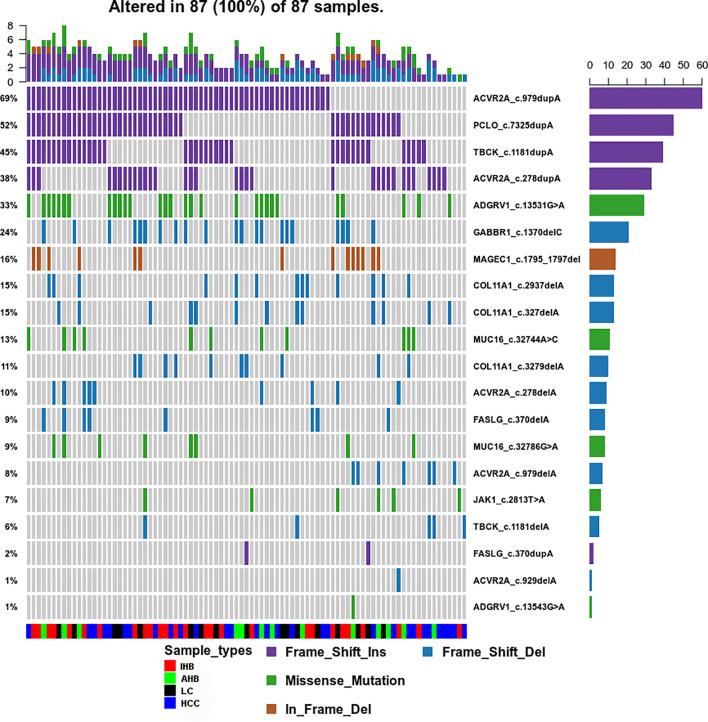
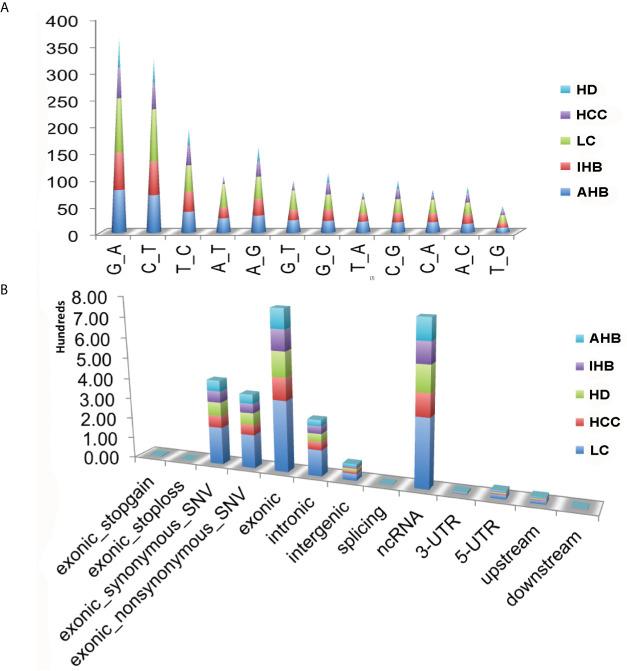
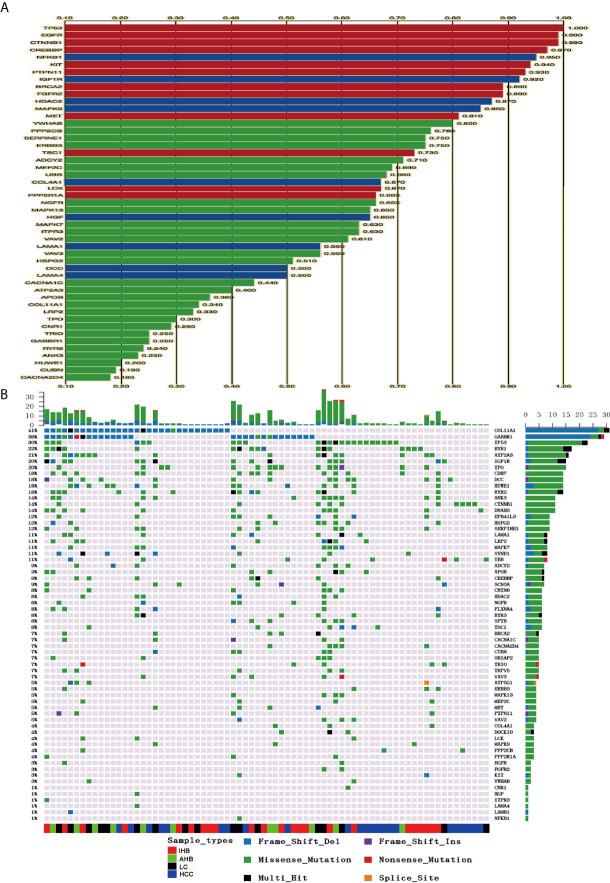
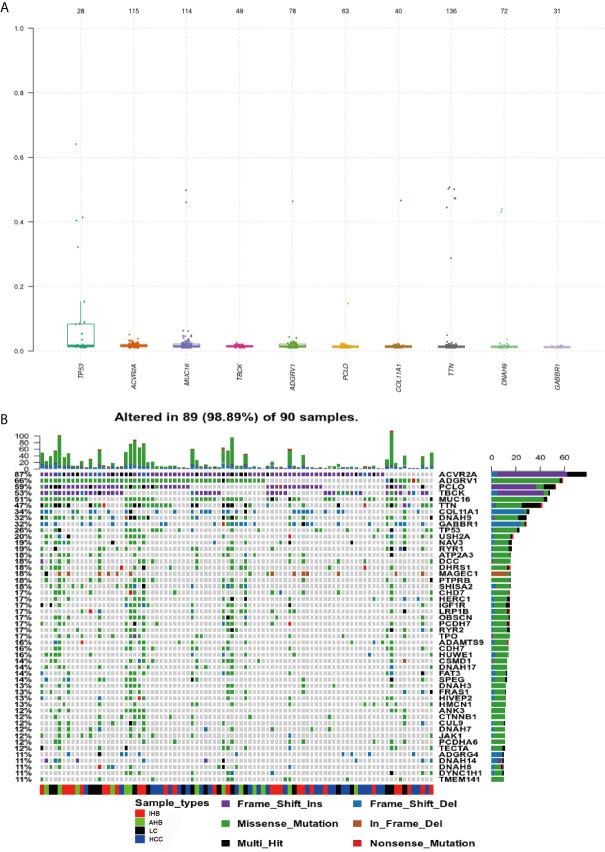
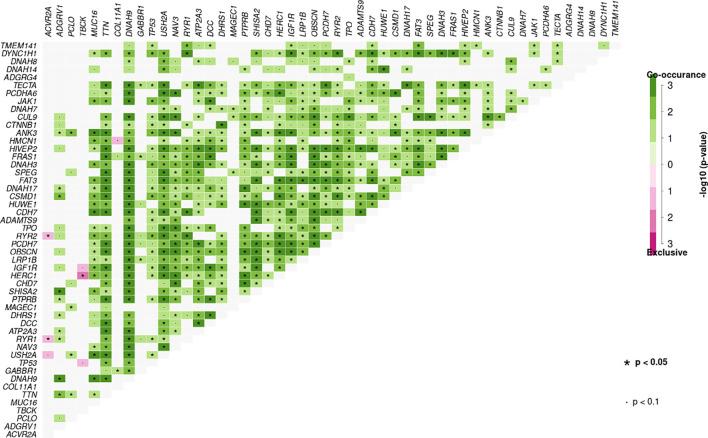
Circulating tumor DNA (ctDNA) is a promising biomarker for accurate monitoring and less invasive assessment of tumor burden and treatment response. Here, targeted next-generation sequencing (NGS) with a designed gene panel of 176 cancer-relevant genes was used to assess mutations in 90 ctDNA samples from 90 patients with multiple types of liver disease and 10 healthy donor samples for control. Using our ctDNA detection panel, we identified mutations in 98.89% (89/90) of patient plasma biopsy samples, and 19 coding variants located in 10 cancer-related genes [, adhesion G protein-coupled receptor (), , and ] were identified in 96.7% of patients (87/90). The 10 top mutated genes were tumor protein p53 (), , titin (), , and . and and and mutations tended to occur together in hepatocellular carcinoma samples. Most importantly, we found that most of those variants were insertions (frameshift insertions) and deletions (frameshift deletions and in-frame deletions), such as insertion variants in , and ; such mutations were detected in almost 95% of patients. Our study demonstrated that the targeted NGS-based ctDNA mutation profiling was a useful tool for hepatocellular carcinoma (HCC) monitoring and could potentially be used to guide treatment decisions in HCC.
循环肿瘤DNA(ctDNA)是一种很有前景的生物标志物,可用于准确监测肿瘤负荷和治疗反应,并进行侵入性较小的评估。在此,我们使用针对176个癌症相关基因设计的基因 panel 进行靶向二代测序(NGS),以评估90例多种肝病患者的90份ctDNA样本以及10份健康供体样本(作为对照)中的突变情况。使用我们的ctDNA检测 panel,我们在98.89%(89/90)的患者血浆活检样本中鉴定到了突变,并且在96.7%的患者(87/90)中鉴定到了位于10个癌症相关基因(黏附G蛋白偶联受体()、、和)中的19个编码变体。10个突变频率最高的基因是肿瘤蛋白p53()、、肌联蛋白()、、和。在肝细胞癌样本中,和、和突变倾向于共同出现。最重要的是,我们发现这些变体大多是插入(移码插入)和缺失(移码缺失和框内缺失),例如、和中的插入变体;几乎95%的患者中检测到了此类突变。我们的研究表明,基于靶向NGS的ctDNA突变谱分析是肝细胞癌(HCC)监测的一种有用工具,并且有可能用于指导HCC的治疗决策。
 Zotero 插件