
罗汉果甜苷V通过抑制TLR4-MyD88和激活AKT/AMPK-Nrf2信号通路减轻脂多糖诱导的神经炎症。
Mogroside V Alleviates Lipopolysaccharide-Induced Neuroinflammation via Inhibition of TLR4-MyD88 and Activation of AKT/AMPK-Nrf2 Signaling Pathway.
作者信息
Liu Yuanyuan, Zhang Boxi, Liu Jiahe, Qiao Chunyu, Xue Nianyu, Lv Hongming, Li Shize
机构信息
College of Animal Science and Veterinary Medicine, Heilongjiang Bayi Agricultural University, Daqing 163319, Heilongjiang Bayi, China.
出版信息
Evid Based Complement Alternat Med. 2021 Apr 30;2021:5521519. doi: 10.1155/2021/5521519. eCollection 2021.
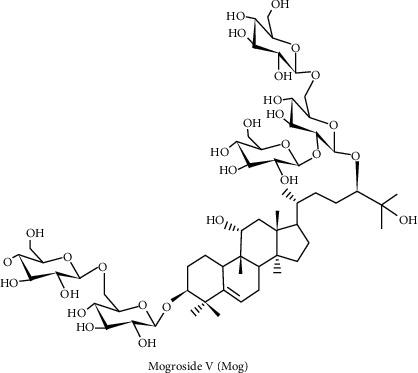
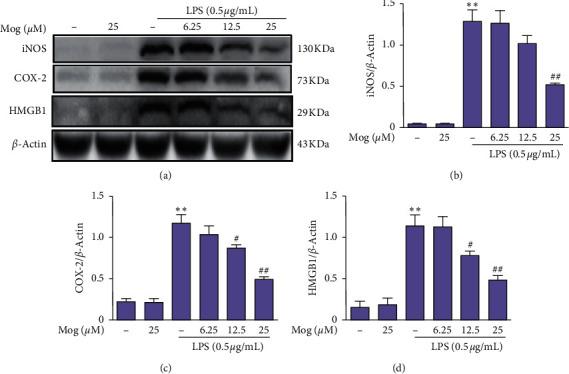
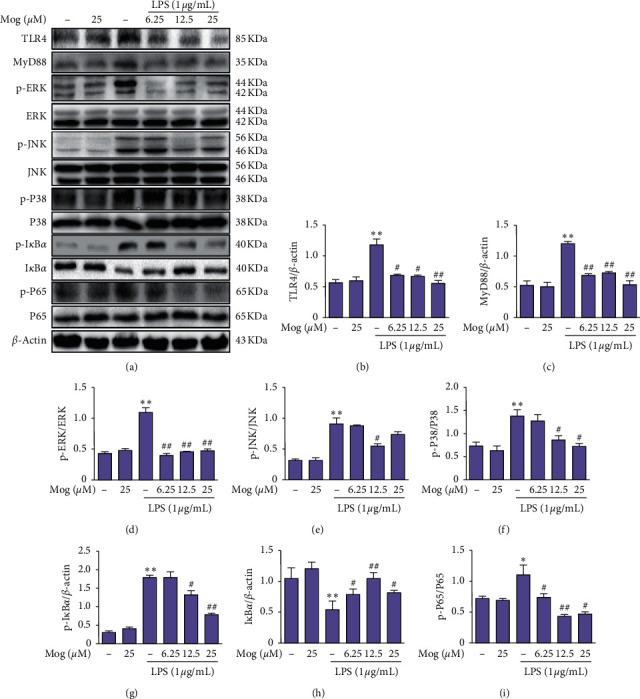
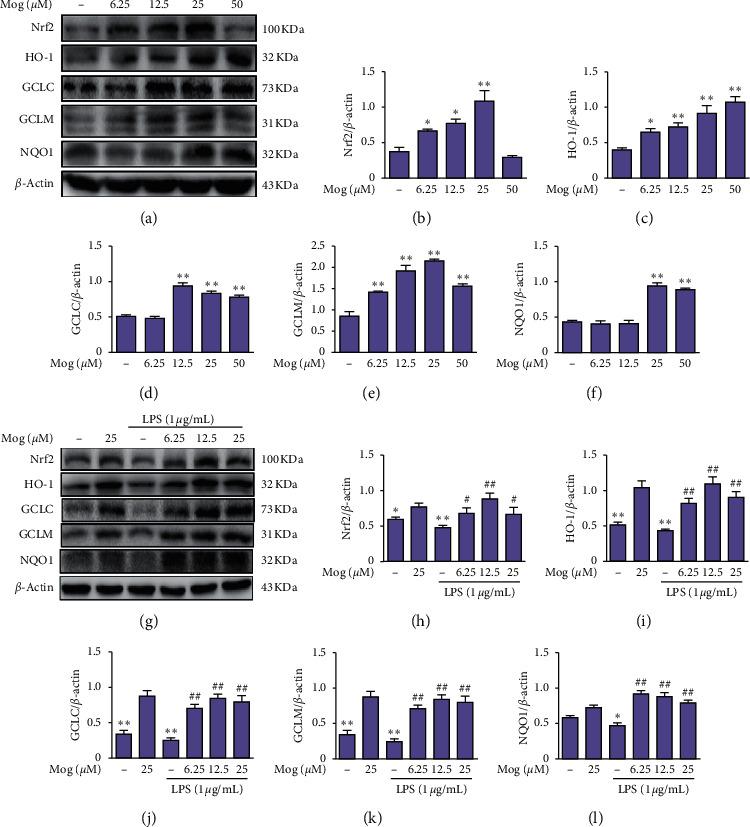
As innate immune effector cells in the central nervous system (CNS), microglia not only are essential for the normal development of nervous system but also act on different neurological diseases, including Alzheimer's disease (AD), Huntington's disease (HD), and other neuroinflammatory diseases. Mogroside V (Mog), a natural plant active ingredient and isolated form of , has been shown to possess anti-inflammatory action, but few studies were carried out to investigate the effects of Mog on neuroinflammation. This study aimed to investigate the role of Mog in lipopolysaccharide- (LPS-) induced neuroinflammation and neuronal damage, revealing the underlying mechanisms. Our data indicated that Mog significantly inhibited the LPS-induced production of proinflammatory factors, such as tumor necrosis factor- (TNF-), interleukin-1 (IL-1), IL-18, IL-6, cyclooxygenase-2 (COX-2), inducible nitric oxide synthase (iNOS), and high mobility group box 1 (HMGB1) in BV-2 cells. We found that Mog also suppressed toll-like receptor 4 (TLR4), myeloid differentiation factor 88 (MyD88), the phosphorylation of mitogen-activated protein kinases (MAPKs), adenosine 5'-monophosphate- (AMP-) activated protein kinase (AMPK), nuclear factor kappa-B (NF-B), and protein kinase B (AKT). Moreover, Mog also enhanced the expression of -glutamyl cysteine synthetase catalytic subunit (GCLC), modifier subunit (GCLM), heme oxygenase-1 (HO-1), and quinine oxidoreductase 1 (NQO1) proteins, mostly depending on the nuclear translation of nuclear factor erythroid-2 related factor 2 (Nrf2). In contrast, pretreatment with inhibitors of AKT can suppress the phosphorylation of AMPK, Nrf2, and its downstream proteins expression. In summary, Mog might play a protective role against LPS-induced neurotoxicity by inhibiting the TLR4-MyD88 and activation of AMPK/AKT-Nrf2 signaling pathway.
作为中枢神经系统(CNS)中的固有免疫效应细胞,小胶质细胞不仅对神经系统的正常发育至关重要,而且还作用于不同的神经疾病,包括阿尔茨海默病(AD)、亨廷顿舞蹈症(HD)和其他神经炎症性疾病。罗汉果甜苷V(Mog)是一种天然植物活性成分,已被证明具有抗炎作用,但很少有研究探讨Mog对神经炎症的影响。本研究旨在探讨Mog在脂多糖(LPS)诱导的神经炎症和神经元损伤中的作用,并揭示其潜在机制。我们的数据表明,Mog显著抑制LPS诱导的BV-2细胞中促炎因子的产生,如肿瘤坏死因子-(TNF-)、白细胞介素-1(IL-1)、IL-18、IL-6、环氧合酶-2(COX-2)、诱导型一氧化氮合酶(iNOS)和高迁移率族蛋白B1(HMGB1)。我们发现,Mog还抑制Toll样受体4(TLR4)、髓样分化因子88(MyD88)、丝裂原活化蛋白激酶(MAPKs)、腺苷5'-单磷酸(AMP)激活蛋白激酶(AMPK)、核因子κB(NF-κB)和蛋白激酶B(AKT)的磷酸化。此外,Mog还增强了γ-谷氨酰半胱氨酸合成酶催化亚基(GCLC)、修饰亚基(GCLM)、血红素加氧酶-1(HO-1)和醌氧化还原酶1(NQO1)蛋白的表达,这主要依赖于核因子红细胞2相关因子2(Nrf2)的核转位。相反,用AKT抑制剂预处理可抑制AMPK、Nrf2的磷酸化及其下游蛋白的表达。总之,Mog可能通过抑制TLR4-MyD88以及激活AMPK/AKT-Nrf2信号通路对LPS诱导的神经毒性发挥保护作用。





 Zotero 插件