
喹啉阴离子作为呼吸复合体I中质子转运与电子传递偶联的催化中间体
A Quinol Anion as Catalytic Intermediate Coupling Proton Translocation With Electron Transfer in Respiratory Complex I.
作者信息
Nuber Franziska, Mérono Luca, Oppermann Sabrina, Schimpf Johannes, Wohlwend Daniel, Friedrich Thorsten
机构信息
Institut für Biochemie, Albert-Ludwigs-Universität, Freiburg, Germany.
出版信息
Front Chem. 2021 May 7;9:672969. doi: 10.3389/fchem.2021.672969. eCollection 2021.
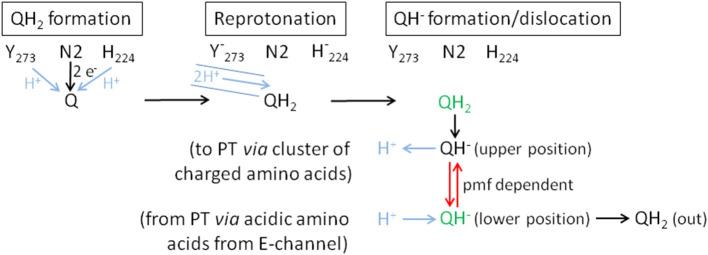
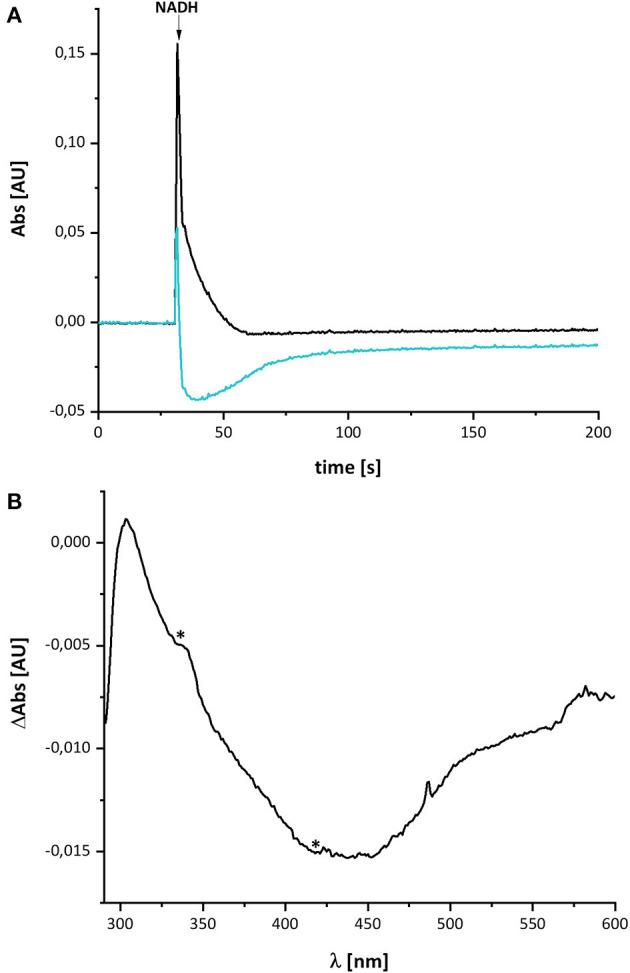
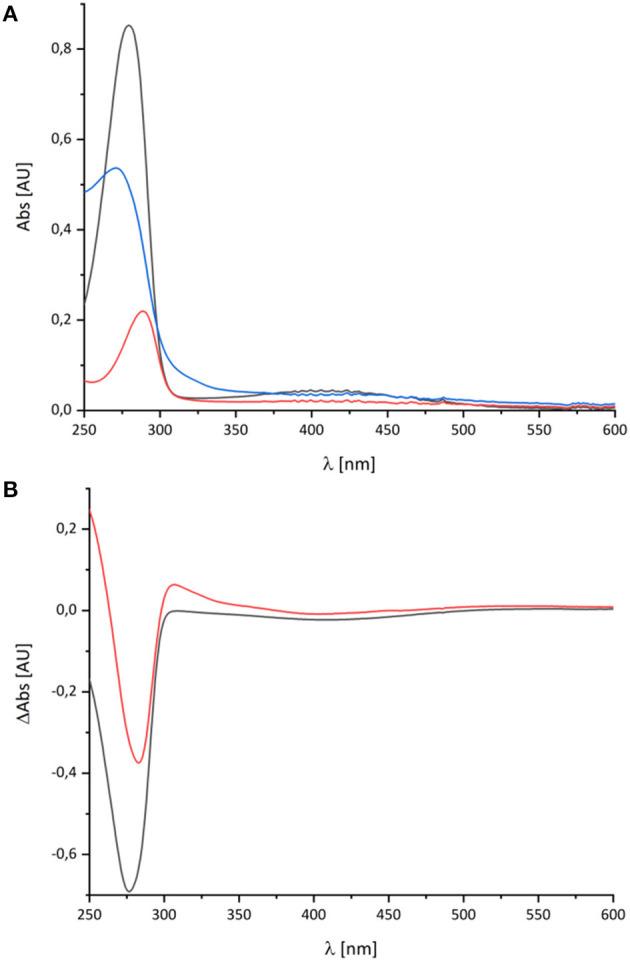
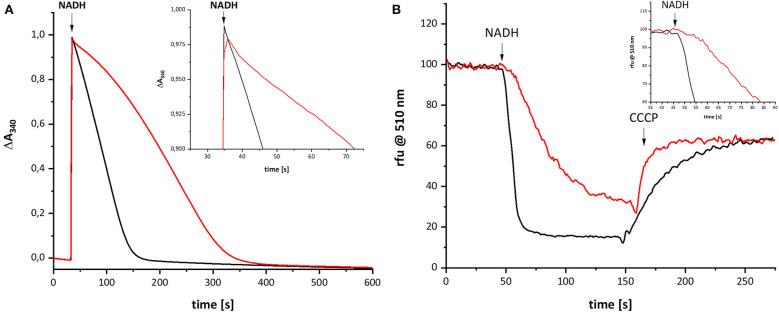
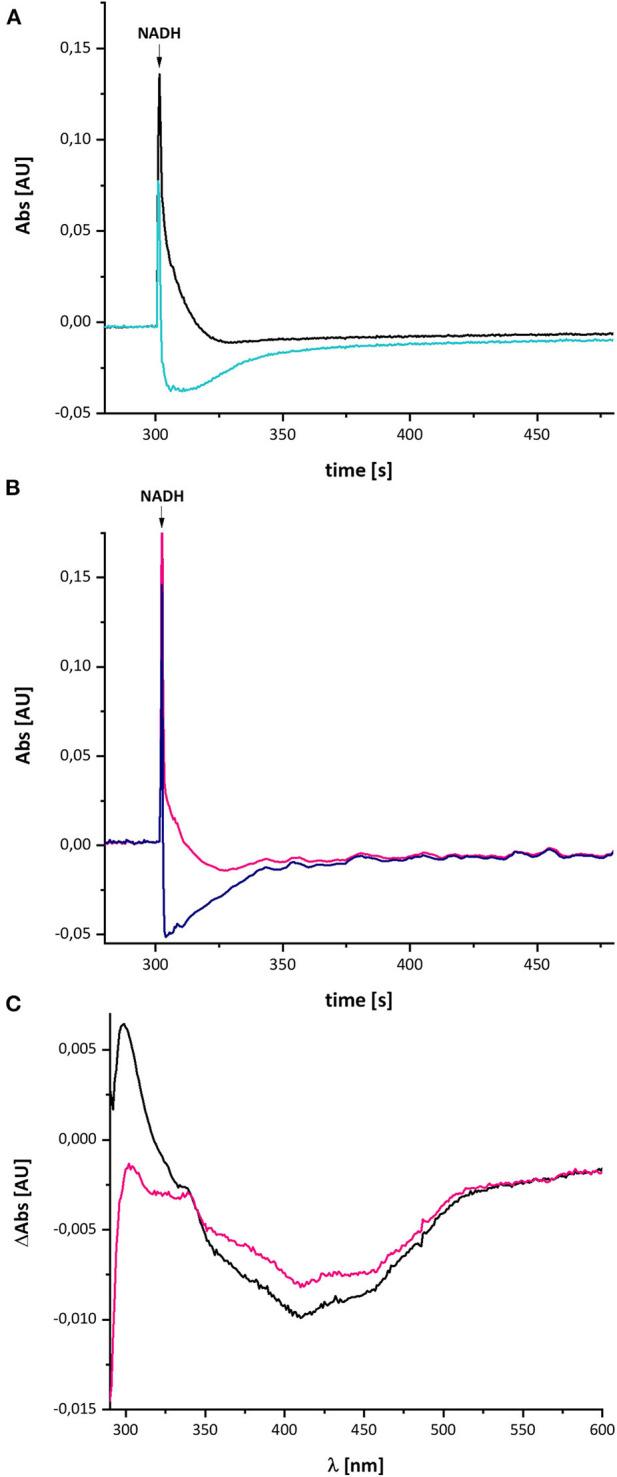
Energy-converting NADH:ubiquinone oxidoreductase, respiratory complex I, plays a major role in cellular energy metabolism. It couples NADH oxidation and quinone reduction with the translocation of protons across the membrane, thus contributing to the protonmotive force. Complex I has an overall L-shaped structure with a peripheral arm catalyzing electron transfer and a membrane arm engaged in proton translocation. Although both reactions are arranged spatially separated, they are tightly coupled by a mechanism that is not fully understood. Using redox-difference UV-vis spectroscopy, an unknown redox component was identified in complex I as reported earlier. A comparison of its spectrum with those obtained for different quinone species indicates features of a quinol anion. The re-oxidation kinetics of the quinol anion intermediate is significantly slower in the D213G variant that was previously shown to operate with disturbed quinone chemistry. Addition of the quinone-site inhibitor piericidin A led to strongly decreased absorption peaks in the difference spectrum. A hypothesis for a mechanism of proton-coupled electron transfer with the quinol anion as catalytically important intermediate in complex I is discussed.
能量转换型NADH:泛醌氧化还原酶,即呼吸链复合体I,在细胞能量代谢中起主要作用。它将NADH氧化和醌还原与质子跨膜转运相偶联,从而产生质子动力。复合体I具有整体L形结构,其外周臂催化电子传递,膜臂参与质子转运。虽然这两个反应在空间上是分开排列的,但它们通过一种尚未完全理解的机制紧密偶联。如先前报道,利用氧化还原差紫外可见光谱法在复合体I中鉴定出一种未知的氧化还原成分。将其光谱与不同醌类物质的光谱进行比较,表明其具有喹啉阴离子的特征。喹啉阴离子中间体的再氧化动力学在先前显示醌化学受到干扰的D213G变体中明显较慢。醌位点抑制剂匹里卡菌素A的添加导致差光谱中的吸收峰大幅降低。本文讨论了一种以喹啉阴离子作为复合体I中催化重要中间体的质子偶联电子传递机制的假说。



 Zotero 插件