
ATM和BRCA1的下调预示头颈癌预后不良:对ATM靶向治疗的启示
Downregulation of ATM and BRCA1 Predicts Poor Outcome in Head and Neck Cancer: Implications for ATM-Targeted Therapy.
作者信息
Wang Yu-Chu, Lee Ka-Wo, Tsai Yi-Shan, Lu Hsing-Han, Chen Si-Yun, Hsieh Hsin-Ying, Lin Chang-Shen
机构信息
Graduate Institute of Medicine, College of Medicine, Kaohsiung Medical University, Kaohsiung 807, Taiwan.
Department of Otorhinolaryngology, Kaohsiung Municipal Ta-Tung Hospital, Kaohsiung 801, Taiwan.
出版信息
J Pers Med. 2021 May 10;11(5):389. doi: 10.3390/jpm11050389.
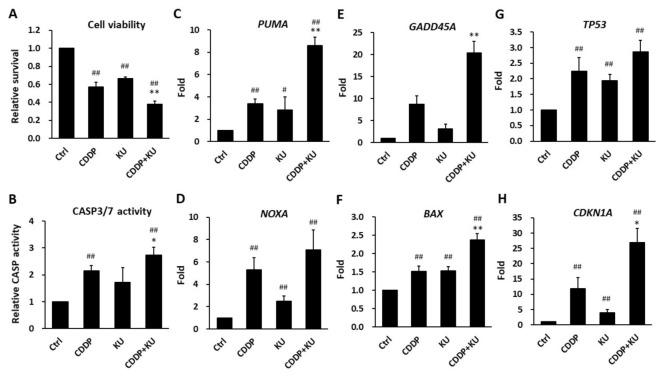
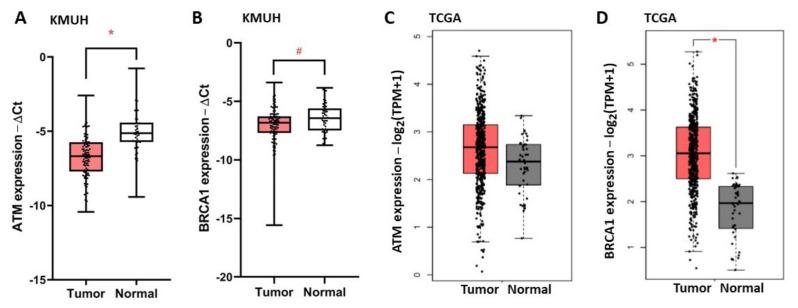
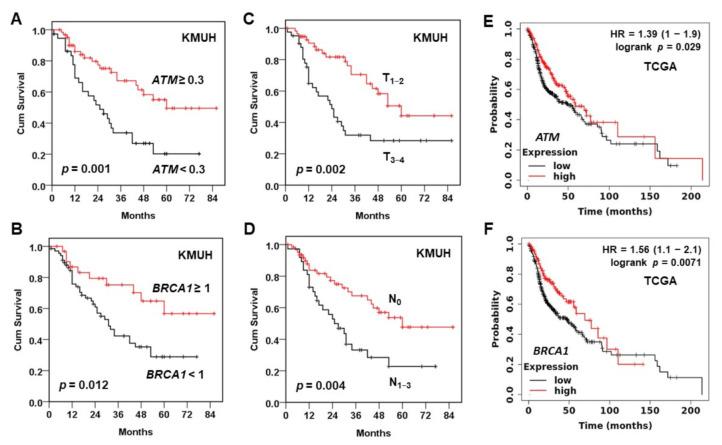
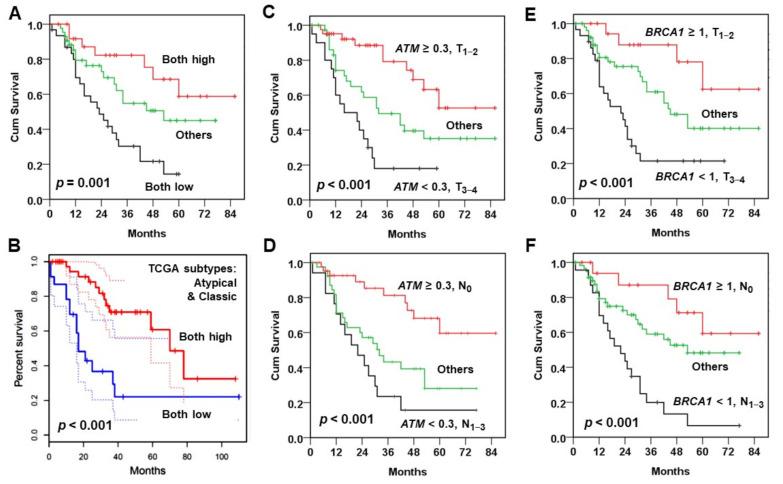
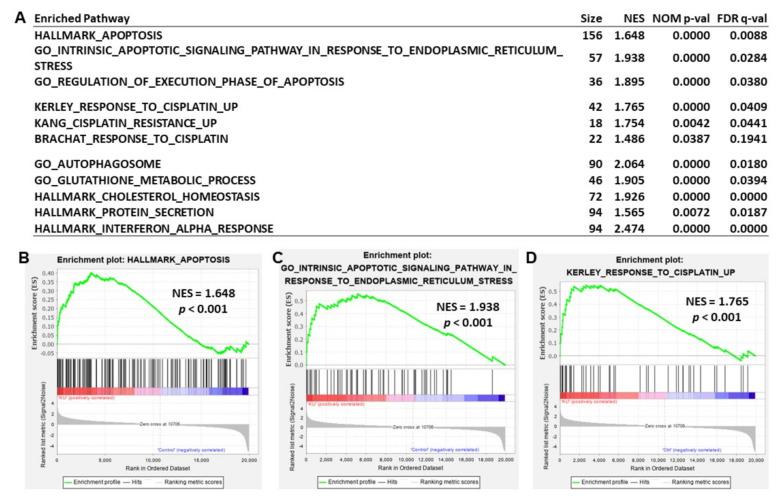
and are DNA repair genes that play a central role in homologous recombination repair. Alterations of and gene expression are found in cancers, some of which are correlated with treatment response and patient outcome. However, the role of and gene expression in head and neck cancer (HNC) is not well characterized. Here, we examined the prognostic role of and expression in two HNC cohorts with and without betel quid (BQ) exposure. The results showed that the expression of and was downregulated in BQ-associated HNC, as the BQ ingredient arecoline could suppress the expression of both genes. Low expression of either or was correlated with poor overall survival (OS) and was an independent prognostic factor in multivariate analysis ( HR: 1.895, = 0.041; HR: 2.163, = 0.040). The combination of and expression states further improved on the prediction of OS (HR: 4.195, = 0.001, both low vs. both high expression). Transcriptomic analysis showed that inhibition of ATM kinase by KU55933 induced apoptosis signaling and potentiated cisplatin-induced cytotoxicity. These data unveil poor prognosis in the HNC patient subgroup with low expression of and and support the notion of -targeted therapy.
[基因名称1]和[基因名称2]是在同源重组修复中起核心作用的DNA修复基因。在癌症中发现了[基因名称1]和[基因名称2]基因表达的改变,其中一些与治疗反应和患者预后相关。然而,[基因名称1]和[基因名称2]基因表达在头颈癌(HNC)中的作用尚未得到充分表征。在这里,我们研究了[基因名称1]和[基因名称2]表达在两个有或无槟榔(BQ)暴露的HNC队列中的预后作用。结果表明,在与BQ相关的HNC中,[基因名称1]和[基因名称2]的表达下调,因为BQ成分槟榔碱可以抑制这两个基因的表达。[基因名称1]或[基因名称2]的低表达与总体生存期(OS)较差相关,并且在多变量分析中是独立的预后因素([基因名称1]风险比:1.895,P = 0.041;[基因名称2]风险比:2.163,P = 0.040)。[基因名称1]和[基因名称2]表达状态的组合进一步改善了OS的预测(风险比:4.195,P = 0.001,两者低表达与两者高表达相比)。转录组分析表明,KU55933抑制ATM激酶可诱导凋亡信号并增强顺铂诱导的细胞毒性。这些数据揭示了[基因名称1]和[基因名称2]低表达的HNC患者亚组预后不良,并支持[基因名称1]靶向治疗的概念。

 Zotero 插件