
头颈部癌发病机制中的分子途径与靶向治疗
Molecular pathways and targeted therapies in head and neck cancers pathogenesis.
作者信息
Constantin Marian, Chifiriuc Mariana Carmen, Bleotu Coralia, Vrancianu Corneliu Ovidiu, Cristian Roxana-Elena, Bertesteanu Serban Vifor, Grigore Raluca, Bertesteanu Gloria
机构信息
Department of Microbiology, Institute of Biology of Romanian Academy, Bucharest, Romania.
The Research Institute of the University of Bucharest, ICUB, Bucharest, Romania.
出版信息
Front Oncol. 2024 Jun 17;14:1373821. doi: 10.3389/fonc.2024.1373821. eCollection 2024.
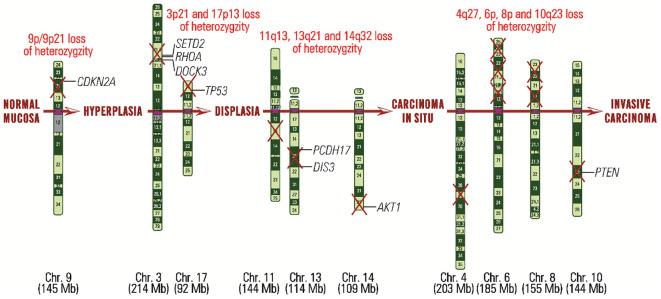
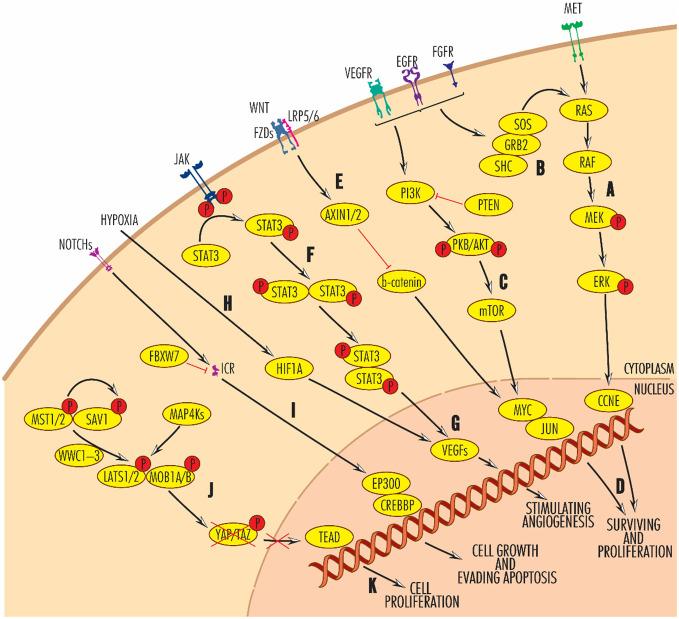
The substantial heterogeneity exhibited by head and neck cancer (HNC), encompassing diverse cellular origins, anatomical locations, and etiological contributors, combined with the prevalent late-stage diagnosis, poses significant challenges for clinical management. Genomic sequencing endeavors have revealed extensive alterations in key signaling pathways that regulate cellular proliferation and survival. Initiatives to engineer therapies targeting these dysregulated pathways are underway, with several candidate molecules progressing to clinical evaluation phases, including FDA approval for agents like the EGFR-targeting monoclonal antibody cetuximab for K-RAS wild-type, EGFR-mutant HNSCC treatment. Non-coding RNAs (ncRNAs), owing to their enhanced stability in biological fluids and their important roles in intracellular and intercellular signaling within HNC contexts, are now recognized as potent biomarkers for disease management, catalyzing further refined diagnostic and therapeutic strategies, edging closer to the personalized medicine desideratum. Enhanced comprehension of the genomic and immunological landscapes characteristic of HNC is anticipated to facilitate a more rigorous assessment of targeted therapies benefits and limitations, optimize their clinical deployment, and foster innovative advancements in treatment approaches. This review presents an update on the molecular mechanisms and mutational spectrum of HNC driving the oncogenesis of head and neck malignancies and explores their implications for advancing diagnostic methodologies and precision therapeutics.
头颈癌(HNC)表现出显著的异质性,包括不同的细胞起源、解剖位置和病因学因素,再加上普遍的晚期诊断,给临床管理带来了重大挑战。基因组测序工作揭示了关键信号通路中广泛的改变,这些通路调节细胞增殖和存活。针对这些失调通路设计疗法的工作正在进行中,一些候选分子已进入临床评估阶段,包括美国食品药品监督管理局(FDA)批准的用于治疗K-RAS野生型、EGFR突变的头颈部鳞状细胞癌(HNSCC)的表皮生长因子受体(EGFR)靶向单克隆抗体西妥昔单抗等药物。非编码RNA(ncRNAs)由于其在生物体液中的稳定性增强以及在HNC环境中细胞内和细胞间信号传导中的重要作用,现在被认为是疾病管理的有效生物标志物,催化了更精细的诊断和治疗策略,更接近个性化医疗的理想目标。对头颈癌基因组和免疫景观特征的深入理解,有望促进对靶向治疗的益处和局限性进行更严格的评估,优化其临床应用,并推动治疗方法的创新进展。本综述介绍了驱动头颈恶性肿瘤发生的头颈癌分子机制和突变谱的最新情况,并探讨了它们对推进诊断方法和精准治疗的意义。
 Zotero 插件