
(一种潜在的治疗靶点)对于 - 突变型卵巢透明细胞癌。
Is a Putative Therapeutic Target for -Mutated Ovarian Clear Cell Carcinoma.
机构信息
Department of Obstetrics and Gynecology, Nara Medical University, Nara 634-8521, Japan.
出版信息
Int J Mol Sci. 2021 May 30;22(11):5869. doi: 10.3390/ijms22115869.
BACKGROUND
Ovarian clear cell carcinoma (OCCC) is resistant to platinum chemotherapy and is characterized by poor prognosis. Today, the use of poly (ADP-ribose) polymerase (PARP) inhibitor, which is based on synthetic lethality strategy and characterized by cancer selectivity, is widely used for new types of molecular-targeted treatment of relapsed platinum-sensitive ovarian cancer. However, it is less effective against OCCC.
METHODS
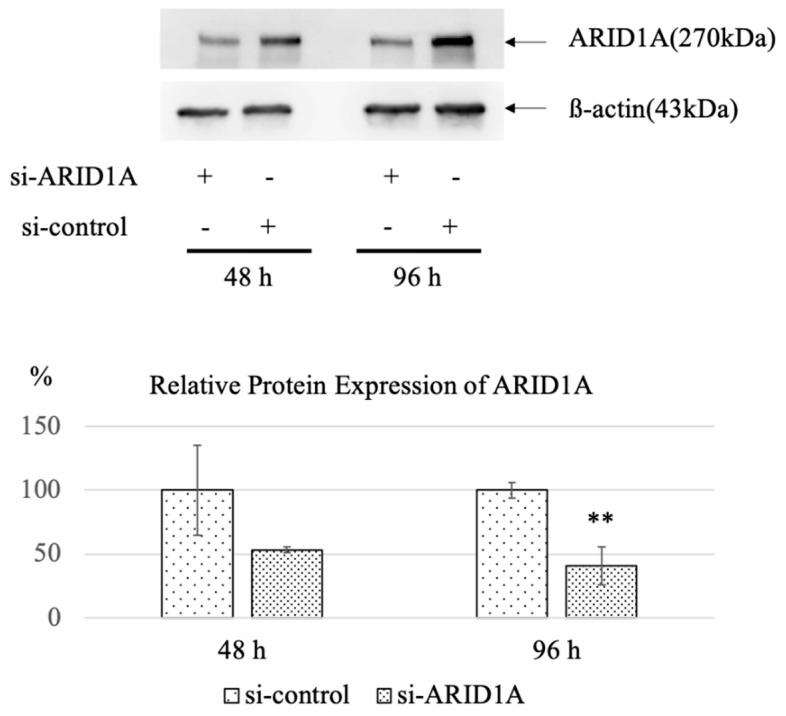
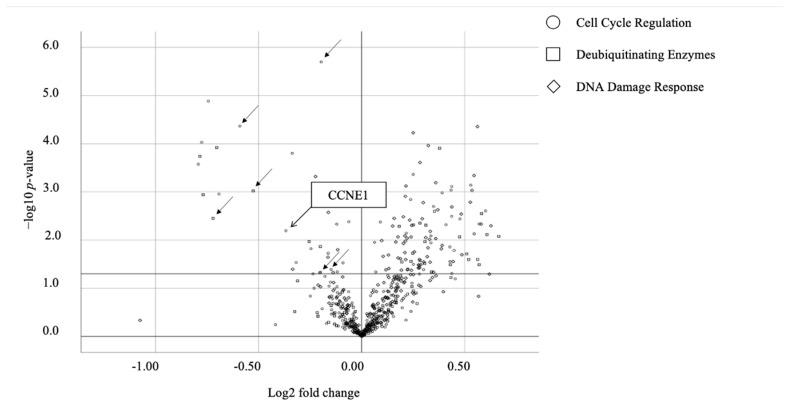
We conducted siRNA screening to identify synthetic lethal candidates for the mutation; as a result, we identified Cyclin-E1 () as a potential target that affects cell viability. To further clarify the effects of , human OCCC cell lines, namely TOV-21G and KOC7c ( mutant lines), and RMG-I and ES2 ( wild type lines) were transfected with siRNA targeting or a control vector.
RESULTS
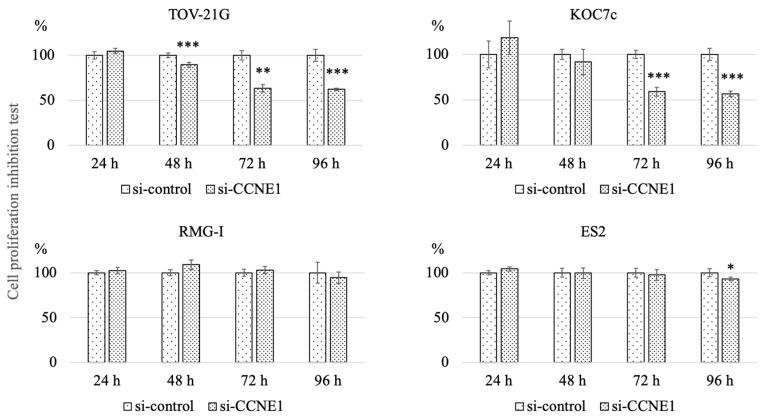
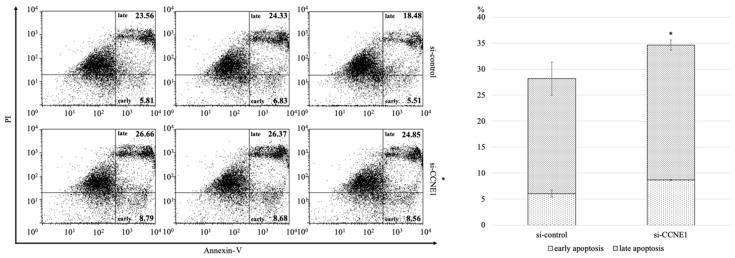
Loss of reduced proliferation of the TOV-21G and KOC7c cells but not of the RMG-I and ES2 cells. Furthermore, in vivo interference of effectively inhibited tumor cell proliferation in a xenograft mouse model.
CONCLUSION
This study showed for the first time that is a synthetic lethal target gene to -mutated OCCC. Targeting this gene may represent a putative, novel, anticancer strategy in OCCC treatment.
背景
卵巢透明细胞癌(OCCC)对铂类化疗具有耐药性,且预后较差。如今,基于合成致死策略的多聚(ADP-核糖)聚合酶(PARP)抑制剂已广泛应用于复发性铂类敏感卵巢癌的新型分子靶向治疗,但对 OCCC 的疗效较差。
方法
我们通过 siRNA 筛选鉴定出 突变的合成致死候选基因;结果表明细胞周期蛋白 E1()是影响细胞活力的潜在靶标。为了进一步阐明的作用,我们转染靶向或对照载体的 siRNA 处理人 OCCC 细胞系,即 TOV-21G 和 KOC7c(突变株)以及 RMG-I 和 ES2(野生型株)。
结果
的缺失降低了 TOV-21G 和 KOC7c 细胞的增殖,但对 RMG-I 和 ES2 细胞没有影响。此外,体内干扰 有效抑制了异种移植小鼠模型中的肿瘤细胞增殖。
结论
本研究首次表明是 突变型 OCCC 的合成致死靶基因。靶向该基因可能代表 OCCC 治疗的一种潜在的新型抗癌策略。



 Zotero 插件